
Does God Want an Abused Spouse to Stay?
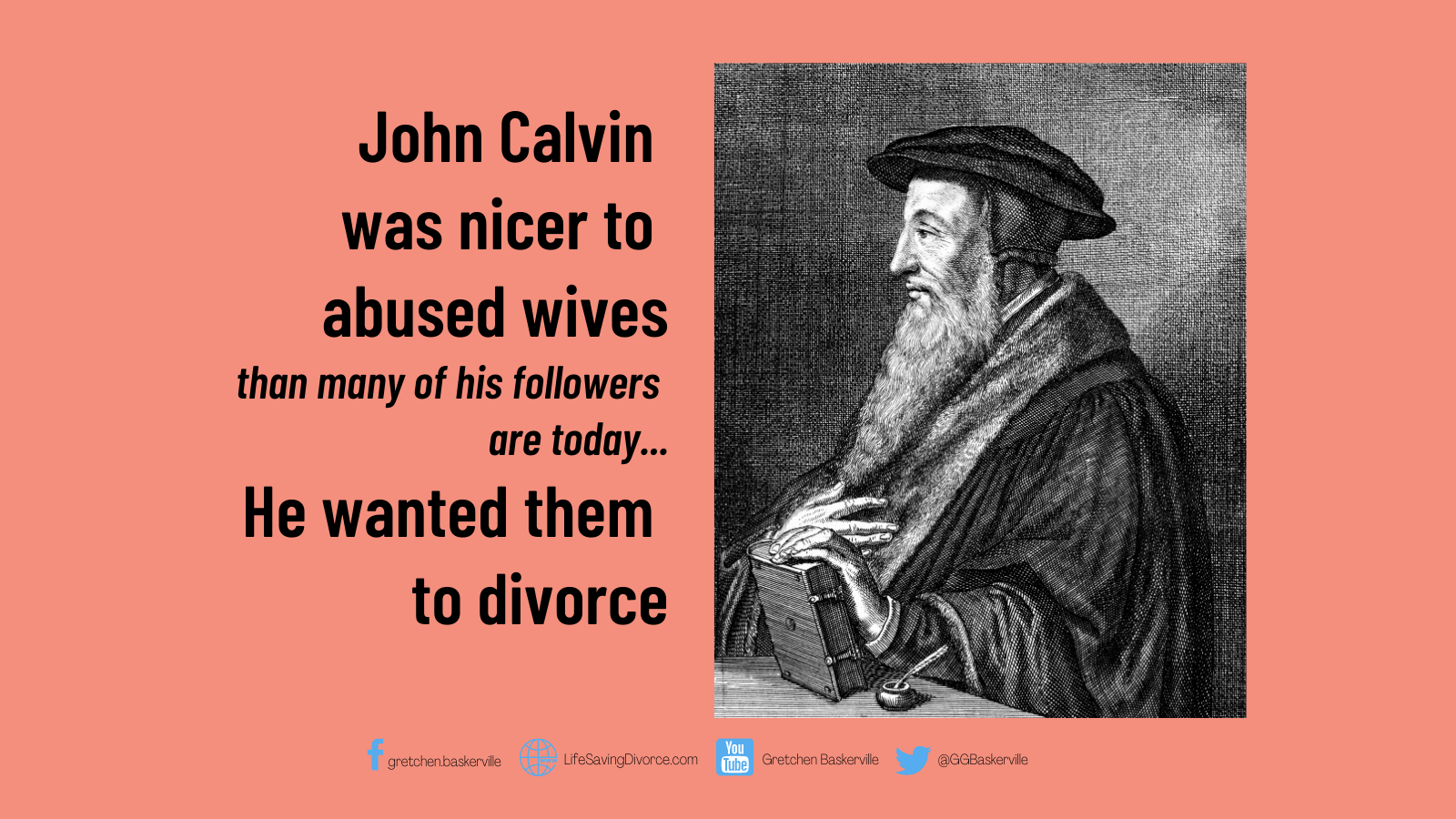
John Calvin’s birthday is July 10, and I want to talk about something many Christians have never heard: Calvin was not soft on men who tormented their wives.
The famous Reformer John Calvin (1509–1564) was angry at men who abused their wives. He believed that cruelty in marriage was especially treacherous because it happens in secrecy, under the roof where a wife ought to be safe.
And that matters when we come to Malachi 2:16, the verse many Christians have heard summarized as “God hates divorce.”
The Geneva Bible did not translate it that way. It stated:
“If thou hatest her, put her away, saith the Lord God of Israel…”
In today’s language, “put her away” means divorce her. So the Geneva Bible’s reading was not, “God hates divorce.” It was closer to this: If a man hates his wife, he should stop tormenting her and let her go.
This may sound shocking to modern Christians, but it fits with most Bible translations before the King James Version. For more detail, see my translation comparison here: Does God Hate Divorce? What Malachi 2:16 Really Means.
What Calvin Himself Said
Calvin’s own commentary on Malachi 2 is even more direct. He was speaking to men who wanted to keep the appearance of marriage while secretly destroying their wives at home.
“This is the way in which you act; for ye destroy the bond of marriage, and ye afterwards deceive your miserable wives, and yet ye force them by your tyranny to continue at your houses, and thus ye torment your miserable wives, who might have enjoyed their freedom, if divorce had been granted them.”
That is an astonishing statement.
Calvin was saying that these men were not protecting marriage. They were destroying it. They kept their wives trapped under the roof of marriage while using tyranny, secrecy, and religious appearance to cover their cruelty.
Calvin’s commentary on Malachi 2, gives this interpretation to Malachi 2:16 (the so-called God-Hates-Divorce verse). Source: https://biblehub.com/commentaries/calvin/malachi/2.htm
In context, here John Calvin is talking directly to abusive husbands who try to hide their bullying behavior from God and others.
“What else is this,” he says, “but to cover by a cloak your violence, or at least to excuse it? for ye do not openly manifest it: but God is not deceived, nor can his eye be dazzled by such a disguise: though then your iniquity is covered by a cloak, it is not yet hid from God;
nay, it is thus doubled, because ye exercise your cruelty at home; for it would be better for robbers to remain in the wood and there to kill strangers, than to entice guests to their houses and to kill them there and to plunder them under the pretext of hospitality. This is the way in which you act; for ye destroy the bond of marriage, and ye afterwards deceive your miserable wives, and yet ye force them by your tyranny to continue at your houses, and thus ye torment your miserable wives, who might have enjoyed their freedom, if divorce had been granted them.”
Treachery Behind Closed Doors
Calvin compared this kind of hidden marital cruelty to a robber who invites a guest into his home and then attacks him under the pretense of hospitality. In other words, abuse in the home is especially treacherous because the home is the place where a person ought to be safe.
That is what cruel spouses do. They use the language of covenant, faithfulness, headship, submission, forgiveness, and “working on the marriage,” while privately making life unbearable for the person they promised to love.
Calvin said God is not fooled by the cloak. God sees the violence underneath.
And Calvin’s conclusion was not, “Make the wife stay.” His conclusion was that the tormented wife “might have enjoyed [her] freedom, if divorce had been granted.”
That should make us pause.
Many Christians today have been taught to use Malachi 2:16 as a cage: “God hates divorce, so you must stay.” But Calvin and the Geneva Bible tradition understood this passage as a warning against treachery, hatred, and violence in marriage.
God is not honored when a destructive spouse hides behind the sanctity of marriage. God sees the tears. God sees the tyranny. God sees the cloak.
And sometimes, freedom is the righteous answer.
Recommended Reading
- John Calvin on Abuse, Divorce, and Malachi 2:16
- Does God Hate Divorce? What Malachi 2:16 Really Means
- What Was the Puritan View of Divorce?
- 10 Grounds for Divorce Recognized by the Puritans
- Pastors Who Accept Physical and Emotional Abuse as Grounds for Divorce
- Abuse, Abandonment, and Adultery Are Biblical Grounds for Divorce
- Will Your Church Support Divorce for Abuse?
Link to two Reformed pastors discussing this quote, and why they believe abuse victims have valid grounds for divorce AND links to other pastors and Calvinist pastors/theologians today who believe that abuse is grounds for divorce.
 :
:
 :
: Buy PDF