130 Examples of Abuse: Physical, Emotional, Sexual, Spiritual, Financial and Neglect
Overt and covert abuse can be physical, emotional, sexual, financial, spiritual, or neglectful. This post is adapted from chapter 4 of The Life-Saving Divorce. For more on this, see chapter 4 in The Life-Saving Divorce.
Am I Being Abused?
Many people struggle to recognize abuse because they assume abuse only counts if there is hitting, bruising, or obvious violence. But abuse is often both overt and covert. Some behaviors are easy to identify. Others are confusing, subtle, or deniable. Both can be dangerous. I want to say this clearly: if a marriage feels chronically unsafe, degrading, controlling, humiliating, or frightening, something is wrong. You do not have to minimize it. You do not have to call it “normal marriage problems.” And you do not have to wait until it gets worse before taking it seriously. As Psalm 10 reminds us, God sees “the trouble of the afflicted” and listens to their cry. If you are confused, exhausted, or walking on eggshells, you are not invisible to God.
“But you, God, see the trouble of the afflicted; you consider their grief and take it in hand… You, LORD, hear the desire of the afflicted; you encourage them, and you listen to their cry…” —Psalm 10:14, 17 (NIV)
In a loving marriage, both spouses matter. In an abusive marriage, one spouse’s feelings, demands, preferences, and image dominate the home. The other spouse becomes the scapegoat, the fixer, the appeaser, or the one who must absorb the damage.
Overt and Covert Abuse
Overt abuse is easier to spot: hitting, screaming, threats, sexual assault, stealing, intimidation, or open humiliation. Covert abuse is more concealed: gaslighting, sleep deprivation, stonewalling, sabotage, silent treatment, indifference, ignoring your existence, isolating you from support, using religion to pressure you, controlling access to money, hiding or sabotaging important items, undermining your confidence and your reputation, or making you doubt your own judgment. Covert abuse is still abuse. A spouse does not have to leave bruises to make a marriage dangerous.
Abuse is about power and control. Survival reactions are often about fear and protection. If you’re still trying to figure out whether what you’re experiencing is abuse, I also have a list of overt and covert warning signs here.
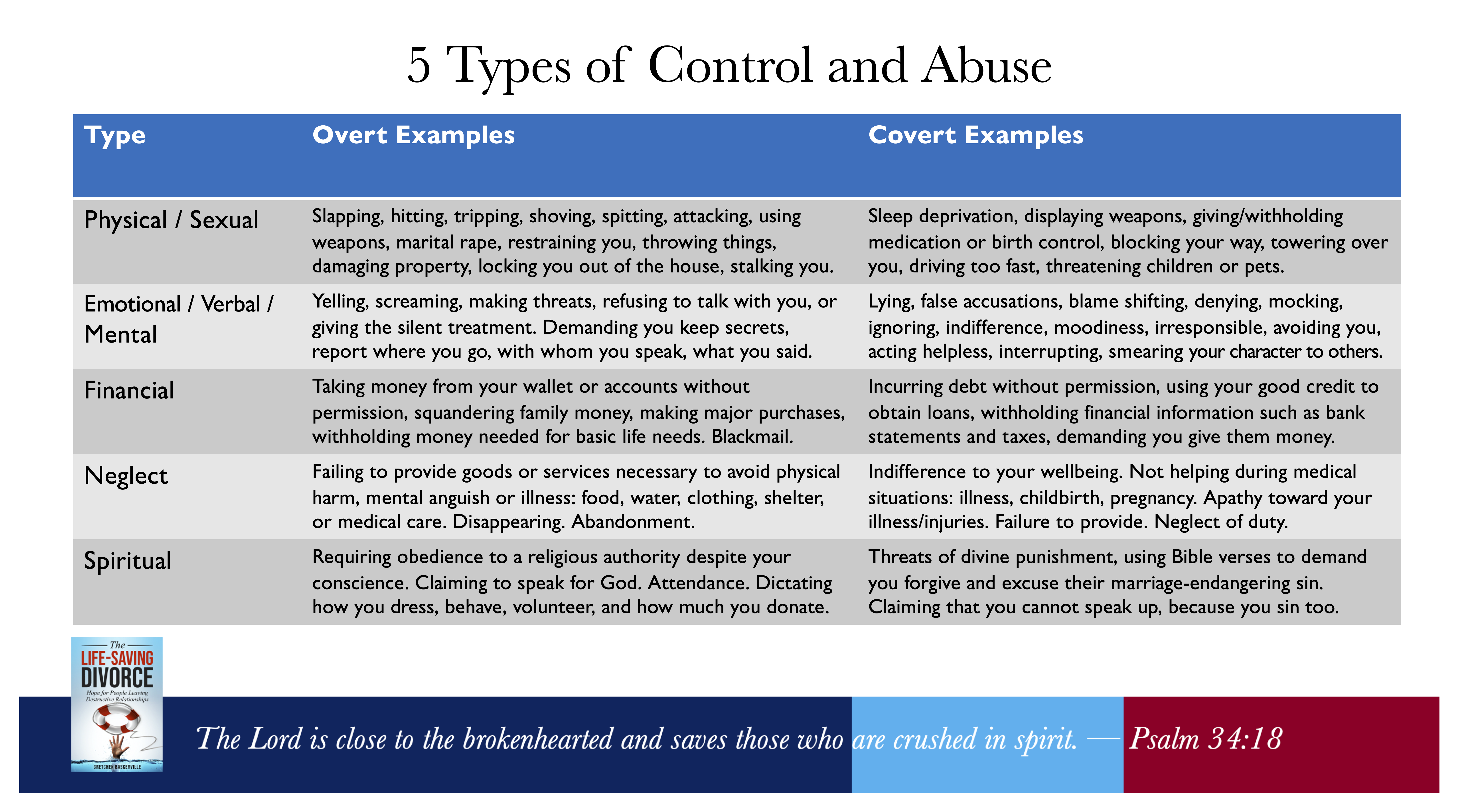
Chart: 5 Types of Marital Abuse: Overt and Covert Examples
11 Signs You May Be Experiencing Abuse
- Do you feel responsible for fixing your spouse’s moods?
- Do you feel your spouse’s emotions are the only ones in the family that matter?
- Do you feel pressured to sacrifice your wellbeing for your spouse’s goals, hobbies, or image?
- Do you feel that if you were sexually available enough, your spouse would stop being unfaithful or using porn?
- Do you feel that if you were quieter, nicer, or more submissive, your spouse would finally treat you well?
- Do you make excuses to others for your spouse’s rude, hurtful, or bizarre behavior?
- Does pity for your spouse’s childhood or past keep you overfunctioning and self-sacrificing?
- Do you feel pressure to act composed and cover for what is happening at home?
- Do you feel you must keep up appearances for the sake of family reputation?
- Do you doubt what you saw, heard, or experienced because your spouse tells you you’re crazy, stupid, dramatic, or confused?
- Do you feel loved only when you are pleasing your spouse?
If you are carrying responsibility for your spouse’s behavior, that is a sign of abuse. If you and the children walk on eggshells, that is a sign of abuse. If gifts, apologies, Bible verses, or tears are used to erase ongoing mistreatment, that is not love. That is part of the pattern.
If the Word “Abuse” Feels Too Strong
For many people, one of the hardest parts is not seeing that something is wrong, but finding words for it. You may not feel ready to call it abuse. That is common.
You might be thinking of it as pressure, control, too many demands, walking on eggshells, constant criticism, intimidation, disrespect, or simply something that is not okay.
That is all right. You do not have to force yourself to use a word you are not ready for. You can start here:
- This is hurtful. Why are they being so mean?
- This is not acceptable.
- This relationship does not feel safe.
- I am being pressured, controlled, or worn down.
Sometimes clarity begins with naming the pattern before you are ready to name the category. What matters most is not whether you use the word abuse right away. What matters is recognizing that chronic fear, coercion, humiliation, domination, and disregard for your wellbeing are not what love is supposed to look like.
5 Types of Abuse and Control
- Physical/Sexual abuse: bodily harm, intimidation, restraint, sexual coercion, sexual assault, reproductive coercion, and other violations of physical safety.
- Emotional/Verbal/Mental abuse: humiliation, blame-shifting, gaslighting, threats, chronic criticism, isolation, stalking, and coercive control.
- Financial abuse: stealing, hiding assets, sabotaging work, withholding access to money, forcing debt, and controlling necessities.
- Neglect: failing to provide needed care, protection, support, or help during illness, childbirth, crisis, or basic daily life.
- Spiritual abuse: using God, Scripture, church language, or spiritual authority to pressure you into silence, submission, or staying in danger.
130 Examples of Abusive Behaviors
Physical and Sexual Abuse and Neglect
- Smashing things, punching walls, damaging property, or destroying sentimental items to frighten you, punish you, or show power.
- Hurting, threatening, neglecting, or using pets to strike fear in you, punish you, or force your compliance.
- Throwing knives, stones, or other objects at you or near you. Spitting at you.
- Note: If none of these examples apply to you, you may be experiencing disguised or covert abuse. See the warning signs here.”
- Slapping, hitting, kicking, punching, burning, dragging, shaking, choking, shoving, or “accidentally” knocking into you. Breaking bones or twisting joints.
- Stalking, repeatedly following you, or harassing you in a way that would make you fear injury.
- Waving a gun or displaying a weapon such as a knife or baseball bat.
- Holding you down, tying you up, locking you in, kidnapping you, or restraining you against your will.
- Threatening to hurt you, your children, your pets, or your possessions.
- Frightening you with dangerous behavior: reckless driving, road rage, speeding, swerving, tailgating, running lights, aggressive passing, brake-checking, or threatening to crash the car while you or the children are inside.
- Withholding food, water, clothing, or other basic necessities.
- Towering over you, pinning you against a wall, blocking your way, or invading your space.
- Giving you drugs or medicine without consent.
- Hiding, removing, or tampering with contraceptives.
- Trying to impregnate you against your will or expose you to disease.
- Using sex or withholding agreed-upon intimacy to control reproduction while refusing mutual decision-making.
- Sleep deprivation.
- Frequently waking you up in the middle of the night to criticize you, pressure you, or demand sex.
- Sex without your consent.
- Refusing to accept your no.
- Unwanted sexual contact, molestation, fondling, or brushing up against you without consent.
- Marital rape.
- Abandonment, whether temporary or long-term: leaving you stranded, storming off and disappearing for hours or days, refusing to answer calls or messages, withholding their whereabouts, vanishing during conflict or crisis, or leaving you to manage the home, children, finances, or emergencies alone while they make themselves unreachable.
- Leaving you stranded somewhere and driving away.
- Leaving for weeks or months with little communication while expecting you to hold everything together.
- Neglect during surgery, childbirth, or other medical crises.
- Failing to help when you cannot manage basic life functions.
- “Wife spanking” or Christian Domestic Discipline used to establish control.
- Forced labor.
- Exhibitionism or voyeurism.
- Exposing you to pornography against your will.
- For children: exposing them to pornography or sexualized situations.
- For children: incest, attempted sexual contact, or sexual exploitation.
Verbal, Emotional, and Mental Abuse Examples
- Chronic indifference to your wellbeing: ignoring your pain, illness, exhaustion, pregnancy, recovery, fear, or basic need for care and support.
- Using gifts, apologies, tears, promises, or public niceness to pressure you to stay silent, drop boundaries, or pretend the abuse did not happen.
- Muttering under their breath to show contempt.
- Sighing, smirking, or using contemptuous tones to belittle you.
- Acting smug or superior.
- Showing indifference toward your wellbeing.
- Refusing to listen to your goals, hopes, or desires.
- Acting helpless or incapable to avoid responsibilities.
- Excusing seductive behavior as “boys will be boys” or similar.
- Excusing porn use by blaming you.
- Professing love while actions never match words.
- Refusing to be pleased by your efforts.
- Belittling your appearance, mannerisms, values, or abilities.
- Lecturing, condescending, or treating you as beneath them.
- Minimizing bad behavior: “You’re overreacting.”
- Using “always” and “never” to exaggerate your faults.
- Predicting you will fail at anything you try on your own.
- Crossing your boundaries while calling you crazy, sensitive, or unstable.
- Treating you like a child through threats or bribes.
- Backing out of commitments at the last minute.
- Stonewalling important discussions or decisions.
- Silent treatment.
- Sulking and forcing you to guess what is wrong.
- Changing the rules so they apply only to you.
- Walking out of serious discussions repeatedly.
- Making major life decisions unilaterally.
- Using gifts to force forgiveness while making no real amends.
- Interrupting your work, rest, sleep, bathing, prayer, or important events for non-emergencies.
- Seducing you and then rejecting you.
- Blaming others for flirtation while claiming innocence.
- Claiming everyone knows you are the problem.
- Saying you are nothing without them.
- Saying your opinions are stupid or worthless.
- Demanding proof of your love or loyalty.
- Using social media to bully, stalk, threaten, or intimidate you.
- Demanding secrecy about what happens at home.
- Criticizing your hobbies, interests, talents, or sports.
- Using sarcasm and shaming to wear you down.
- Rolling eyes, smirking, or making contemptuous gestures when you speak.
- Degrading your capabilities.
- Degrading you sexually.
- Calling you crazy or stupid, then dismissing it as a joke.
- Denying things they clearly said or did.
- Telling you no one else could ever love you.
- Body-shaming you.
- Mocking your looks or clothing.
- Patronizing you while pretending it is kindness.
- Smearing your reputation to friends, family, children, bosses, or pastors.
- Recruiting allies or “flying monkeys” to discredit you.
- Creating scenes in public and leaving you to explain.
- Accusing you of being judgmental or unforgiving when you object to mistreatment.
- Changing the story and rewriting history.
- Making false accusations with no evidence.
- Falsely accusing you of infidelity, stealing, cheating, or lying.
- Blame-shifting: “I wouldn’t have done that if you hadn’t…”
- Demanding your time, energy, or money while giving you no voice or veto.
- Preventing you from seeing family or friends.
- Isolating you from support.
- Insisting on your passwords because you have “nothing to hide.”
- Going through your purse, wallet, briefcase, or phone.
- Demanding to know where you are, what you did, and who you talked to.
- Giving you a curfew.
- Requiring detailed reports of your conversations with others.
- Using location-sharing apps to monitor you.
- Putting tracking apps on your phone without permission.
- Maintaining a chronic pattern of criticism, blame, and belittling “for your own good.”
- Name-calling, slurs, screaming, and yelling.
- Starting fights and forcing you to apologize.
- Provoking you in public so you look like the aggressive one.
- Threatening infidelity or sexual betrayal if you refuse sex.
- Making threats of harm, leaving, divorce, or suicide to keep you afraid.
- Threatening to destroy you legally, professionally, or socially.
- Threatening injury and claiming you deserve it.
- Blaming you for crimes or harms done to you.
- Threatening to turn the children, family, church, or authorities against you.
- Blackmail and extortion.
- Threatening revenge porn or exposure of private texts/photos.
- Threatening that you will never see your children again.
- Suicide threats used as coercion.
- Hacking your email or online accounts.
- Cyber-stalking, spyware, keystroke loggers, or hidden cameras.
- Giving you devices set up to track or monitor you.
- Listening to or recording your private calls.
- Sending dozens of texts demanding updates about your whereabouts.
- Bribing you with gifts, trips, or valuables to keep you silent.
- Withholding affection as control—making you feel terrible for going against their wishes, then giving brief special attention so you feel grateful for crumbs of affection.
Related:
- He never hit me: signs of an emotionally abusive marriage,
- Why abuse is not merely “subjective”,
- How to know if an abuser has really changed, and
- A checklist for whether an abusive or deceptive partner has really changed.
- 5 FREE Self-Tests: Am I Being Abused, or Is This Normal?
Financial Abuse Examples
- Sabotaging your work or ability to earn a living: calling your boss, interfering with your job, creating crises before work, showing up uninvited, or trying to make you lose employment.
- Withholding financial information: hiding accounts, debt, tax information, passwords, assets, or credit activity so you cannot make informed decisions or protect yourself.
- Stealing or hiding money or valuables from you.
- Note: If none of these examples apply to you, you may be experiencing disguised or covert abuse. See the warning signs here.”
- Pressuring you to hand over an inheritance or trust funds or demanding to be a signer on those accounts.
- Selling or pawning valuables without your consent.
- Using your identity to open accounts or change addresses.
- Refusing access to routine money needed for food, clothing, transportation, or utilities.
- Keeping and using your usernames, passwords, or account IDs without permission.
- Opening new credit cards without your agreement.
- Running up debt or taking out loans without discussion.
- Demanding loans for others under false pretenses.
- Lying about missing or damaged valuables.
- “Accidentally” breaking sentimental or valuable items after conflict.
- Removing your access to essential funds as punishment.
- Demanding ownership in property they did not purchase with you.
- Demanding you refinance a home and give them cash.
- Selling the home, car, or marital property without your consent.
- Making major financial decisions unilaterally that affect your livelihood.
- Using their paycheck for personal fun while demanding you cover family essentials.
- Threatening exposure, punishment, or harm if you do not give money.
- Refusing to help support the family with money, time, effort, or priority.
- Refusing to earn sufficient income while forcing the family into chronic lack.
- Demanding a lifestyle the family cannot afford while neglecting basic needs.
Spiritual Abuse
- “You must submit to me in everything because the Bible says so.”
- Demanding sex as a spiritual duty.
- Insisting you must stay in one rigid role regardless of your gifts or calling.
- Using Scripture to silence you because of your sex.
- Telling you that because you are a sinner, you have no right to expect good treatment.
- Saying your suffering in the marriage glorifies God and makes you holy.
- Using “leave and cleave” to isolate you from parents, friends, counsel, or support.
- Saying that because you are a Christian, you must reconcile immediately.
- Saying every choice you make must serve ministry, leaving no room for joy, rest, hobbies, or boundaries.
- Teaching a wife that her safety, wellbeing, and legitimate needs must be sacrificed to protect her husband’s ministry, reputation, or “gospel priorities.”
- Telling you that anger, protest, or self-protection is sin because Christ suffered.
- Telling you to ignore your God-given instinct for self-preservation.
- Claiming special knowledge of God’s will for your life that you cannot access directly.
- Threatening God’s wrath or loss of blessing if you leave danger.
- Promising special access to God if you follow their ministry or marriage advice.
- Threatening divine punishment if you leave a church or religious system.
- Telling you that leaving a marriage or church is the same as leaving Jesus.
- Using Bible verses or church language to shame your fear, anger, desperation, or grief.
- Telling you that if you prayed more, gave more, or believed more, the abuse would stop and the marriage would heal.
Final Thoughts
Some of these behaviors are blatant. Some are subtle. Some are illegal. Some are easily denied. But all of them can be used to dominate, frighten, isolate, exploit, degrade, silence, or control. You do not need every item on this list for a marriage to be dangerous. One pattern repeated over time can do tremendous damage. Sometimes the clearest first step is simply this: This is not okay. If this post resonates with you, you may also want to read But He Never Hit Me: Divorce for Neglect, Emotional, and Financial Abuse and Can I Divorce for Abuse? Can Christians Divorce for Abuse?. And if you need more biblical background, pastoral language, and real-life stories, The Life-Saving Divorce goes much deeper. For more on this, see chapter 4 in The Life-Saving Divorce or see this list of overt vs. covert warning signs here.
 :
:
 :
: Buy PDF