

11 Ways to Know if a Church is Safe for Abuse Victims or Divorcees
Are you looking for a new church when you need a separation or divorce?
Did you know that nearly 6 in 10 churchgoing Christians switch churches or leave their church when they go through a divorce or separation? That’s surprising. But it is completely understandable: Sometimes you just feel awkward staying at your old church or just want to avoid seeing your ex.
You have options! You can find another church without spending months driving around. You can find a church that doesn’t treat all divorcees as second-class Christians. You want a church that takes your story seriously and empathizes. Anyone who got a life-saving divorce can hold their head high. It took courage, effort, and struggle to get away from that toxic environment.
Safe churches require some work to find. Some churches describe all divorcees as quitters who took the easy way out. That’s not fair. You want empathetic leadership that knows how hard you tried, and doesn’t accuse you of ignoring God’s Word and not valuing the sanctity of marriage. You want a church that is supportive of life-saving divorces, and knows that sometimes they are necessary.
LifeWay Research (the research affiliate of the Southern Baptists) published this graph that shows nearly 6 in 10 churchgoers switch churches when they divorce. That means most divorced Christians switch churches when they divorce.
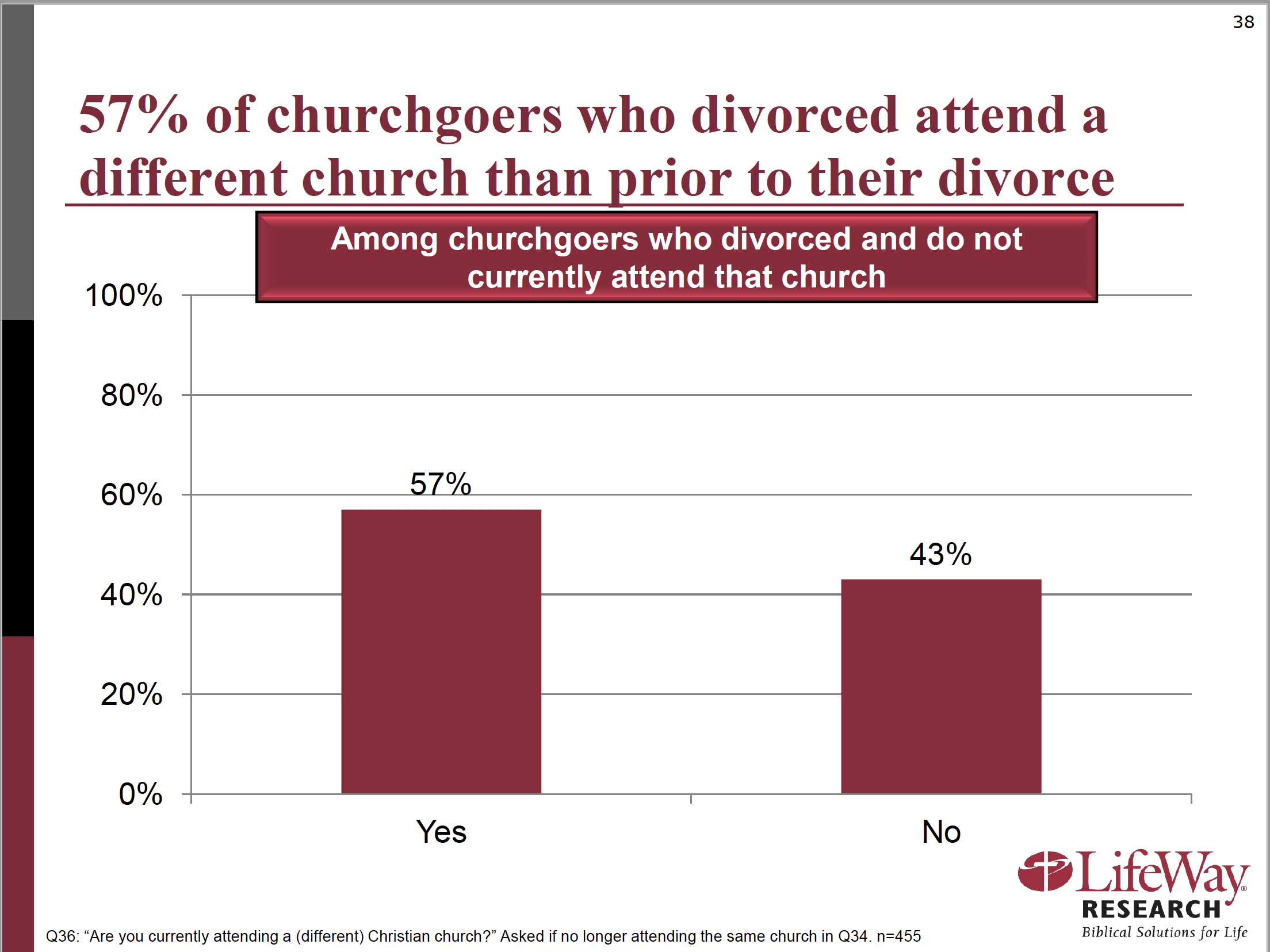
This graph shows that nearly 6 in 10 churchgoing Christians switch churches when they divorce.
Look for a Church Online!
Consider exploring a church online before you visit in person. Many churches post sermons on their websites or YouTube channels, and listening ahead of time can give you a thoughtful sense of how pastors speak about marriage, divorce, forgiveness, and hardship.
I once did this for a friend who had just moved to a new town and was overwhelmed by the dozens of churches. It took two hours, but it helped her feel more confident and prepared. Instead of walking in unsure, she already understood the church’s tone and theology.
For families especially, this can reduce stress. Getting everyone ready and trying something new takes energy. Listening online first allows you to discern carefully and choose a place where you’re more likely to feel welcomed, understood, and spiritually safe.
First, Find the Marriage Sermons
- Find their marriage sermons or marriage education videos online.
Do an internet search to find the church website (or YouTube channel) and look for or do a search for Sermons or Messages. Search within their site/channel for: marriage sermons - Get the transcript:
On YouTube, open the sermon, click the ••• menu, then choose Show transcript.
Copy/paste it into a document for easier review. - Within those videos, search for these keywords: divorce, abuse, violence, infidelity, porn, lust, authority, forgiveness, suffering, roles, sex, submission, headship.
- You can either watch or read the sermons yourself — or if you wish, use AI to scan for red flags and green flags (AI isn’t good at everything, but it is good at noticing patterns. Paste the transcript into AI, then leave a couple of spaces and then copy-paste the following 4 prompts. Then hit “Enter.”):
- Prompt 1 (Red flags): “Analyze this sermon transcript for red flags that make churches unsafe for abuse victims or divorcees. Quote the exact lines and explain why each is a red flag (victim-blaming, minimizing abuse, pressured reconciliation, sin-leveling, ‘submit harder,’ rushed forgiveness, anti-reporting-to-police). Provide a bullet list with timestamps/line excerpts.”
- Prompt 2 (Green flags): “Analyze this transcript for green flags that indicate safety for abuse victims and betrayed spouses. Quote exact lines. Identify: clear condemnation of abuse, mentions of accountability, support for reporting crimes, trauma awareness, professional referrals, respect for agency, repentance before reconciliation.”
- Prompt 3 (Responsibility test): “Who carries the burden in this message—victims or offenders? Quote the lines that assign responsibility. Summarize the pattern in 8–12 bullets.”
- Prompt 4 (Sex teaching audit): “Extract every statement about sex, lust, pornography, and ‘marital duty.’ Flag any language that pressures sex, excuses male entitlement, or blames wives for men’s sin. Quote exact lines.”
Tip: If the AI won’t quote, tell it: “Only use direct quotations from the transcript. Do not paraphrase.”
Listen Carefully for Phrases and Patterns
If you are looking for a church after separation or divorce, you are not alone.
Many believers quietly change churches during this season — not because they stopped loving God,
but because they felt misunderstood, blamed, or invisible.
You deserve a church where your story is handled with care.
Before you visit in person, listen to sermons online. Pay attention to how pastors speak about marriage, sex, sin, authority, repentance, and suffering.
You’re not looking for perfection. You’re looking for patterns.
Here are 10 things to listen for.
1. When Divorce Is Mentioned, Are Sexual Immorality, Abuse, and Other Covenant-Destroying Sins Acknowledged?
Conservative churches often affirm the seriousness of marriage vows. That is biblical. But listen for something else: Is there any recognition that some marriages involve chronic harm — not just conflict, but intimidation, sexual immorality, coercion, deception, or fear? A sermon doesn’t have to bring up all 130 examples of abuse, but listen to see if any are mentioned.
If divorce is always described as impatience, selfishness, or rebellion, victims will remain silent. You’re not looking for a church that treats divorce lightly. You’re looking for a church that takes abuse seriously. (Related reading: Can I Divorce for Abuse? Can Christians Divorce for Abuse?)
Does the sermon give the impression that most divorces are frivolous and only a handful are really for serious reasons? (The truth is that about half of divorces in the U.S. are for life-saving reasons.) Does the sermon ignore abuse and suggest that the person who files for divorce is the one who destroyed the marriage? Does the sermon suggest that all divorce can be avoided if the faithful spouse single-handedly prays harder and sets a good example, regardless of the destructive behavior of the other?
Does the sermon depict divorce itself as the ultimate act of violence? For example—
-
“It harms children permanently
How are divorcees described? Are they portrayed as quitters who took the easy way out, overreacted to normal ups and downs, or as people who simply absorbed Hollywood’s divorce culture? Are they spoken of as failures who couldn’t go the distance, as immature and superficial, or as impulsive people who hadn’t counted the cost? Are they framed as sinners chasing their own happiness without concern for their children, or as selfish parents willing to harm their kids for personal freedom?
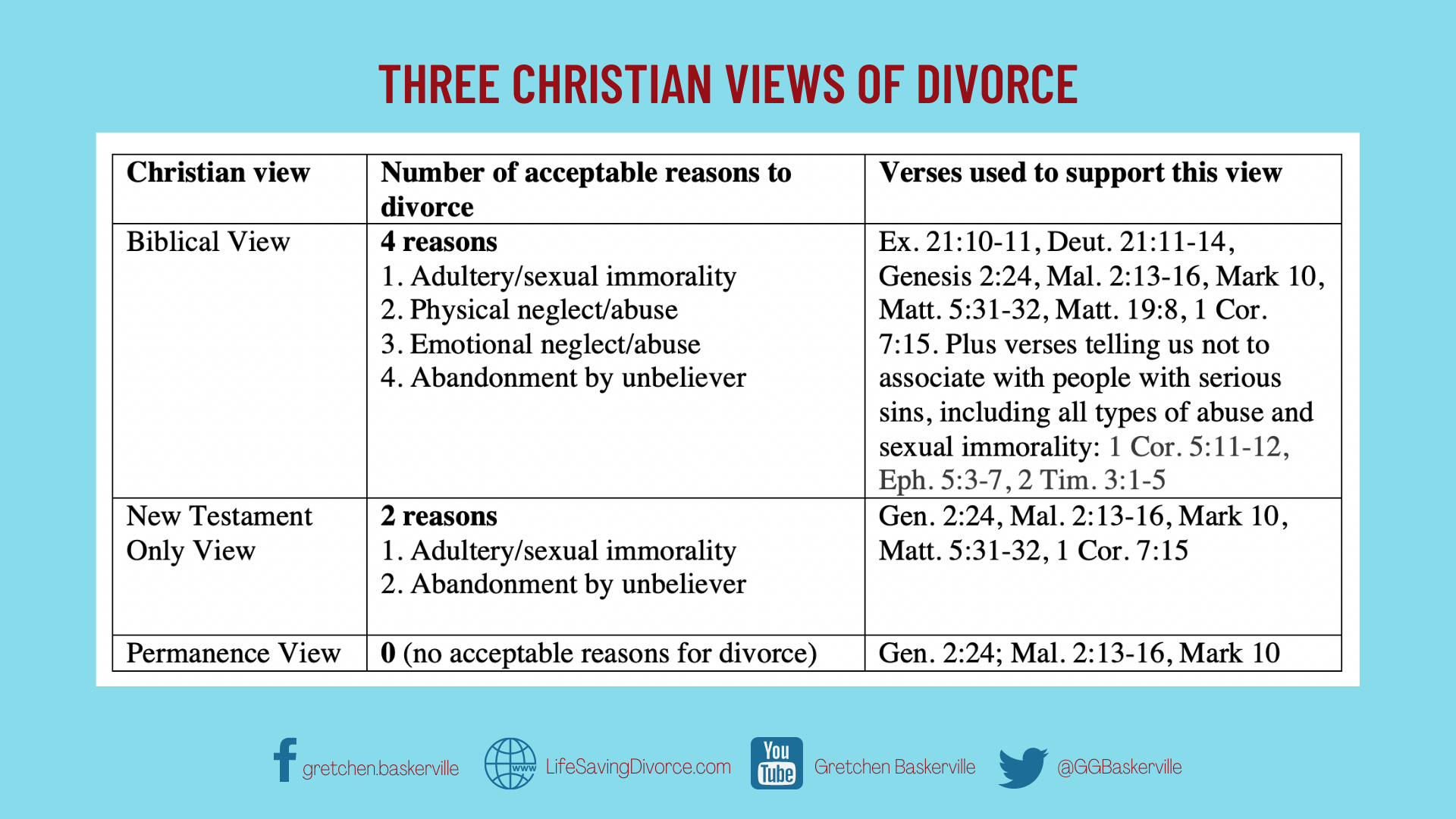
2. Is Marriage Framed as a Covenant — or a Power Structure?
Headship is often taught in conservative churches. The question isn’t whether they use the word.
The question is how they define it.
Does leadership sound like sacrificial responsibility, protection, and accountability before God?
Or does it sound like final say, compliance, and a one-sided chain of command?
If authority language consistently protects one spouse and exposes the other, that’s a warning sign.
Helpful context: Marriage Is a Conditional Covenant (Not an Unbreakable Promise)
Are all marriage problems blamed on the wife for not being submissive, cheerful, or agreeable enough?
3. Do They Name Emotional Abuse — Not Just Physical Violence?
Some churches condemn hitting but never mention constant criticism, financial control, threats,
sexual pressure, or isolation.
Abuse isn’t always bruises. Silence benefits abusers.
(Examples to compare against what you’re hearing: 130 Examples of Abuse: Physical, Emotional, Sexual, Spiritual, Financial and Neglect)
4. How Does the Pastor Speak About His Own Wife?
This may seem small, but it reveals much. Are there jokes at her expense, private information shared for laughs, or contempt disguised as humor?
Public patterns often reflect private theology.
5. Do They Rush Forgiveness Without Requiring Repentance?
Conservative churches value forgiveness. That’s biblical. But forgiveness is often weaponized in
abusive settings.
If sermons pressure betrayed or abused spouses to “forgive and move on” while minimizing the
offender’s responsibility to change, that imbalance will surface in counseling too.
Safety requires repentance, not just reconciliation.
Related reading: Forgiveness Takes Time Where There’s Marital Abuse or Betrayal
6. Is Marriage the Ultimate Goal — Especially for Women?
If every sermon on womanhood centers marriage as her primary identity, that creates pressure to
preserve marriage at any cost.
Scripture’s ultimate goal is faithfulness to Christ. Marriage is a blessing. It is not a woman’s
salvation.
7. After Listening, Who Feels Heavier?
This is the simplest test.
Imagine the spouse who is exhausted, afraid, and trying to hold their family together. After the sermon,
do they feel encouraged, protected, and strengthened — or responsible for fixing the marriage, guilty for
struggling, and afraid to speak up?
You can often tell within one sermon whether a church distributes responsibility fairly — or
consistently loads it onto one spouse.
Looking At the Sex Teachings in the Church
1. When They Preach on Sex, Do Both Spouses Matter?
Conservative churches often preach 1 Corinthians 7. That’s good. It’s Scripture.
But listen carefully.
Is sex framed primarily as a husband’s need? Or are both husband and wife treated as people whose
bodies, consciences, and wellbeing matter?
A healthy church can say something simple and clear:
Both husband and wife matter in the bedroom.
2. Are Men Called to Self-Control — or Excused?
Conservative theology often affirms male leadership. But leadership in Scripture includes
self-control, gentleness, and accountability.
Listen for how pastors talk about lust: Are men described as almost powerless against temptation,
or called to disciplined obedience? Is sex portrayed as a man’s right at any time, day or night-something that men need and women must give in order to keep them from cheating or doing porn?
A safe church insists that men answer for their own choices before God.
3. Is Porn Treated as a Man’s Sin — or a Wife’s Failure?
If pornography comes up, listen closely. Are wives warned to “keep their husbands satisfied,”
or are men reminded that porn is sin, regardless of circumstances?
No spouse can make another person sin. If a church implies a wife’s availability determines a
husband’s purity, that creates spiritual pressure and silent coercion.
Final Tip
Next check the comparison chart of Christian denominations to learn their official policies on divorce for abuse. Obviously some pastors have their own views that diverge from their denomination. But you should know what that church’s denomination believes up front. Also, it’s okay to call the pastor before visiting and ask if they accept physical and emotional abuse as valid grounds for divorce. CLICK HERE FOR THE LINK TO THE CHURCH/DENOMINATION COMPARISON CHART
 :
:
 :
: Buy PDF