

How Do I Know If My Spouse Has Really Changed?
Summary: This article gives 3 ways you can know if your abusive or addicted spouse has really changed and 3 signs that they have not. It also includes 3 Responses to Give to People Who Pressure You to Reconcile. Watch the 20-min. video version on YouTube.
It’s one of the most confusing moments in a destructive marriage: things suddenly seem “better,” and your spouse insists it’s proof they’ve changed. They may even be angry that you’re not convinced.
- “I’ve changed. Why can’t you see it?”
- “How soon can I move back in?”
- “I’d die for you and the kids.”
In my interview with therapist Bob Hamp (LMFT), he explains why this moment is so dangerous: abuse usually runs in cycles. When the pressure is on—when you separate, set boundaries, or stop absorbing their blame—many abusers or addicts will adjust their behavior to get back in the door.
The Key Principle: Abuse Is the “Misassignment of Responsibility”
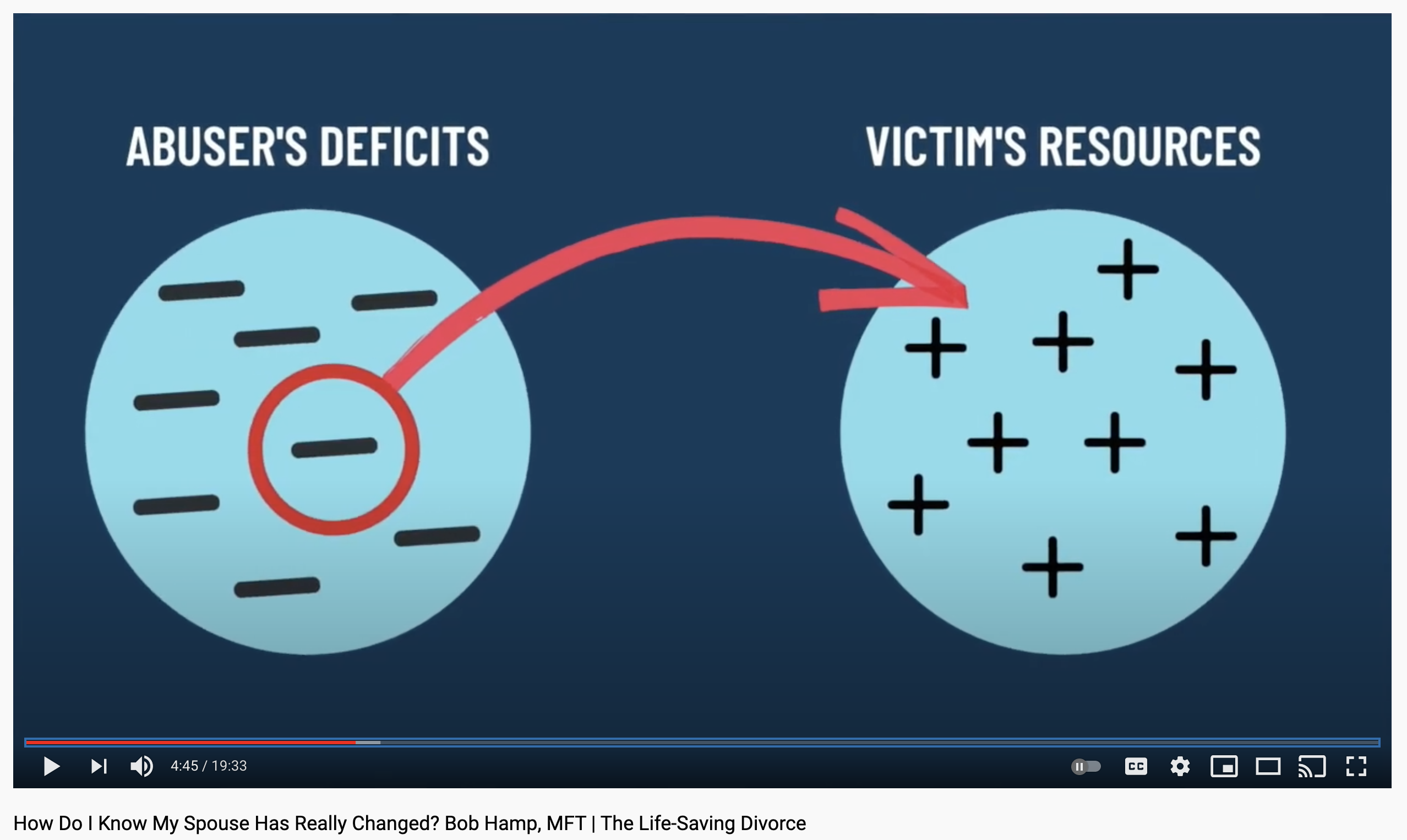
Bob’s core idea is simple and clarifying: abuse and codependency thrive when responsibility gets assigned to the wrong person.
The abuser offloads their emotional burden onto you. You end up managing their feelings, soothing their anger, preventing their explosions, protecting their reputation, or keeping the peace.
Common blame-shifts sound like:
- “If you were nicer, I wouldn’t drink.”
- “If you trusted me more, I wouldn’t get so angry.”
- “If you’d just stop talking about the past, we’d be fine.”
Even if they stop one destructive behavior (like drinking or yelling), if they still demand that you fix their emotions—or get mad that you aren’t praising them—the responsibility dynamic hasn’t changed.
Before Reconciliation: Watch for These Pressure Tactics
Bob Hamp warns that many abusers (and many addiction-driven spouses) try to create the appearance of change without actually taking responsibility.
In his teaching on recovery ministries, he explains how this situation can become even more confusing when a church is impressed by visible “good” behaviors—such as attending counseling, praying more, or giving a testimony—and then pressures the victim to accept those behaviors as proof that real change has happened.
When others insist that you should now trust, reconcile, or resume the relationship because your spouse appears to be doing better, that pressure itself can be a warning sign.
Pressure tactics from the abusive spouse
These are red flags because they shift responsibility back onto you—to validate, reward, or restore access—rather than the abuser owning the harm and accepting consequences.
- “Why don’t you see that I’ve changed?”
- “Look at me — I’m in counseling. I’m praying more. I’m reading my Bible every day.”
- “You’re now responsible to give me an A on my report card.”
- “Everyone else sees it. Why can’t you?”
- “Why won’t you take me back?”
- “How soon can I move back in?” / “Why can’t I move back home?”
- “You won’t even talk to me.”
That’s not change. That’s reconciliation pressure. It’s still the “misassignment of responsibility”—the same abuse dynamic, just wearing religious language and improved behavior.
Pressure tactics that often show up in churches and “freedom/recovery ministries”
Bob describes how abuse is usually a triangle: the abuser, the victim, and the onlookers (helpers, leaders, prayer teams, friends). If the onlookers don’t understand abuse dynamics, they can get pulled in to support the abuser and unintentionally become “secondary abusers.”
-
Sympathy-first prayer requests: The abusive spouse tells a heartbreaking story to prayer teams or leaders—saying their spouse “left out of the blue” and they have no idea why—so the church rallies around them as the injured party.
-
The innocent-victim narrative: The abuser portrays themselves as misunderstood: friends are supposedly turning the victim against them, and no one will listen to their side.
-
Labeling the victim “wayward”: Because the abuser appears calm, spiritual, or repentant, leaders may start treating the victim as the rebellious spouse who needs to return.
-
Program success pressure: When a church or ministry wants to demonstrate that its program works, the spouse’s participation in counseling, classes, or prayer meetings is treated as proof that the marriage should now be restored.
-
Public restoration too quickly: The spouse is put in visible roles—giving testimony, serving in ministry, or being publicly affirmed—as evidence of transformation before long-term change has actually been proven.
-
Judging by behavior alone: Helpers focus on surface improvements—“He stopped drinking,” “She’s not yelling anymore”—while ignoring deeper patterns like blame-shifting or lack of empathy.
-
Using forgiveness to demand reconciliation: Forgiveness is framed as meaning the victim must restore trust, resume the relationship, and give the spouse access again.
-
Shifting the spotlight onto the victim: Leaders start focusing on the victim’s anger, bitterness, or lack of forgiveness while minimizing years of destructive behavior from the abuser.
- Bob’s point is sobering: forgiveness is about past harm that has stopped. If the responsibility-shifting is still happening—if the spouse is still demanding an “A,” demanding a timeline, demanding access—then the core problem is still present.
Forgiveness addresses the past; boundaries and consequences address ongoing harm.
Three Signs Your Abusive or Addicted Spouse Has Truly Changed
1. They Take Full Responsibility
Not vague apologies. Not “I’m sorry you felt that way.”
Real responsibility names:
-
what they did,
-
the impact it had on you,
-
who else was affected (often the kids),
-
and the harm their choices caused.
(article continues below the graphic)
2. They Show Genuine Empathy
Empathy is not gifts, flowers, jewelry, or sentimental speeches.
Empathy sounds like:
“Here’s what it was like to be married to me. You were humiliated. You were afraid. You carried burdens that were never yours.”
It includes a willingness to undo harm where possible—making amends, correcting lies, repairing what they damaged.
3. They Do It Publicly and Over Time
Many victims were blamed while the abuser played “the good guy.”
If people were recruited into that false story—family, church leaders, friends—real change includes correcting it.
And it lasts.
Not days. Not a honeymoon phase.
Time reveals truth.
Three Steps the Victim Must Take to Test Whether Change Is Real
1. Stop Taking Responsibility for Their Choices
Hand the responsibility back.
Step out of the role of emotional caretaker.
2. Keep Your Boundaries
Bob said it clearly:
Forgiveness addresses the past; boundaries and consequences address ongoing harm.
Many churches pressure victims to “forgive” when what they really mean is “reconcile, trust, and resume access.”
But love is not a promise of access, no matter how someone behaves.
3. Define What a Healthy Relationship Requires
Bob suggests picturing a circle called:
“Relationship as I’m willing to do it.”
Inside: mutuality, support, empathy, open communication, responsibility-taking.
You can invite them into that circle—but if they refuse those requirements, they remain outside.
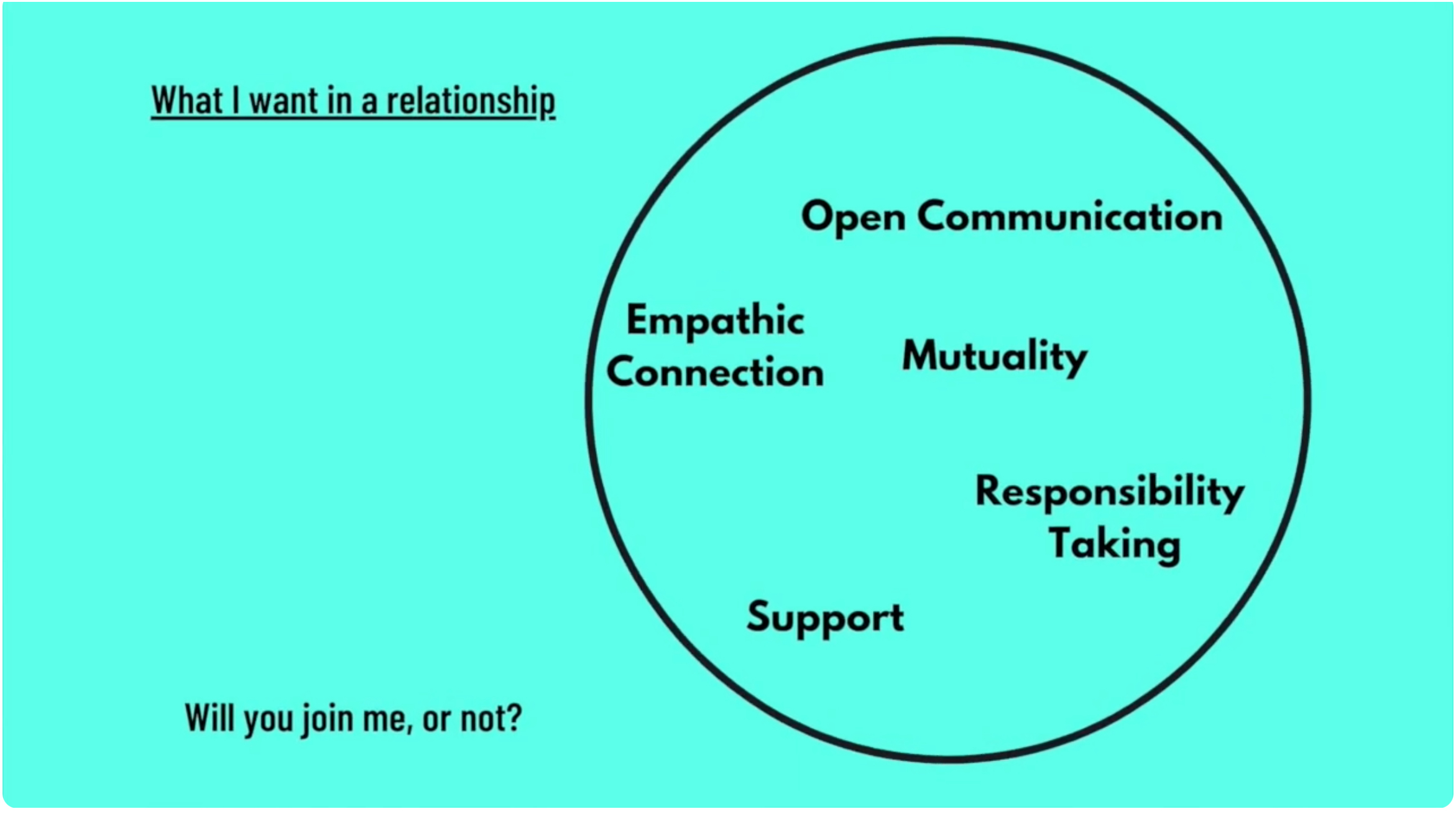
Click to expand: “What I Want in a Relationship” and “Will you join me, or not?”
One Final Word: Remember Who You Were
Abuse Wears People Down—But It Doesn’t Erase You
Abuse diminishes people over time. So does blame from a religious or social system that should have protected you.
Take time to remember the person you were before you were worn down.
That strong, wise self is still in you.
Fight for yourself.
You are worth safety.
Related videos:
 :
:
 :
: Buy PDF