
Pastor Education: Sharpening Your Skills for Marital Crisis
These resources are for pastors and ministry leaders who want to respond wisely to oppression in the form of domestic violence, coercive control, addiction, sexual immorality, and betrayal—without minimizing harm or pressuring victims to stay unsafe.
Pastors carry a sacred responsibility. When a frightened spouse reaches out, you may be the first person they trust with their story. These posts are offered with respect for your calling and gratitude for your work.
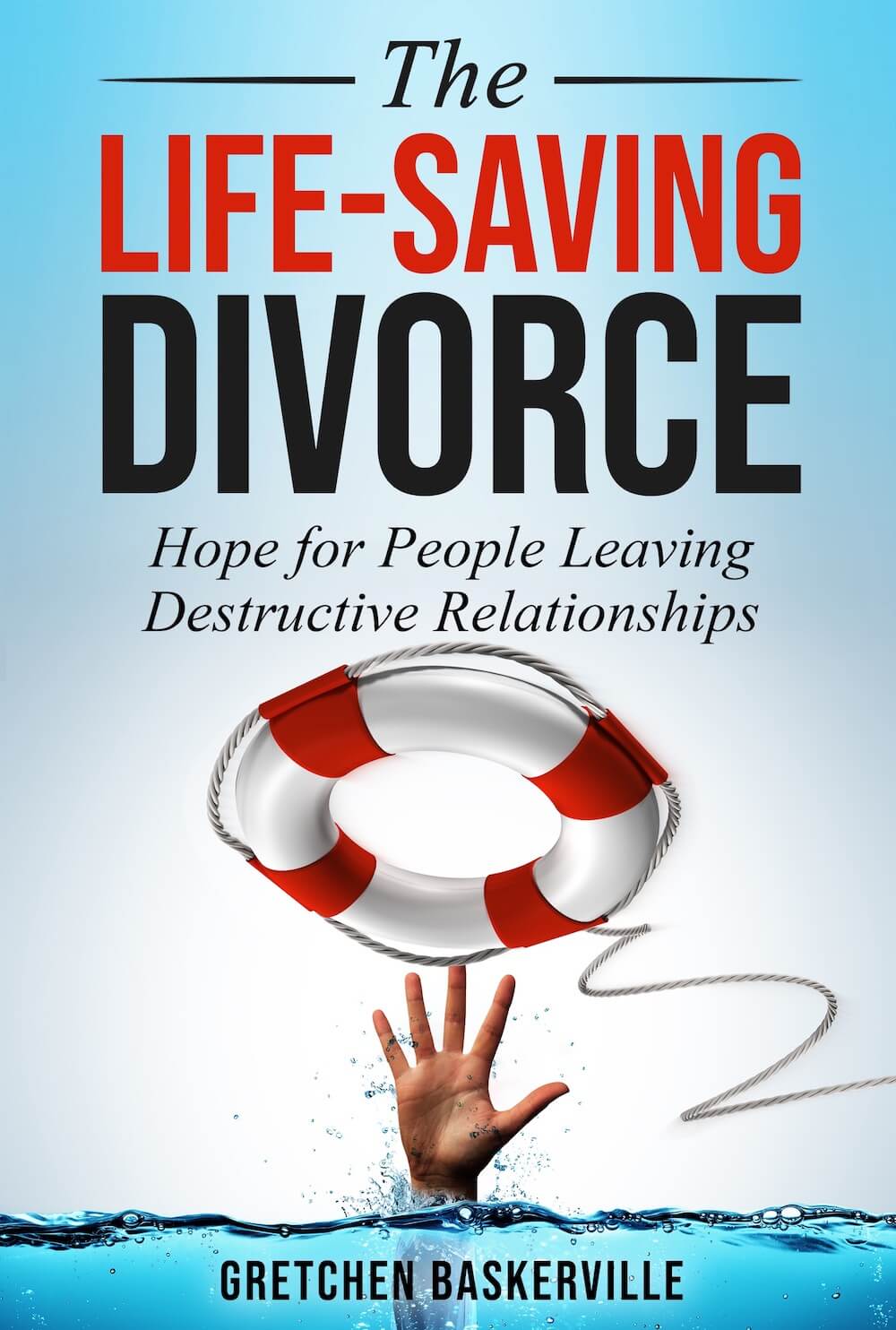
Gretchen Baskerville is a Christian, Wheaton College graduate (Bible and Christian Education), and author of The Life-Saving Divorce. Since 1998, she has been a divorce recovery leader in evangelical churches and spent more than 25 years helping men and women of faith who need a life-saving divorce due to abuse, betrayal, and high-conflict marriages with biblical clarity and research-based insight.
1. When Theology About Suffering Is Misapplied
Scripture calls believers to perseverance, but perseverance does not mean enduring ongoing harm.
When “forgiveness,” “turn the other cheek,” or “submission” are applied without discernment, victims can feel pressured to stay quiet instead of get safe.
2. When “Save the Marriage” Becomes the Highest Goal
Healthy marriages are worth fighting for. But in high-distress or abusive marriages, “marriage-first” approaches can unintentionally keep victims in harm’s way.
Abuse is not a “communication problem.” It is a power-and-control problem.
3. Training Gaps: Coercive Control, Trauma, and Lethality Risk
Many pastors were never trained in coercive control, trauma responses, or the way abusers manipulate systems.
Without that training, leaders may default to mediation, couples counseling, or “he said/she said,” which can empower the abuser and endanger the victim.
- 130 Examples of Abuse: Physical, Emotional, Sexual, Spiritual, Financial and Neglect
- What Is DARVO? How Abuse Survivors Are Silenced by Deny, Attack, and Reverse Victim Offender
- Am I Being Abused? 5 Free Self-Tests, Assessments and Questionnaires
- Why You Did Not See the Red Flags And Why It Is Not Your Fault
-
Pastor training video/sermon for Domestic Violence Awareness Month (October) by Pastor Neil Schori.
4. Protecting the Institution vs. Protecting the Vulnerable
Leaders can feel pressure—from scandal-avoidance, reputational fear, or a desire to handle things “in-house.”
But Scripture consistently confronts hidden injustice. The church’s witness is strengthened when the vulnerable are protected and sin is named honestly.
5. Abuser Charm and Victim-Blaming Culture
Skilled abusers often appear calm, spiritual, and remorseful. Victims may appear anxious or inconsistent—common trauma effects. When churches equate composure with credibility, the vulnerable may be misjudged.
6. Listen to Survivors in Their Own Words
Many victims do not leave immediately—not because the abuse is minor, but because it is complex. Financial control, fear, children, church pressure, hope for repentance, and trauma bonding all play a role.
Before forming conclusions about a situation, it can be helpful to hear directly
from men and women who have lived through these realities.
- Why Does She Stay In An Abusive Marriage? 50 Women & Men Tell Why
- Christians: Life After Divorce — Real Stories of Challenge, Healing, and Hope
Listening without immediately correcting, advising, or defending marriage often builds the trust necessary for wise pastoral care.
7. Life After Divorce: Research on Healing
Many pastors fear that divorce inevitably leads to lifelong misery, based on the messages they’ve heard for years. However, the research does not support that assumption—especially in high-conflict or abusive marriages. More than 7 in 10 divorcees report being “very happy” or “pretty happy” in the General Social Survey 2024.
- Will the Kids and I Ever Find Safety, Healthy, and Peace Again After Divorce? Studies Say Most People Do!
- Life After Divorce: First-person stories of challenge, faith, and hope
- Yes, Despite Claims, Divorce Can Lead to Personal Happiness, Relief, and Freedom from Fear
While divorce is never trivial, in some situations it is stabilizing. For individuals and children emerging from chronic fear, safety itself
becomes the foundation for healing.
8. Research Myths That Shape Pastoral Advice
Most pastors understandably rely on the summaries they’ve heard for years. The goal here is simply to provide fuller context for high-conflict and abusive cases.
For example:
-
The claim that “in five years, unhappy marriages will likely become happy again” comes from a study that also found that the 1-in-3 unhappy marriages with adultery, domestic violence, addictions or high conflict did not become happier, on average.
-
Judith Wallerstein’s early work is sometimes quoted as proof that divorce is universally destructive to children, yet her own research shows outcomes vary significantly depending on conflict levels before divorce. In very troubled marriages she advises to divorce for the sake of the children.
-
Divorce rate statistics are frequently overstated or misunderstood in church contexts.
When research is simplified into slogans, pastoral counsel may unintentionally minimize serious harm.
Recommended Reading:
- 6 in 10 U.S. Divorces are For Life-Saving Reasons: Adultery, Substance Abuse, Domestic Violence. Four Studies
https://lifesavingdivorce.com/what-is-a-life-saving-divorce/ - Harvard study shows divorce has been proven to save lives by reducing the homicide, suicide, and domestic violence rates for wives.
https://lifesavingdivorce.com/divorcesaveslives -
Does the Waite and Gallagher Study Really Say Your Marriage Will Become Happy If You Stay 5 Years? No!
https://lifesavingdivorce.com/waite/ -
10 Quotes on Kids and Divorce From Dr. Judith Wallerstein and Other Top Researchers of the Past 30 Years
https://lifesavingdivorce.com/wallerstein/ -
Psychology Today Got the Waite Divorce Study Wrong — Here Is What the Data Really Show
https://lifesavingdivorce.com/psychologytoday1/ -
Will the Kids and I Ever Find Safety, Healthy, and Peace Again After Divorce? Studies Say Most People Do!
https://lifesavingdivorce.com/happy/
9. The Divorce Rate: What Pastors Often Hear — and What the Data Actually Shows
For decades, Christians have heard that “50% of marriages end in divorce.” That figure originated from projections made in the 1970s — not from current long-term tracking.
In reality:
-
Research shows that marriage outcomes vary widely based on multiple factors such as age at marriage, education, prior divorce, addiction, and chronic conflict. Faith commitment alone does not eliminate risk factors such as abuse, infidelity, or coercive control.
-
Second marriages do carry higher risk (about 2 in 3), but the overall divorce rate is not increasing.
When the church operates under outdated crisis statistics, marriage may be treated as perpetually on the brink of collapse. In high-conflict or abusive marriages, this can create pressure to preserve the institution at all costs.
Clear data helps pastors distinguish between:
-
Normal marital distress
-
Chronic high-conflict marriages
-
Dangerous abuse situations
Recommended Reading:
-
There Is No Divorce Crisis. We Have a Marriage-Endangering Sin Crisis.
https://lifesavingdivorce.com/no-divorce-crisis/ -
5 Factors (such as Age at Marriage) and the Divorce Rate
https://lifesavingdivorce.com/age/ -
Forbes Divorce Graph Misleads: Infidelity, Abuse, and Addiction Were Key “Final Straws”
https://lifesavingdivorce.com/forbes-lack-of-commitment-divorce-study/ - For Math Nerds: How is the Divorce Rate Calculated
https://lifesavingdivorce.com/divorcerate
A Final Word to Pastors
Many divorces in Christian communities are not frivolous. A significant portion involve serious issues such as abuse, infidelity, addiction, or abandonment. When a frightened spouse reaches out, your words matter.
When people only hear:
- “Stay and pray harder.”
- “Submit more.”
- “You must forgive and forget.”
…they may remain in danger.
When people hear:
- “Your safety matters.”
- “Abuse is sin.”
- “Let’s make a safety plan.”
…you may save a life.
For a fuller biblical treatment, see chapter 6 in The Life-Saving Divorce.
 :
:
 :
: Buy PDF