

Will Focus on the Family’s Hope Restored Marriage Intensive Fix My Desperate Marriage?
A closer look at Focus on the Family’s marriage-intensive program and the dangers of pressuring people to stay in destructive marriages as a way of proving their faith.
This review is for spouses in high-conflict, abusive, or deceptive marriages considering Hope Restored. People searching for Hope Restored abuse concerns or Christian marriage intensive dangers deserve clear, safety-first information.
What Is Hope Restored?
Hope Restored is Focus on the Family’s marriage intensive program, offering 3–5 days of Christian counseling for couples on the brink of divorce ($3,000-$6,000). The model, called Focus Marital Therapy (FMT), is laid out in their book, Restoring Hope, which aims to teach therapists how to strengthen a couple’s relationship through spiritual renewal and improved communication skills.
At first, that might sound wholesome and practical. But Restoring Hope inadvertently reveals that this heavy focus on communication comes at a dangerous cost: it replaces professional trauma assessment, safety planning, and accountability for abusive behavior with techniques that only work when both partners are healthy and safe. Many past participants have shared their stories (below.) Read more about marriage counseling and abuse.
What Does Hope Restored Teach?
Why communication-only marriage counseling fails in abusive marriages
Hope Restored presents marital healing as a matter of prayer, forgiveness, and better communication. And while this sounds good, mere communication tools can’t fix coercion, chronic deceit, or violence. Teaching a victim to share their fears, insecurities, and needs with an abuser doesn’t promote intimacy—it hands them ammunition to do future harm. And past participants have reported this.
If reconciliation fails—or if the marriage remains unsafe—the book says couples are referred elsewhere. The victim is abandoned by Hope Restored to find support wherever they can. The model itself offers no therapeutic — or spiritual — pathway for those who must leave a destructive or violent marriage.
“Focus Marriage Therapy [FMT] is designed to help couples explore whether there are ways to restore or create a relationship that both of them can feel good about… Nowhere within that focus is divorce assistance.”
— Restoring Hope, p. 190
“FMT therapists do not advise or encourage people to divorce. They do, however, encourage people to seriously take the issue before the Lord Himself and seek His direct guidance prior to making any permanent decision.”
— Restoring Hope, p. 190
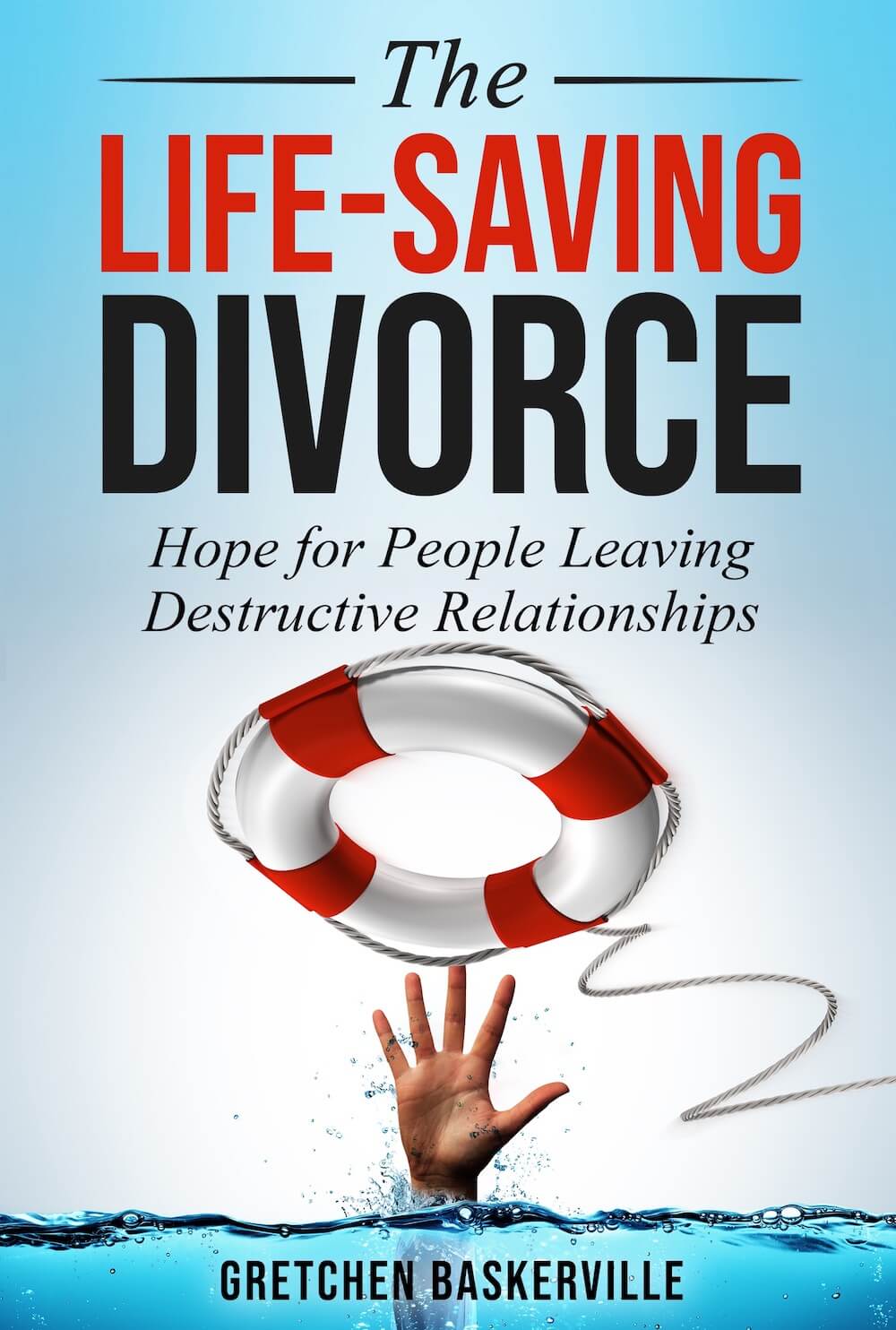
No doubt this is why so many past participants in unsafe circumstances follow me on Facebook and join my free Life-Saving Divorce Private Group on Facebook for people of faith.
When Faith and Communication Replace Safety
A common problem in Focus on the Family marriage counseling
“Strong marriages and families are the cornerstone of a vibrant and successful society, and widespread marital decay leads to a weakened society.”
— Restoring Hope, p. viii
This worldview elevates staying married as a sacred duty for the health of families and communities. Within it, the role of therapy centers on restoring communication and harmony—noble goals that reflect deep covenant faithfulness.
Yet commitment and safety are not the same thing. A marriage that honors God must also be safe, respectful, and faithful in practice. People come to these intensives precisely because their marriages have ceased to be so.
Spiritual Framing That Shames Victims
“Spouses who are already determined to exit their marriage and reject the possibility of a miracle from God are respectfully and sensitively referred to other resources.”
— Restoring Hope, p. 190
This frames divorce as a lack of faith, not a valid option for distance and safety. Victims are urged to keep communicating, keep praying, keep hoping—rather than to get away from their abuser. It’s spiritual pressure disguised as pastoral sensitivity.
Yet Scripture doesn’t command people to endure harm. The Bible repeatedly tells believers to turn away from evildoers and to have nothing to do with those who exploit or abuse (2 Timothy 3:1–5; 1 Corinthians 5:11). Protecting oneself from violence or cruelty isn’t rebellion against God—it’s obedience to His heart for justice and dignity. Sometimes the most faithful act is not staying, but running from those who destroy peace and safety.
Abuse Declared “Beyond the Scope”
Why this makes Hope Restored unsafe for abuse victims
“A comprehensive treatment of abusive dynamics in marital therapy is beyond the scope of this text.”
— Restoring Hope, p. 274
This is the official therapy manual’s most revealing admission. By declaring abuse “beyond the scope,” the authors excuse themselves from addressing the single issue that determines whether therapy can occur safely and the entire reason that abuse victims attend.
They add that couples with “significant concerns about abuse dynamics” are usually screened out and “sensitively referred.” But in the same paragraph, they concede that some spouses say they’re already in therapy and “sufficiently in command of their personal safety” to participate anyway.
Translation: if someone insists they’re safe—and can pay the $3,000-$6,000 fee and are open to God doing a miracle—Hope Restored will still accept them. Once inside, therapists “process how they will attend to their safety” during the intensive. In other words, safety planning happens after intake, not before.
Sometimes, the authors note, the “clarity and severity” of abuse only emerge mid-program, forcing couples to exit early. This isn’t trauma-informed care—it’s liability management. If communication coaching continues while violence or coercion is present, therapy can retraumatize victims and empower abusers.
This is a well-documented problem in marriage counseling and abuse, where communication-based therapy increases risk when coercion or violence is present.
If communication coaching continues while violence or coercion is present, therapy can retraumatize victims and empower abusers.
This pattern is well documented in marriage counseling and abuse, especially when pastors or counselors are not trained to identify coercive control.
Ignoring The Research They Include in the Manual
“A successful outcome for such couples may include them deciding to terminate the relationship (Wood et al., 2005), and couples therapy may be contraindicated (Christensen et al., 2004).”
— Restoring Hope, p. 331
On at least three pages, authors cite research showing that in severely distressed or violent marriages, couples therapy can be harmful, and sometimes the healthiest outcome is terminating the relationship. Yet they never integrate that finding into their therapy model. Instead, they double down on communication and spiritual unity—precisely the tactics research warns can escalate danger when abuse exists.
When “Never Suggesting Divorce” Becomes Dangerous
“If God were to perform a miracle in your marriage, would you be willing to accept it?… Nowhere within that focus is divorce assistance.”
— Restoring Hope, p. 190
This “miracle question” is required of all participants. If you say no—even for safety reasons—you’re ineligible.
But evidence tells a different story: divorce saves lives. A Harvard study found that when divorce laws were changed in the 1970s, suicide by wives, domestic violence, and homicide of wives by their husbands all declined. Giving people a way out saved lives.
What Attendees Say (Anonymized)
These first-person accounts (summarized and quoted from attendee responses) show the pattern: initial hope fueled by intensive communication work, followed by disillusionment when deeper harm resurfaces. Costs commonly ranged from $3,000–$6,000, sometimes sponsored by friends or churches.
“My hope was restored. I had hope my husband cared and wanted to work on us.” — About the same
“We wanted a healthy relationship and to understand each other. We’re divorced.”
“I felt responsible. I hated giving up without trying… after the intensive, I knew it was over.” — Now separated.
“We got tools and felt hopeful, but it didn’t address the deeper issues.” — Now separated
“I wanted boundaries and a miracle. We’re separated.” (Paid >$3k)
“I was done, but hoped they’d tell my husband he needed help. Clarity—we’re separated.”
“I reported physical abuse during the trip. We left worse than we came.”
“They failed to call out my husband’s adultery and gaslighting. I was blamed.” —Now Separated
“We left hopeful; on the drive home he said nothing had changed.” —Now Divorced.
“I thought we were healed… we’re divorced.”
“The intensive was amazing and a turning point for us.” Better now.
Taken together, these stories show a consistent throughline: short-term hope from communication work often collapses when unaddressed patterns—coercion, deceit, rage, addiction—resurface. In a few cases (about 15%), couples reported meaningful improvement; in many others, separation or divorce follows.
Is Hope Restored Trauma-Informed or Evidence-Based?
No. While the book uses the word “trauma” occasionally, it never discusses PTSD, coercive control, or trauma-informed practice. Instead, it relies on prayer, forgiveness, and communication techniques to mend marriages—even those marked by fear or harm.
This isn’t clinical therapy; It isn’t “safety-first” counseling. It is pastoral coaching or “marriage-first” counseling. When a counseling model teaches communication but omits trauma assessment, it doesn’t empower—it endangers.
This is why Focus on the Family marriage counseling models like Hope Restored are not trauma-informed.

🧭 How to Tell If Your Counselor Puts Safety First Before healing can happen, you need to know you’re safe — emotionally, physically, and spiritually.
What Clients Expect vs. What They Actually Get
In Restoring Hope, the authors acknowledge that couples arrive at Hope Restored with powerful expectations. Many come desperate, told this is their “last chance,” believing they’re about to witness a miracle—that God will use this $3,000–$6,000 weekend to save their marriage.
But the fine print tells a different story.
In the section on Collaborative Goal Setting (pp. 254–259), therapists are instructed to “shape” or “adjust” participants’ expectations if they are “unrealistic or nontherapeutic.” In practice, that means couples who came for help fixing betrayal, addiction, or abuse are quickly redirected to work on communication skills and self-responsibility. The book warns therapists to reframe clients’ goals toward “what they can control,” meaning their own attitudes—not their partner’s harmful behavior.
So, while the marketing promises divine transformation, the reality is a kind of spiritual bait-and-switch. Participants who come hoping for repentance or rescue often leave with a few talking tools and the message that they must change how they respond to pain.
One woman wrote, “I hoped for a miracle. My husband had been cheating and lying. We left with ‘communication tools,’ but the deeper issues were never addressed.”
Another said, “They taught us how to talk better—but not how to stop the abuse.”
The contradiction couldn’t be starker: Hope Restored asks you to believe in a miracle but delivers a workshop in polite conversation. It preaches divine intervention but practices interpersonal technique. And for those trapped in destructive marriages, that gap between expectation and reality isn’t just disappointing—it can be devastating. No wonder that independent surveys find that more than 7 in 10 Hope Restored attendees later divorce or separate.
Why Avoiding the Possibility of Personality Disorders Is Dangerous
Restoring Hope never mentions narcissism, sociopathy, or antisocial behavior—conditions that often drive chronic manipulation and abuse. Without screening for these patterns, counselors can mistake cruelty for “poor communication” and advise victims to speak more gently to those who harm them.
Ignoring pathology doesn’t make therapy more faithful; it makes it less safe. It’s no wonder I hear so many stories of wives weeping in despair during the intensive — and being ignored.
Shifting the Blame for Program Ineffectiveness to the Victim
The paragraph at the top of page 271 is a classic example of double-speak: it appears to acknowledge there may be danger from a deceitful or abusive spouse while subtly reframing responsibility away from the therapist and onto the victim.
Click to read full paragraph from the manual
“A significant challenge to the therapeutic alliance between a couple in distress and their marriage therapist/counselor may be how the professional addresses dynamics of abuse occurring in the relationship. Spouses may be exceedingly sensitive and reactive to the suggestion that their behavior in the relationship is abusive to their spouse. An abused spouse may be struggling with feelings of fear and anxiety about disclosing abusive patterns, reluctant to invite greater inquiry about details of the relationship which would alert the therapist/counselor to the abusive dynamics occurring. Most experienced marriage therapists and counselors recognize how delicate and yet critical it may be to address abusive dynamics occurring in the relationship, even if it stresses the therapeutic alliance being sought with a couple.”
— Restoring Hope, p. 271
.
At first glance, this seems balanced and professional. It acknowledges that therapists must assess risk and that abuse can be complex. The authors frame abuse assessment as a delicate balance between truth-telling and preserving the therapeutic bond. Yet this framing risks shifting responsibility away from the therapist and toward the couple’s self-disclosure—a move that can inadvertently protect the alliance—the courteous, peacekeeping tone between the spouses and the therapist—more than the abused partner. In professional counseling models that are safety-first and trauma-informed, safety must always precede alliance, not compete with it.
And there’s even a deeper problem.
This paragraph quietly shifts responsibility for identifying abuse onto the couple rather than the professional Hope Restored therapist. It says that therapy is complicated when “one or both spouses do not self-identify as abusive” — implying that unless an abuser openly admits their behavior, the therapist’s hands are tied. That’s false and ethically indefensible.
In professional trauma-informed counseling, it is the therapist’s professional duty to assess and name abuse, regardless of self-report. Abusers rarely “self-identify.” Victims often minimize or hide their fear. When a model treats denial as a barrier instead of a symptom, it effectively excuses the professional from intervening. This is why on the last day of the intensive, half people in an independent survey said they left the intensive “hopeful” and the other half left confused, disappointed, hopeless, indifferent, injured, or worse.
Then comes the rhetorical sleight of hand: the paragraph concludes by urging both spouses to be “honest about how their interactions affect one another.” That sounds fair, but it’s a false equivalence — equating mutual communication breakdown with abuse. It recasts a power imbalance as a shared “interaction problem.”
Here are some comments from Hope Restored participants:
“The screening process should have caught that we had a toxic relationship and not let us go.”
→ This shows the program’s failure to screen for danger — exactly what the book calls a “delicate challenge” for maintaining the therapeutic alliance (aka keeping the peace).
“At the end of one of the sessions, my husband verbally attacked me in front of everyone. The counselors did not address this at all… At the end of the week, they praised my husband for being ‘so committed to his marriage.’ It was sickening.”
→ This is the clearest real-world proof of the danger: therapists prioritized keeping the peace over addressing open aggression.
“I felt bruised and undermined and felt like he was viewed as a victim due to his childhood… I was emotionally and psychologically abused by him, but the tables were turned. They said ahead of time the intensive wasn’t for domestic violence, but I didn’t know I was in an emotionally destructive marriage.”
→ This shows how abusers are reframed as wounded while victims are treated as overreactive — a hallmark of “therapeutic alliance” over truth-telling.
📚 For Further Reading
🔎 On Hope Restored Marriage Intensives (All Related Posts)
-
Hope Restored Marriage Intensive: Real Results From 44 Former Attendees
https://lifesavingdivorce.com/hoperestoredattendees/ -
The Truth About Focus on the Family and the Hope Restored Study: What the 2011 Research Really Says
https://lifesavingdivorce.com/hoperestoredfail/ -
Are Focus On The Family’s Hope Restored Marriage Intensive Miracle Claims True?
https://lifesavingdivorce.com/fotfevidence/ -
Breaking: Hope Restored Marriage Intensive “Miracle Claims” Violate FTC Regulations
https://lifesavingdivorce.com/hoperestoredftc/ -
Will a Marriage Intensive Fix Your Marriage? (Independent survey findings)
https://lifesavingdivorce.com/marriageintensives/
🛑 Safety-First Counseling vs. Marriage-First Counseling
-
Safety-First vs. Marriage-First Counseling
https://lifesavingdivorce.com/safety-first-counseling/ -
Marriage Counseling in Abusive Situations is Unethical
https://lifesavingdivorce.com/couplescounseling/ -
The Bible Teaches Us to Get Away from Abusers
https://lifesavingdivorce.com/runfromabusers/
📖 Biblical Grounds & Abuse
-
Adultery, Abuse, Abandonment are Biblical Grounds for Divorce
https://lifesavingdivorce.com/abuse-in-bible/ -
Jesus’ Greatest Divorce Sermon – Luke 13
https://lifesavingdivorce.com/luke-13-jesus-rescue-abusive-marriage/ -
Does God Hate Divorce? What Malachi 2:16 Really Says in 18 Bible Translations
https://lifesavingdivorce.com/malachi/
🧠 Understanding Abuse & Manipulation
-
130 Examples of Abuse: Physical, Emotional, Sexual, Spiritual, Financial and Neglect
https://lifesavingdivorce.com/130examples/ -
What Is DARVO? How Abuse Survivors Are Silenced by Deny, Attack, and Reverse Victim Offender
https://lifesavingdivorce.com/what-is-darvo-abuse-survivors-silenced/ -
Is Gary Chapman’s Marriage Advice Safe for Abuse Victims?
https://lifesavingdivorce.com/chapman2/
💬 For Those Feeling Pressured to “Just Try Harder”
-
Churches That Block Abused Wives (and Husbands) From Divorcing
https://lifesavingdivorce.com/policy/ -
Do Evangelicals Shoot Their Own Wounded Divorcees?
https://lifesavingdivorce.com/evangelical-churches-stigma/ -
Does A Divorce Mean My Faith Is Weak?
https://lifesavingdivorce.com/faith/
 :
:
 :
: Buy PDF