Is Gary Chapman’s Marriage Advice Safe for Abuse Victims? A Critical Review of Focus on the Family’s Claims and Credentials

by | Nov 29, 2025 | Christians and Divorce, Focus on the Family, Hope Restored Marriage Intensive

Every time Gary Chapman gives marriage advice, abusive husbands pick up new ideas for manipulating their wives — and his new Focus on the Family interview, “How to Have a Better Marriage,” is no exception. In this post, I examine whether Chapman’s marriage advice is safe for abuse victims, whether the video claims about research are accurate, and whether he has the counseling credentials implied by Focus on the Family and by his own public bio.

This is the 3rd in a series of exposés on Gary Chapman — the pastor, author, and unlicensed “marriage counselor” whose teachings routinely blame wives for their husbands’ destructive and abusive behavior.

See my critique of his 6-part video series that blames wives for their husbands’ marriage-destroying sins — including alcoholism and physical violence:
👉 https://youtu.be/Kk5GTMlZPNY?si=4nJu4yiHnpa1WJDH

And read 50 responses from people in my private group, The Life-Saving Divorce, who know firsthand that his claim “divorce never makes people happy” is pure bunk:
👉 https://lifesavingdivorce.com/chapman


🚩 When Chapman Talks, Abusers Cheer

Every time Gary Chapman opens his mouth, abusive husbands know he’s their best buddy. The latest example? His new Focus on the Family interview, where he repeats a now-classic Chapman move: presenting harmful teachings with pastoral confidence and zero accountability.

Now, to be fair to Gary, I will say that the first half of this interview had one good segment. He admits some of his terrible treatment of his wife and explains how he changed because he wanted to become a pastor and didn’t want to have a bad marriage.  However, the second half of the interview was dismal.


💥 The “Happy” Trap: How Chapman Minimizes Real Harm

One of the most manipulative moves in this interview is Chapman’s obsession with the word “happy.” He talks as if marriage problems are just a matter of “unhappiness,” like you’re grumpy or bored—not like you’re being lied to, controlled, gaslit, cheated on, or physically threatened (24:17). By reducing profound betrayal and abuse to mere “unhappiness,” he erases the seriousness of the harm and reframes the victim as someone who just needs a better attitude. This is classic spiritual gaslighting: if you leave to find safety, you’re “seeking happiness” instead of fleeing danger. Chapman’s language protects abusers by making the victim’s suffering sound petty, emotional, or trivial—when in reality, many spouses aren’t unhappy… they’re unsafe.


🙏 Six Months of Self-Abasement, Courtesy of Gary Chapman

The video gets worse. Chapman tells ‘hurting spouses’—meaning the betrayed or abused partner, not the offender—to spend six months apologizing, ‘fixing themselves,’ and loving their spouse in that spouse’s love language, no matter how they’re being treated.

Only after half a year of emotional boot-licking are they allowed to use “tough love,” which he defines as… moving in with your mother temporarily and inviting the abuser to counseling.

Perfect for men who want a compliant, spiritually guilt-ridden wife who blames herself for his behavior.


📜 The Covenant: Marriage Isn’t an Unconditional Covenant

Chapman also leans hard on the word covenant as if that means Christian marriage is unconditional and unbreakable, no matter what the spouse does. But biblically, that’s just wrong. As I explain in my article, “Is Marriage an Unconditional Covenant?” marriage is a conditional covenant, not a one-sided lifelong promise. In Scripture, God made two types of covenants: 2 conditional and 5 unconditional. Conditional covenants can be dissolved when one party trashes the terms—just like God divorced Israel for persistent unfaithfulness (Jer. 3:8). A spouse who lives in a pattern of adultery, violence, chronic deceit, or severe neglect has already broken the covenant. They tore it up. Pretending marriage is “unconditional” simply hands abusers a theological shield and tells victims that God requires them to keep suffering.


🌀 Confusing “Wanting Safety” with “Wanting to Change Your Spouse”

One of the most manipulative moves in this interview is the way Chapman and Daly blur the line between wanting your spouse to stop abusing you and “wanting to change your spouse.” (29:45) They make it sound as if a wife asking for basic safety—no violence, no cheating, no addiction-fueled rages—is the same as nagging her husband to load the dishwasher differently. This sleight of hand minimizes covenant-breaking behavior by lumping serious violations (abuse, betrayal, coercion, cruelty) in with ordinary marital disagreements like buying the wrong brand of toothpaste. Wanting a spouse to stop harming you is not “trying to change them.” It’s asking for the bare minimum of what the marriage covenant requires. Calling that “trying to change your spouse” is another way of blaming victims for expecting the vows to mean something.


🪵 How They Twist “Take the Log Out of Your Eye” Into Another Burden for Women

Chapman and Daly also twist Jesus’ teaching about “taking the log out of your own eye” (29:55) into a weapon that forces wives into silence. In their framing, a woman must focus on her own flaws first—no matter how small—before she can ever confront her spouse’s abuse, betrayal, or cruelty. Conveniently, this creates an impossible standard: she must be 100% perfect before she can ask for basic safety or accountability. By conflating “deal with your own shortcomings” with “you have no right to address your spouse’s covenant-breaking behavior,” they turn a teaching about humility into a gag order for victims. It shifts the moral weight onto the safer spouse while letting the destructive spouse off the hook entirely.


👑 The King David Distortion: Conveniently Leaving Out the Part Where David Escaped Abuse in the Bible

Chapman even cites David’s prayer, (“Search me, O God,”) as if self-examination for flaws (30:45) means silently enduring mistreatment. But notice what he leaves out: David didn’t stay and submit to King Saul’s abuse. He didn’t tell himself to “love Saul in his love language for six months” or look for the “log in his own eye.” David ran for his life. He hid. He sought protection. And ultimately, he did not return to Saul’s household—he took his rightful place as king. Using David’s introspection to pressure wives to stay in destructive marriages is a theological sleight of hand. David examined his heart, yes—but he also got away from the man trying to kill him.


🌩️ When “We Were Both at Fault” Really Means “Gary Was the Problem”

In Gary’s polished story in this particular video (minute 3:30), he frames his early marriage as two equally immature spouses who “both” yelled and “both” needed to grow. But in other interviews—like the With U Podcast”—his wife Karolyn Chapman’s own words tell a different story. She describes his expectations of her “obedience,” his certainty that he was always right, and his yelling, lectures, and harsh outbursts. She even recalls walking out into the rain to escape him. She comes across as dutiful, soft-spoken, deferential, and shaped by a very legalistic church culture. And the turning point wasn’t mutual blame and responsibility—it was Gary realizing that having a bad marriage was a bad look if he was going to be a pastor. When Karolyn speaks for herself, the narrative shifts: the marriage didn’t heal because two flawed people improved equally. It healed because the person creating the damage finally transformed by his own self-serving motivation — not out of love for his wife, but because he wanted to go to seminary and be able to say he had a good marriage.


💠 Highlighting Her “Flaws” While Justifying His Own Entitlement

Another troubling moment in the interview is how casually Gary shares stories about his wife’s “foibles”—like misplacing her car keys—inviting the audience to chuckle at her expense, while using those same stories to defend his own refusal to change basic behaviors such as picking up his clothes. Beneath the humor is an old, familiar script: her imperfections excuse him from putting in effort. Instead of showing gratitude that she tolerates his habits, he treats his messiness as a right he doesn’t need to reconsider.

This isn’t mutual grace; it’s a subtle power play. He turns her ordinary human mistakes into a reason why he doesn’t need to grow, framing his intentional choices—and his refusal to adjust them—as simply part of the deal she must accept as his wife.

And it fits a larger pattern of minimizing her. In a 2024 joint interview about their marriage, Gary points out Karolyn’s “deficits” over and over, including a mention that he only noticed Karolyn after his first-choice girlfriend (who he really loved) dumped him. Even now, 63 years after they married, he views himself as the prize.


🧩 Chapman’s Questions: Fine for Safe Couples, Dangerous for Destructive Situations

Chapman also trots out his usual “marriage tools”: the three questions he says every spouse should ask (“What can I do to help you? How can I make your life easier? How can I be a better husband/wife?”) and his five “apology languages” (“I’m sorry,” “I was wrong,” “How can I make it right?” “I won’t do it again,” and “Will you forgive me?”). These might be helpful in a normal marriage with mutual goodwill. But in a destructive marriage, they become weapons. Chapman treats serious covenant-breaking behavior—violence, deceit, infidelity, coercion, addictions—as if it’s just everyday conflict that can be fixed with better apologies and more self-sacrifice. He frames the victim’s desire for safety as a failure to “ask the right questions” or “interpret apologies correctly.” This shifts all the emotional labor onto the abused spouse, implying that if the marriage doesn’t improve, it’s because they didn’t serve enough, apologize enough, or understand their spouse’s “apology language.” It’s just another way of making victims responsible for their abuser’s behavior.


📊 The “University of Chicago Study” That Doesn’t Exist

In the interview, Jim Daly, president of Focus on the Family confidently cites a “University of Chicago study” (27:45)  claiming:

  • 85% of divorced people regret leaving, and

  • 85% of miserable couples who stay married end up happy.

Sounds authoritative—until you try to find it. The study doesn’t exist. There is no University of Chicago research with those numbers, no randomized groups, no “300 couples” assigned to divorce and 300 to counseling.

But accuracy isn’t the point. The claim is designed to guilt unhappy spouses—especially women—into staying, regardless of harm or danger.

The closest real research (Dr. Linda Waite, NORC, University of Chicago), which Focus on the Family often mentions, shows nothing like Daly’s neat little 85/85 morality tale.

Dr. Waite’s study explicitly says destructive marriages are unlikely to improve

Dr. Waite’s study from University of Chicago studied 645 couples and found that:

  • High-conflict and violent marriages are least likely to become happy.

  • Violence cases often see significant relief after divorce.

  • 8 in 10 people in the study who divorced and remarried were happier.

These are the parts Jim Daly and Focus on the Family never quote (even though they mention this study a lot) — and they come straight from the text.


🔁 The “You’ll Just Bring Your Problems Into the Next Marriage” Myth

And of course, Jim Daly trots out the old scare tactic that if you leave a destructive marriage, you’ll just “bring the same problems” into your second, third, or fourth marriage (minute 28:49). It’s a tidy little moral lesson—too bad it’s not backed by research. That same University of Chicago study itself found that 81% of unhappy spouses who divorced and remarried were happier in their next marriage. In other words, people in destructive marriages often don’t bring “the same problems” with them once they’re free from ongoing betrayal, violence, addiction, or contempt. Sometimes the only “problem” was the abusive spouse they left behind.


🗣️ The Comment Section Tells the Real Story

Scroll through the comments below the Focus on the Family video and you’ll see exactly who absorbs Chapman’s teachings: women in long-term abusive marriages saying “40 years in and he will never change,newlyweds already crying daily, and survivors told to “get over things without apologies.” These are the people Chapman instructs to apologize more, serve more, and look for the “log in their own eye.” Meanwhile, his mostly male fan club chimes in with, “He’s such a gift!” and “This is exactly what I needed”—a perfect snapshot of how his work comforts abusers and confuses victims. Focus on the Family’s own replies offer prayer and platitudes but never question the harmful theology they’re platforming. The comments prove that the people most likely to take Chapman seriously are the very people his advice harms most.


🚫 Hope Restored: No Screening, No Safeguards, No Reality

And in the comments, Focus on the Family loves to promote their Hope Restored marriage intensives. But here’s the part they never mention: they don’t screen for narcissism, coercive control, or personality disorders that the commenters mention—the very issues that make marriage counseling dangerous and ineffective. How do we know? Their manual says they don’t do professional screenings for abuse or safety. This means victims of emotional abuse, gaslighting, or coercive control get dropped into a high-pressure “save your marriage” program with someone who cannot engage honestly and has no intention of changing. Research is clear: marriage counseling is contraindicated for abusive and personality-disordered dynamics. But Hope Restored doesn’t ask the right questions, doesn’t evaluate for safety, and their own therapy manual and participants’ stories give examples of accepting people in the program who have a long history of violence, betrayal, and cruelty. It’s the perfect setup for victim-blaming, not healing. Oh, and their program isn’t very successful. Independent surveys and past participants’ stories suggest that 7 in 10 attendees divorced or separated after the program. See more about the problems with Hope Restored miracle claims here, here, and here.


🎓 The Mysterious Credential Inflation

Then there’s Chapman’s shifting résumé. Focus on the Family quietly revised Gary Chapman’s bio between 2023 and 2025. Suddenly in 2025 he’s a marriage-and-family counselor, even though he has no related degree or licensing.

Above: Gary Chapman’s bio on the Focus on the Family website as it existed in mid-2023.

Gary Chapman’s puffed up bio on the late-2025 Focus on the Family website.


Chapman isn’t a licensed counselor

Gary Chapman does not appear on the State of North Carolina’s public licensing database as a Licensed Clinical Mental Health Counselor or Marriage and Family Therapist. He holds degrees in anthropology and religious education, not counseling or therapy, marriage and family, sociology, or any other related field. It appears he’s just a pastor and author with opinions.

No listing for any Gary Chapman in North Carolina as a licensed clinical mental health counselor

One fact remains immovable:
The State of North Carolina shows zero counseling license for any Gary Chapman.
Not a Licensed Clinical Mental Health Counselor.
Not a Marriage and Family Therapist. Not a marriage counselor (as he claims to be on his own site).
Nothing.


🚪 What They Don’t Say: No Mention of Safety, Danger, or Biblical Grounds for Divorce

One of the most telling parts of this interview is what Jim Daly and Gary Chapman never say. Not once do they acknowledge that divorce may be biblically justified or necessary in cases of abuse, chronic betrayal, coercive control, or abandonment. They never cite Exodus 21 or the words of Jesus or Paul. They never reassure victims that God permits divorce to protect the oppressed. They don’t even challenge the common evangelical weaponization of “God hates divorce,” a phrase they and their own commenters parrot beneath the video. Instead, the only “escape hatch” they offer is a temporary separation — but make sure you tell your spouse you’re not divorcing them. It’s a stunning omission in a conversation supposedly about “better marriages.” By refusing to name divorce as a valid, God-honoring option for victims, they don’t leave room for safety at all. They leave only one dangerous path: endure, apologize, serve harder, and hope your abuser decides to change.


🛑 Christians Abuse Victims Deserve Better

Jim Daly and Gary Chapman’s teachings are a lifeline—for abusive husbands. And domestic violence victims deserve better than a guest whose “expertise” evaporates the moment you perform a basic license search, and who writes many titles that blame wives for husband’s destructive behavior and never gives them a permanent way out.


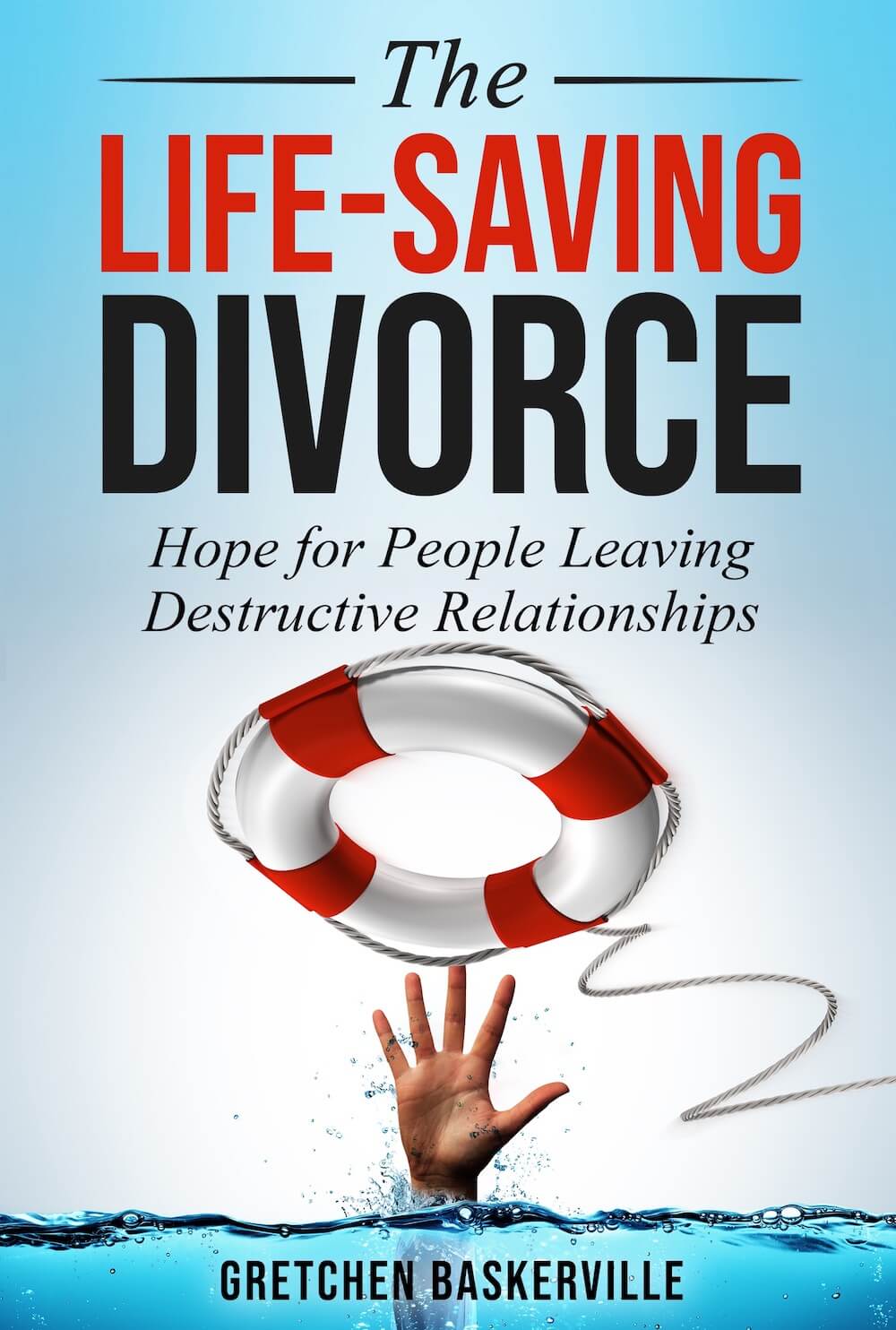
Are you going through a life-saving divorce? I’d like to invite you to my private Facebook group, “Life-Saving Divorce for Separated or Divorced Christians.” Just click the link and ANSWER the 3 QUESTIONS. This is a group for women and men of faith who have walked this path, or are considering it. Allies and people helpers are also welcome.  I’ve also written a book about spiritual abuse and divorce for Christians. You may also sign up for my email list below.

50 MOST POPULAR BLOG POSTS

Start Here

Physical and Emotional Abuse & Infidelity

God Allows Divorce to Protect Victims


Does God Hate Divorce? No, Most English Bible Translations Don’t Say That


How to Find a Good Supportive Church


What If My Pastor Says It Would Be Wrong to Get Divorced for Abuse?


Divorce Saves Lives: The Surprising (Wonderful!) Truth About Divorce Nobody Told You

Will I Ever Find Love Again? Dating After Divorce: Good News

Finding Happiness and Health After Divorce


Thriving After Divorce: These Christians Tell their Stories


Self-Doubt, Second-Guessing Ourselves, and Gaslighting

Children and Divorce: Researchers Give Hope


High Conflict Divorce and Parenting

Recommended Reading List and Free Resources for Christians and Other People of Faith


Common Myths


FREE


FOLLOW

Get the Life-Saving Divorce Book

The Life-Saving Divorce is about divorces for very serious reasons: a pattern of sexual immorality, physical abuse, chronic emotional abuse, life-altering addictions, abandonment, or severe neglect. This book will give you hope for your future, and optimism about your children. As an Amazon Associate I earn from qualifying purchases.

Ways to purchase the book

Order in paperback or KINDLE on   :

Order on   :

Sign up for the email list for find out about helpful new blog posts, videos, and FREE Kindle book giveaways