
HE NEVER HIT ME: SIGNS OF AN EMOTIONALLY ABUSIVE MARRIAGE
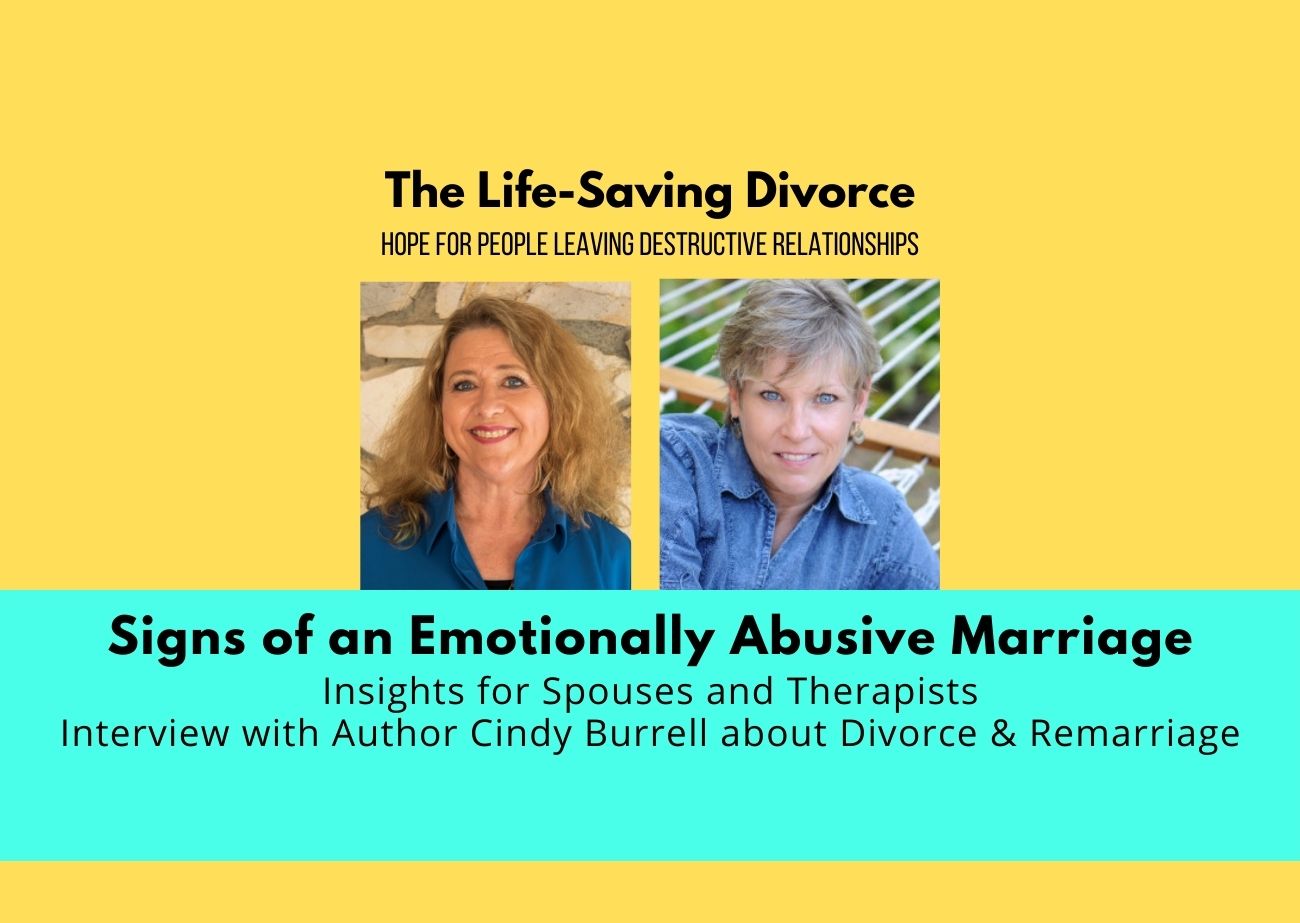
I interviewed Cindy Burrell who is the author of the book, “Why Is He So Mean to Me?“ and a writer on the topic of emotional abuse. She’s a mother of four. A survivor of a 20-year abusive marriage to a Christian man who memorized Scripture and taught on marriage topics at church, Cindy tells her story, and how she finally felt the Lord releasing her from the marriage. She tells about the process of recovery and rebuilding her life during and after divorce. She tells us about her kids, and she talks about having boundaries while doing online dating.
And don’t miss her wonderful (and surprising story) about she met her new husband 15 years ago (online!). She calls him the “love of my life.”
She also wants to give tips to people helpers, counselors, pastors, and therapists so they can do a better job at identifying mental abuse and help their clients. See timestamps below:
01:30 – Her story
02:25 – Examples of types of emotional abuse
03:20 – No counselor used the word “abuse” to describe her husband’s controlling behavior
04:00 – The tipping point: How the Spirit told her that living like this was insane.
05:00 – How well-meaning therapists and pastors accidentally pressure the victim and side with the abuser
08:00 – 1 Peter 3 requires husbands to be understanding and to give respectful treatment to their wives.
09:21 – How desperation drove her to divorce.
09:55 – God made a path to freedom, but she was still afraid of the future.
10:45 – Rebuilding your life is a walk of faith. Watch and see how God provides. A good counselor who understands abuse is beneficial.
12:15 – Getting past a negative view of men.
13:15 – Online dating disasters-and success
16:00 – Setting boundaries when doing online dating
18:00 – Meeting her husband online. Not “love at first sight.”
20:00 – Do you have too much baggage to remarry? No.
21:45 – How her children feel about her 2nd husband.
23:40 – Why do counselors miss abuse?
25:00 – How abusers deceive us. What happens when words, actions, and attitudes don’t line up?
26:00 – How abusers blame you for their marriage-destroying sin.
27:00 – Better ways for therapists to help abuse victims
30:10 – Examine the fruit of the abuser: are they bringing love, joy, peace, patience, etc., to your marriage?
31:00 – “Holiness over happiness” messages trap abuse victims in unsafe situations.
32:00 – How life-saving divorces make your home MORE holy, not LESS holy.
32:45 – Recommendations for therapists.
36:16 – We want to break the cycle to protect our children. The dysfunction ends with me.
37:50 – If you don’t leave abuse, your children may decide to either become predators or prey.
38:40 – Be careful about counselors whose goal is to keep your marriage together. An abusive marriage isn’t noble: it’s destructive.
38:56 – Dealing with regrets that you failed to protect your children, and didn’t get them out sooner.
43:00 – How to combat regret.
45:10 – Expecting criticism from church leaders who don’t understand. Praying about it. Talking to the Lord.
45:45 – When an abuser abuses, they’ve broken their vows.
48:00 – We need more Christian counselors who are trained in abuse.
48:45 – Sometimes well-meaning counselors accidentally treat abuse as a communication problem rather than a coercion or control problem.
49:30 – Abusers are charming and skillful at deceiving the counselor
50:00 – Counselors have a duty to warn if their clients are marrying someone with an issue known to have poor treatment outcomes: pedophiles, abusers, serial adulterers, etc.
CONTACT: cindyburrell@hurtbylove.com Book is available as a paperback or Kindle.
Recommended Reading from Life-Saving Divorce
Emotional abuse can be difficult to recognize—especially when there are no bruises, the abusive spouse appears respectable, or Christian counselors and church leaders treat the situation as an ordinary marriage conflict. These articles offer additional help for recognizing abuse, finding safer support, protecting children, and rebuilding your life.
1. Recognizing Emotional Abuse, Control, and Deception
- Is This Abuse? 130 Overt and Covert Warning Signs
Not all abuse is physical or obvious. This checklist identifies emotional, financial, sexual, spiritual, and coercively controlling behaviors that are often minimized. - Am I the One Destroying the Relationship? Or Is This Abuse?
Abuse victims often assume they are the problem because they have been blamed, criticized, and taught to distrust their own perceptions. - Emotional Abuse IS Physical Abuse: More Than 80 Examples from Medical Science
Chronic emotional abuse can affect the nervous system, physical health, sleep, concentration, and the body’s response to danger. - What Is DARVO? How Abuse Survivors Are Silenced by Deny, Attack, and Reverse Victim Offender
Learn how an abusive person may deny the behavior, attack the person who names it, and then portray himself as the true victim. - How to Tell if an Abusive or Deceptive Partner Has Really Changed
Apologies, religious language, tears, and counseling attendance are not the same as sustained repentance, accountability, and changed behavior.
“`
2. Finding Safe Counselors, Pastors, and Churches
- Safety-First vs. Marriage-First Counseling
Learn how to screen counselors and recognize whether their first priority is protecting people or preserving the marriage at any cost. - Marriage Counseling in Abusive Situations Is Unethical
When coercion or abuse is present, couples counseling may misidentify the problem, increase victim-blaming, and expose the abused spouse to retaliation. - Good vs. Bad Pastoral Counselors: Marital Abuse
Survivors describe the enormous difference between pastors who recognized the danger and pastors who pressured them to return to abuse. - 7 Shocking Signs Your Pastor Is Helping Your Abuser
These warning signs can help you recognize pastoral advice that minimizes abuse, automatically sides with the harmful spouse, or places children at risk. - Pastor Education: How to Respond Biblically to Abuse and Betrayal in Marriage
A resource for pastors, ministry leaders, counselors, and people helpers who want to respond wisely without pressuring victims to remain unsafe.
“`
3. Protecting Children and Rebuilding After Divorce
- Is It Best to Stay for the Kids? What 50 Years of Divorce Research Actually Shows
Children need safety, stability, and supportive adults—not simply parents who remain legally married while the home is filled with fear, hostility, or abuse. - I Wish I’d Left Sooner: What Parents Learned About Divorce and Kids
Parents reflect on how years of volatility, emotional abuse, and walking on eggshells affected their children—and why many wish they had acted sooner. - 7 Reasons to Have Hope for Your Kids After Abuse and Divorce
Research offers real reasons for hope, particularly when divorce removes children from chronic tension, intimidation, addiction, or violence. - Christians: Life After Divorce—Real Stories of Challenge, Healing, and Hope
Divorced Christians describe recovering peace, safety, self-respect, financial stability, healthier relationships, and more peaceful homes for their children. - Dating After Divorce When You Have Trust Issues
Practical guidance for maintaining boundaries, recognizing character, and learning to trust carefully after abuse or betrayal.
“`
You are not required to wait for physical violence before taking emotional abuse seriously. A marriage can be profoundly destructive even when the abusive spouse never leaves a bruise.
 :
:
 :
: Buy PDF