
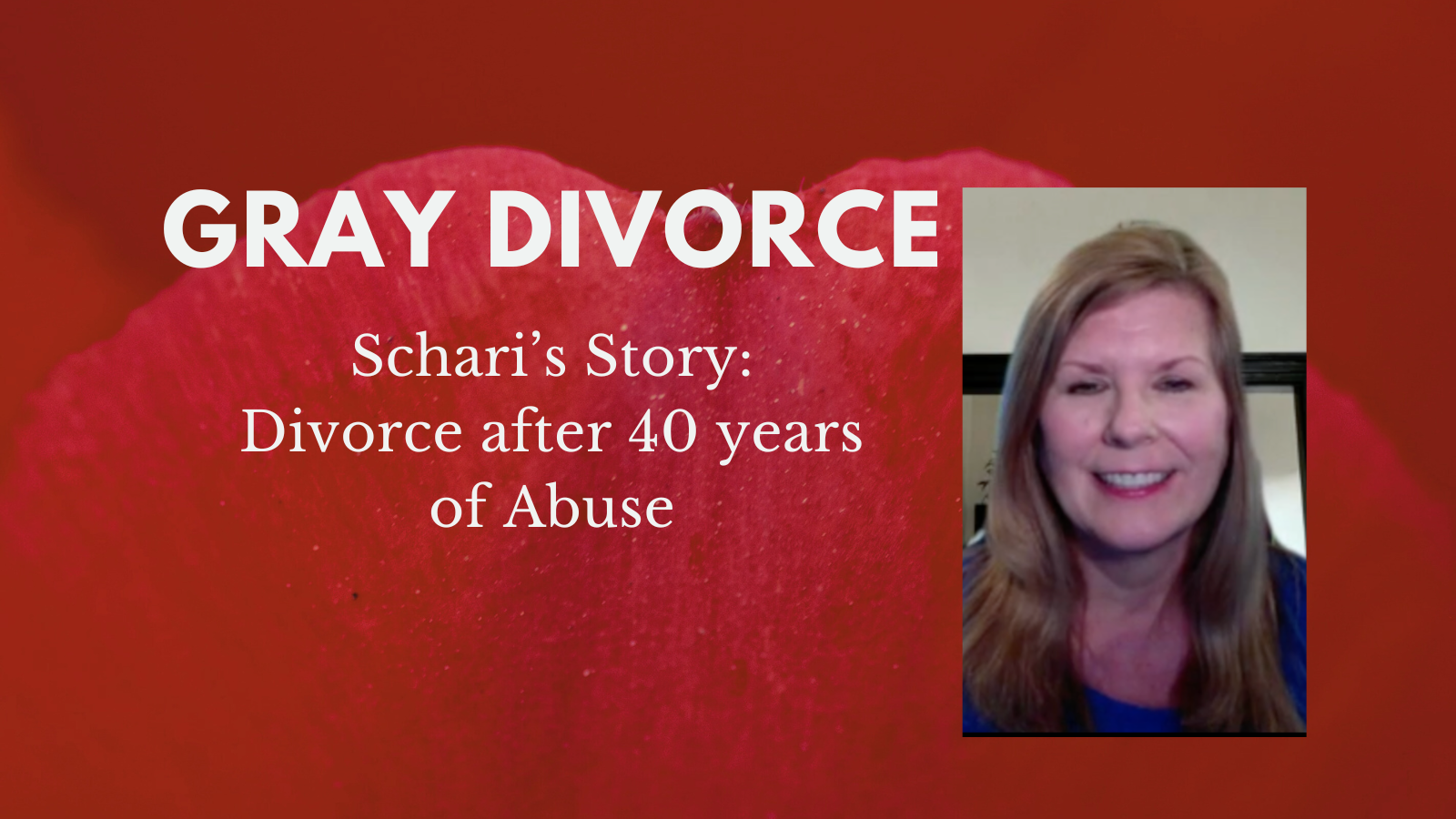
Why Some Christian Women Get a Gray Divorce After Decades of Abuse
Why would a Christian woman divorce just weeks before her 40th anniversary?
That question confuses many people when they hear about a gray divorce. Financial experts worry about retirement. Friends may wonder why someone would leave so late in life. Church people may quietly think she should just endure a little longer.
But survivors understand.
Sometimes a gray divorce is not reckless. Sometimes it is life-saving.
Schari is a committed Christian woman and mother of three who escaped an abusive marriage just weeks before her 40th anniversary. From the outside, some people might assume she gave up late. But that is not what happened. She endured decades of physical, emotional, and financial abuse before finally breaking free. Her story helps explain why many older women leave long marriages in their 50s, 60s, and beyond.
It also exposes a painful truth: sometimes the very church messages that are supposed to protect women instead keep them trapped. If you are new here, start with What Is a Life-Saving Divorce?, because this site is about divorces for very serious reasons, not casual dissatisfaction.
Video: Schari’s Story
Why Gray Divorce Makes Sense to Survivors
People often talk about gray divorce as if it is a mystery. Why would someone risk financial security in retirement? Why start over after so many years? Why leave now?
But those questions often miss the point.
The better question is this: What was happening in that marriage that made leaving feel safer than staying?
That is the question Schari’s story answers.
In many long marriages, especially destructive ones, the wife stays busy raising children, managing the home, serving others, and trying to hold everything together. She may know something is deeply wrong but not fully have language for it. She may keep hoping things will improve. She may believe staying is more biblical than leaving.
Then the children grow up.
The house gets quieter.
The distractions disappear.
And suddenly the truth is harder to ignore.
That is one reason gray divorce makes sense to survivors. It also connects with one of the turning points I wrote about in Help! I Am Alone with the Abuser (often Gray Divorce). Once the children leave home, some women realize they are alone with a spouse who has no intention of making the marriage safe, respectful, or loving.
If that is where you are, you may also relate to Depression, Suicidal Thoughts and Medical Issues and This Really Is Abuse! It’s not Normal Marriage Ups and Downs.
A Marriage Marked by Fear and Harm
Schari describes the man she married as terrifying and violent. This was not a mildly unhappy marriage. It was a destructive marriage that endangered her and the children physically, emotionally, and financially.
That distinction matters.
Too many people still talk as though all divorces are basically about selfishness, boredom, or lack of commitment. But many long marriages end because of abuse, infidelity, addiction, coercion, neglect, and contempt. If you need language for what destructive relationships look like, see 130 Examples of Abuse: Emotional, Physical, Financial, Spiritual and Gaslighting and Why Trying to Fix an Abuser Doesn’t Work.
Schari’s marriage was not preserved by staying in it. The only thing preserved for many years was the appearance of endurance.
Why She Stayed So Long
This is the question many people ask, but often in the wrong spirit.
They ask, “Why didn’t she leave sooner?” as if the main mystery is the victim’s delay.
But women stay for many reasons. They stay because they are afraid. They stay because they have children. They stay because they have been taught false things about divorce and children. They stay because they lack support. They stay because they are trauma-bonded. They stay because they have spent years trying to be good enough, respectful enough, forgiving enough, and prayerful enough.
And many stay because of church teaching.
Schari’s story highlights the religious messages that kept her trapped. She had absorbed the kind of counsel many Christian women hear in abusive marriages: pray more, respect better, submit more, forgive more, try harder. If those messages sound familiar, please read Safety Is Biblical: When a Marriage Becomes Harmful, Does the Bible Say Women Should Suffer Abuse and Violence?, and Does God Hate Divorce? What Malachi 2:16 Really Says.
You may also want Unconditional Love Doesn’t Mean Staying, because unconditional love doesn’t mean staying no matter how they treat you.
When Church Counsel Becomes Dangerous
One of the most important parts of Schari’s story is what happened with her church counselor.
For the first six months, he gave her bad advice. He did not recognize the abuse as he should have. He encouraged responses that assumed the problem could be solved through better respect, more prayer, and ordinary marriage help.
This is not unusual. It is tragically common.
Many counselors, pastors, and church leaders are trained to think in terms of mutual marital problems when the real issue is oppression. They look for communication problems when one person is being terrorized. They recommend marriage counseling when the situation calls for safety, clarity, boundaries, and sometimes escape.
If that has happened to you, please read Good vs. Bad Pastoral Counselors: Marital Abuse, Safety-First vs. Marriage-First Counseling, Marriage Counseling in Abusive Situations is Unethical, and “We Saw Five Christian Marriage Counselors, But Still Divorced”.
That kind of counsel is not merely unhelpful. It can be life-threatening.
After the interview, Schari wanted to add something important. She said those first six months nearly destroyed her. She described self-harm, suicidal thoughts, taking six times the correct dosage of medications with wine, sitting in a cemetery dreaming of being there, severe insomnia, and hysterical nighttime breakdowns. She almost died while being told to “respect better, pray more, blah blah blah!”
The church needs to hear this.
Abuse-blind counsel is not a benign mistake. It can push a desperate victim closer to death. You can’t pray abuse away. You can’t respect your way out of someone else’s violence. And you cannot build a safe marriage with a person who is committed to domination, cruelty, or contempt.
The Good News: Her Counselor Changed
There is a hopeful twist in this part of Schari’s story.
The counselor changed.
At first he was enabling the abuse, but then he became wise and discerning. He recognized what was happening and helped save her life. He helped her escape and rebuild.
That matters because it shows that pastors and counselors can learn. They can repent of bad frameworks. They can stop confusing abuse with ordinary marital conflict. They can stop putting marriage first and start putting safety first. For more on that difference, see Safety-First vs. Marriage-First Counseling and Safety Is Biblical.
Why Victims Often Don’t Realize They’re Being Abused
Another important theme in Schari’s story is that many severely abused spouses do not immediately identify their experience as abuse.
That surprises outsiders, but it should not.
Abuse is confusing by design. It distorts reality. It trains the victim to doubt herself, minimize what happened, and focus on fixing her own reactions. Especially in Christian settings, women are often taught to interpret mistreatment through a lens of endless endurance, humility, forgiveness, and sacrifice. Those virtues can be weaponized against them.
If you married young and spent decades trying to survive one destructive relationship, you may not know who you are apart from that system. You may know you are miserable, exhausted, fearful, numb, depressed, or physically unwell. But you may not yet have the language to say: This is abuse.
If that is where you are, see This Really Is Abuse! It’s not Normal Marriage Ups and Downs, When Your Friend Doesn’t Believe You’re Being Abused, and Someone I Respected Told Me I was Free to Go—If I Wanted To.
Rebuilding a Self After Abuse
Leaving is not the end of the story. It is the beginning of another one.
Schari’s interview also touches on what comes after escape: developing self-respect after abuse, finding your separate identity, dealing with anger, wrestling with forgiveness, coping with depression, and addressing health problems that stem from years of trauma.
This is especially hard for women who married very young. If you have spent your adult life in survival mode, you may not know what you enjoy, what you believe, what boundaries you need, or even what kind of life you want. Recovery is not just about legal freedom. It is about recovering a person.
If you are wondering what life can look like afterward, read Christians: Life After Divorce — Real Stories of Challenge, Healing, and Hope and Thriving After Divorce: 5 Christian Stories After Abuse, Betrayal, and Destructive Marriages.
Gray Divorce Is Not About “Giving Up”
Too many discussions of gray divorce are shallow. They talk as though older couples split because they got bored, wanted adventure, or stopped trying.
That certainly happens sometimes. But many gray divorces happen for reasons far more serious.
Schari did not leave a good marriage too soon.
She left a destructive marriage very late.
And that is true for many survivors. They stayed for years. They stayed for the children. They stayed for church. They stayed because they were told divorce would harm everyone more than abuse would. They stayed because nobody around them knew how to distinguish ordinary marital hardship from profound betrayal and oppression.
If you want more on why people leave later in life, read Gray Divorce: One Woman Tells Her Story and Help! I Am Alone with the Abuser (often Gray Divorce).
A Life-Saving Divorce
When people hear the term gray divorce, they often think first about cost.
Schari’s story invites us to think first about survival.
Yes, leaving a long marriage later in life can be financially costly. It can be socially painful. It can be spiritually disorienting if a woman has spent decades being told God requires her to stay. But remaining in a destructive marriage also has costs: emotional collapse, physical illness, loss of identity, suicidality, fear, and the slow death of hope.
That is why some women leave late.
Not because they suddenly became selfish.
But because they finally found the strength, clarity, and support to stop dying inside.
And thank God Schari still left.
Because sometimes gray divorce is not the end of commitment.
Sometimes it is the beginning of freedom.
Part 2 of Schari’s story:
Related reading:
- Gray Divorce: One Woman Tells Her Story
- Help! I Am Alone with the Abuser (often Gray Divorce)
- Good vs. Bad Pastoral Counselors: Marital Abuse
- Safety Is Biblical: When a Marriage Becomes Harmful
- Safety-First vs. Marriage-First Counseling
- Marriage Counseling in Abusive Situations is Unethical
- “We Saw Five Christian Marriage Counselors, But Still Divorced”
- Does the Bible Say Women Should Suffer Abuse and Violence?
- Unconditional Love Doesn’t Mean Staying
- Does God Hate Divorce? What Malachi 2:16 Really Says
- Why Trying to Fix an Abuser Doesn’t Work
- Depression, Suicidal Thoughts and Medical Issues
- This Really Is Abuse! It’s not Normal Marriage Ups and Downs
 :
:
 :
: Buy PDF