
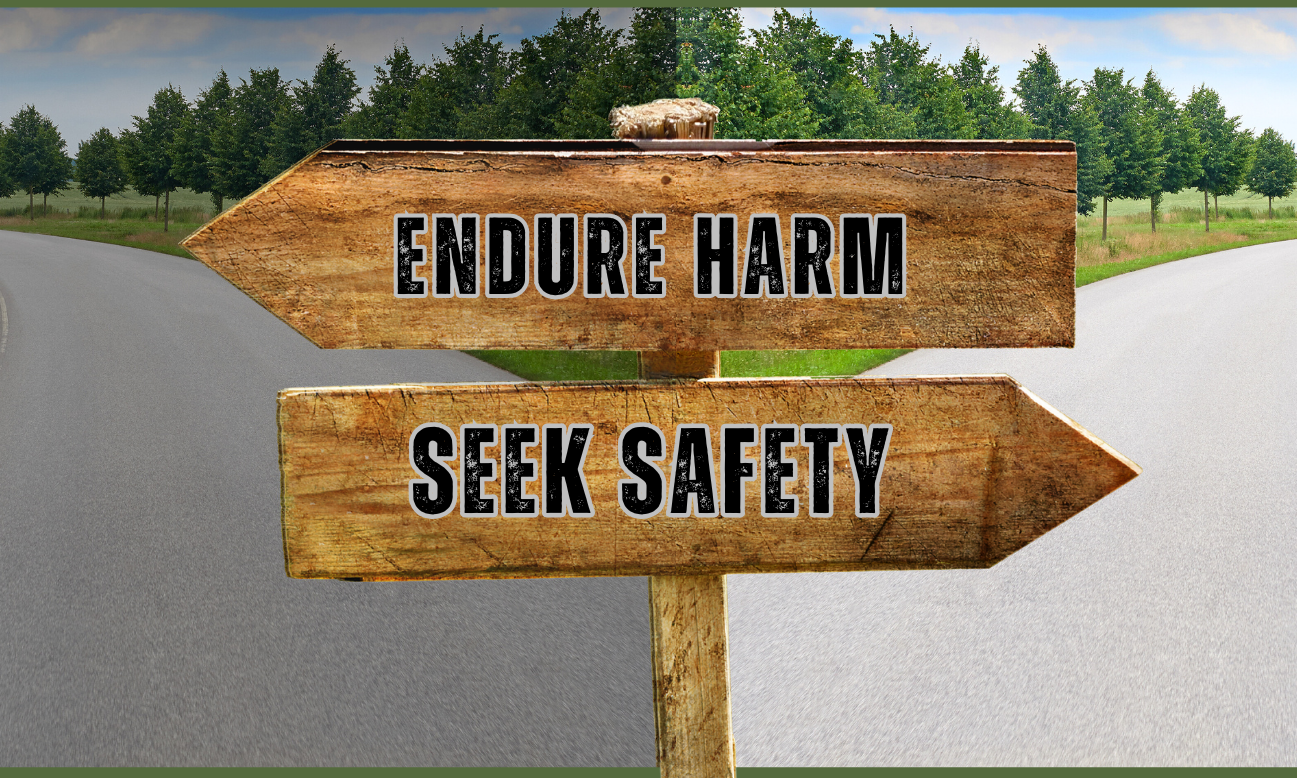
Getting to Safety Is Biblical When a Marriage Becomes Harmful
Almost every time I say, “Safety is biblical,” someone pushes back and brings up one of the 8 standard objections. So let’s walk through them carefully.
First, let’s be clear: I am not talking about avoiding discomfort, criticism, or ordinary marital conflict.
I am talking about serious, pattern-level harm: fear and intimidation, sexual immorality, deception and betrayal, chronic withdrawal, coercive control, domination, exploitation, physical or sexual harm, family-crushing addictions, monitoring and isolation, a secret double-life, emotional cruelty, severe neglect, and the kind of chronic indifference that makes a person feel invisible and worthless.
These harms can be done by husbands or wives. Men can be abused. Women can be abused. Safety, truth, dignity, and refuge are not female-only categories.
Safety is not an escape from difficulty. It is a refusal to treat harm as normal or to keep giving an abuser or betrayer opportunity to sin.
Justin and Lindsey Holcomb write from a conservative evangelical context and argue that the Bible does not require a woman to stay in an abusive marriage. In Does the Bible Say Women Should Suffer Abuse and Violence?, they argue that Scripture does not require a woman to remain in abuse, that she can and should flee, and that the Bible does not call Christians to endure avoidable suffering. That principle does not apply only to women. Men too are image-bearers of God, and men too may need to flee abuse, coercion, degradation, or serious pattern-level harm.
Let’s look at the 8 standard objections (below).
Related reading
- Does the Bible Say Women Should Suffer Abuse and Violence? — Justin S. and Lindsey A. Holcomb
- Adultery, Abuse, Abandonment are Biblical Grounds for Divorce
- Marriage Is a Conditional Covenant (Not an Unbreakable Promise)
- Unconditional Love in Marriage Does Not Mean Enduring Abuse
- 5 FREE Self-tests for Abuse
Ordinary Marital Difficulty vs. Serious, Pattern-Level Harm
Ordinary Marital Difficulty
- Disagreements
- Personality differences
- Misunderstandings
- Ordinary frustration
- Conflict that can be addressed honestly
- Immaturity that is not abusive
Serious, Pattern-Level Harm
- Fear and intimidation
- Coercive control
- Chronic contempt or degradation
- Deception and betrayal
- Physical or sexual harm
- Severe neglect or chronic indifference
Scripture treats human beings as image-bearers whose bodies, minds, and lives matter to God. Taking refuge from danger is not worldliness. It is wisdom (Proverbs 22:3).
So let’s answer the 8 usual arguments.
Objection #1: “Trials make us strong.” (James 1)
James says, “Consider it pure joy… whenever you face trials” (1:2). He says when you face trials—not remain in preventable harm.
The trial may be persecution for your faith, job loss, death of a family member, single parenting, financial downturn, loneliness, or rebuilding after a disaster destroys your home. Those are trials.
But within a marriage or any other relationship, the ongoing threats, degradation, coercion, affairs, deception, contempt, and terror are not a spiritual discipline. That is true whether the harmed spouse is a wife or a husband. Scripture never teaches that a man proves godliness by absorbing emotional abuse, or that a woman proves holiness by remaining available for mistreatment.
-
Joseph in the Old Testament ran from sexual coercion rather than stay and absorb it to prove godliness (Genesis 39:7–12).
-
David fled King Saul’s repeated violence instead of remaining within reach of a ruler who meant him harm (1 Samuel 19:10–12).
-
Jesus withdrew from people trying to kill Him, showing that leaving danger is not faithlessness (John 7:1; 8:59).
-
In Luke 13, Jesus said the bound woman ought to be loosed, not left in prolonged bondage as the religious leaders demanded (Luke 13:10–16).
-
The wise men did not return to King Herod after learning his intent, showing that a prior commitment does not require cooperation with evil (Matthew 2:7–12).
God can redeem evil. But that is very different from commanding someone to stay under it.
Unavoidable Trials vs. Preventable Harm
Unavoidable Trials
- Grief and loss
- Illness or accidents
- Financial strain or a mass job layoff
- Single parenting
- Infertility
- Natural disasters
Preventable Harm
- Punches or threats
- Sexual coercion
- Domination
- Chronic degradation
- Emotional cruelty
- Ongoing abuse, even when abuser claims to repent
Objection #2: You Should Value “Holiness over Happiness.”
This phrase sounds spiritual, but it is often used to keep people in harm God never asked them to endure.
Choosing safety is not choosing comfort over obedience. It is choosing stewardship. Your body belongs to God. Your children are entrusted to your care. Protecting what God has entrusted to you is not selfish. It is obedience. That is true for women and for men. A husband is not less biblical for seeking refuge from serious harm, and a wife is not more biblical for staying under it.
“The prudent see danger and take refuge” (Proverbs 22:3). Scripture does not say the holy ignore danger to prove their faith. Holiness includes wisdom, truth, and refusing to call evil good.
Yes, marriage requires sacrifice. But there is a difference between sacrificial love and being destroyed by someone else’s sin. Forgiveness is not the same as ongoing access. Endurance is not the same as enabling cruelty.
When “holiness over happiness” is used to demand silence in the face of coercion, contempt, betrayal, or fear, it becomes a tool of bondage, not biblical maturity.
Safety and holiness are not opposites. In many cases, choosing safety is the holy choice.
For more on covenant obligations and the difference between love and access, see Marriage Is a Conditional Covenant (Not an Unbreakable Promise) and Unconditional Love in Marriage Does Not Mean Enduring Abuse.
Sacrificial Love vs. Self-Destruction
Sacrificial Love
- Serving with humility
- Forgiving genuine repentance
- Bearing ordinary burdens
- Making costly choices for others’ good
- Protecting, nourishing, and cherishing
- Chosen sacrifice for righteousness
Self-Destruction
- Tolerating violence
- Remaining available for repeated harm
- Being pressured to absorb ongoing cruelty
- Calling bondage “obedience”
- Absorbing ongoing abuse
- Confusing silence with holiness
Objection #3: “Jesus Suffered and You Should Too.”
Persecution for Christ’s name is not the same as abuse inside a covenant where vows are being violated.
Jesus chose the cross at the appointed hour. Before that, He withdrew from His attackers.
He told His disciples to flee persecution.
You cannot avoid a cancer diagnosis.
But…
You are not morally required to absorb a fist.
You are not commanded to remain under a death threat.
That remains true whether the victim is female or male. The fact that people often recognize female victimization more quickly does not make male victimization less real or less serious.
Some will say, “Leaving isn’t that simple.” And they’re right. It isn’t always immediately possible. Safety planning can be complex. Risk can escalate.
The fact that escape may be dangerous or gradual does not transform abuse into a holy calling.
Jesus voluntarily endured redemptive suffering for the salvation of the world. Scripture nowhere commands victims to volunteer for ongoing harm.
Let’s apply this logic somewhere else.
If your boss humiliates you daily, we do not say, “Stay. Trials build character.” We say contact human resources—or find a new job.
If a house catches fire at night, we do not say. “That family and their children will grow through this suffering.” We bang on their door, wake them up, and help them escape.
If a military commander faces overwhelming fire, he does not order soldiers to stand still because suffering sanctifies. Strategic retreat is wisdom.
We understand prudence everywhere else.
Only in marriage do some suddenly redefine preventable harm as spiritual maturity.
Biblical truth holds up under consistent application. If an interpretation only works in one setting—especially to keep someone in harm—it deserves reexamination.
On Luke 13 especially, see Jesus’ Greatest Divorce Sermon – Luke 13.
Objection #4: “Lay down your life as Christ did.”
Yes. Husbands are commanded to love sacrificially, as Christ loved the church (Ephesians 5:25). But sacrificial love is not the same as volunteering to be abused.
This command does not mean a husband must remain in ongoing cruelty, coercion, degradation, or violence to prove love. And it certainly does not mean wives are the only ones permitted to seek safety. Scripture calls all spouses to faithfulness, love, and protection, not to become doormats for another person’s sin.
Christlike love means protecting, nourishing, and cherishing. It does not mean enabling evil or offering endless access to someone who is doing harm.
There is a difference between chosen sacrifice for righteousness and being trapped in destructive mistreatment. Losing sleep to care for a sick spouse, making costly choices for your family, or enduring hardship in service to others is one category. Absorbing ongoing abuse is another.
No verse commands a wife or a husband to stay and suffer ongoing harm in order to imitate Christ. Christ’s sacrifice redeems; it does not require victims to remain available for further injury.
Christ laid down His life for the Church. The Church is never commanded to crucify herself for Christ.
Self-giving love means protecting, nourishing, and cherishing (Ephesians 5:29). It does not mean tolerating violence, coercion, or contempt.
There is a difference between sacrificial love and self-destruction.
Parents “lay down their lives” by losing sleep, absorbing inconvenience, making costly choices for their children. Missionaries risk persecution for the gospel. Those are chosen sacrifices for righteousness.
Absorbing ongoing abuse is not the same category.
No verse commands a wife—or anyone—to volunteer for mistreatment in order to mirror the cross.
Christ’s sacrifice exposes evil. It does not require you to enable it.
Objection #5: “But obedience to God matters more than safety.”
Yes. Obedience to God does matter more than safety. But that is exactly why we need to ask the right question.
Many Christians have been taught a damaging equation: marital vows + suffering = godliness. So when marriage becomes oppressive, they assume that enduring more harm must be the holy choice. But vows do not turn cruelty into righteousness.
The real question is not which choice hurts more. The real question is which choice is faithful to God’s plan for marriage.
Yes, Christians are called to do what is right even when obedience is costly. Yes, we are called to love, forgive, refuse revenge, and endure hardship when faithfulness to God brings hardship. But none of that proves that God requires a spouse to remain in ongoing, preventable abuse.
A spouse can still do what is right without continuing to offer an abuser physical proximity, sexual access, emotional access, financial access, or legal control. That is true whether the harmed spouse is a wife or a husband. A spouse can tell the truth, seek help, protect the children, set boundaries, separate, and even divorce without ceasing to do good.
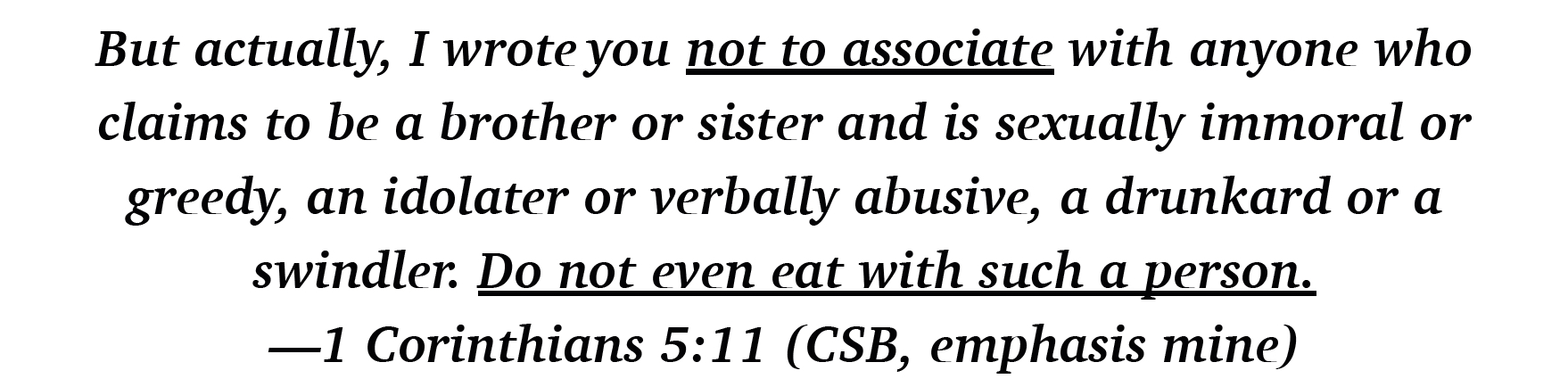
In 1 Corinthians 5:11 and 1 Timothy 3:1–5, Scripture names sexual immorality, greed, idolatry, verbal abuse, drunkenness, swindling, violence, quarrelsomeness, lack of self-control, and destructive household leadership as dangers to take seriously, not patterns to keep living under, not even when the spouse is a believer.
What about Unconditional Love?
This is where Christian teaching often confuses two different ideas: unconditional Christian love and unconditional marital access. They are not the same thing.
I can love an enemy without giving that person continued power to harm me. I can forgive without pretending trust exists. I can pray for their repentance without calling cruelty a calling. I can refuse hatred without refusing safety.
So yes, obedience to God is higher than safety. But once we ask what God truly requires, we can say this clearly: obedience to God does not require a spouse to remain available for ongoing, preventable abuse.
For more on this, see Marriage Is a Conditional Covenant (Not an Unbreakable Promise), Unconditional Love in Marriage Does Not Mean Enduring Abuse, and Adultery, Abuse, Abandonment are Biblical Grounds for Divorce.
What about 1 Peter 3:1–6?
This passage is often misused to tell women to stay and suffer in silence, but that is not what Peter is doing. Peter is addressing conduct, not commanding a wife to remain within reach of danger. A spouse who is abusing, coercing, degrading, terrorizing, or exploiting you is not persecuting you because of your faith. That is a crucial distinction. Suffering for Christ is not the same as enduring preventable harm inside a destructive marriage.
Scripture repeatedly shows godly people seeking safety when danger was avoidable. Noah and his family escaped the flood. Abigail acted to save her household. David fled Saul’s violence. Paul escaped a murderous plot. Jesus Himself withdrew from those trying to kill Him. We do not get extra holiness points for staying in harm’s way when refuge is possible.
And Peter’s own passage ends with this: Sarah’s daughters are those who do what is right and do not give way to fear (1 Peter 3:6). Fear matters. Safety matters. Peter is not telling women to prove faithfulness by remaining available for another person’s sin. Biblical submission is never a command to cooperate with evil, endure abuse without protest, or call danger holy.
Objection #6: “What about submission?”
Submission in Scripture is never a command to participate in sin, enable sin, or cooperate with lawlessness.
Too often, abusive spouses and misguided counselors treat “submission” as if it means silence, compliance, and staying in harm’s way. But bad teaching can wound in more than one direction. Women may be told submission requires them to stay. Men may be told headship means they should absorb mistreatment silently, or that admitting abuse makes them weak. Both lies protect oppression. Neither reflects biblical marriage.
Scripture calls Christians to mutual care, mutual faithfulness, and love that protects and nourishes.
People quote “wives, submit,” but in Ephesians 5 the husband gets the longer, weightier commands: love her, nourish her, cherish her, and treat her as your own body. Abuse is not biblical headship. It is disobedience.
Submission doesn’t prevent abuse. If there is abuse, commanding more submission makes things worse, not better.
Any concept of headship that excuses cruelty, intimidation, sexual coercion, domination, or fear is already a corruption of biblical marriage. God does not assign someone’s cruelty as your spiritual growth plan.
And when a spouse has shattered the covenant through abuse, betrayal, or abandonment, forgiveness does not require continued access. Rebecca VanDoodewaard, writing in a conservative Reformed context, A High View of Marriage Includes Divorce, argues that forgiveness does not require continuing to live with a spouse who has shattered the covenant, and that abuse, sexual unfaithfulness, and abandonment can be legitimate biblical grounds for divorce.
“Wives in particular are told that God requires that they forgive a repentant spouse, which is true, and that this means that they need to stay in the marriage, which is not true.”
“You can forgive someone and divorce them.”
So no—submission is not a command to stay and suffer. Biblical submission is never a license for one spouse to dominate and destroy the other.
Objection #7: “What about the children?”
“Love your neighbor as yourself” includes the small neighbors sleeping down the hall. Remaining in serious, pattern-level harm often exposes others to it. Protecting them is not rebellion. It is obedience.
About 8 in 10 children of divorce turn out fine, without any serious long-term problems, despite what we’ve been told. And in cases where the home was highly troubled, the children’s wellbeing was far better if the parents divorced rather than stayed. See also Top researchers of the past 50 years warn against “staying for the kids in destructive marriages.”
Objection #8: “But I’m not in physical danger.”
Many of us grew up hearing, “Sticks and stones may break my bones, but words will never hurt me.”
That is not what Scripture teaches.
And it is not what science shows.
The Bible repeatedly describes words as weapons—piercing, crushing, and life-altering (Proverbs 12:18; 18:21). God does not treat verbal or emotional harm as trivial.
Modern research confirms that emotional and psychological abuse are not harmless. They are associated with 87 significant physical and mental health consequences—and in at least one large population-based study, psychological abuse was more strongly associated with many health outcomes than physical abuse.
In other words, “not physical” does not mean “not real.”
And it certainly does not mean “safe.”
A marriage marked by chronic contempt, degradation, coercive control, or emotional cruelty is not a harmless situation just because there are no visible bruises.
God does not require His image-bearers to live under conditions that steadily crush their spirit and damage their well-being.
Scripture does not reduce harm to bruises. Chronic contempt, degradation, deception, financial deceit, and indifference violate covenant love.
- Proverbs 12:18 — Cruel words are like stabbing someone with sword thrusts.
- Proverbs 25:18 — A lie is like a war club, sword, or arrow.
- Proverbs 18:21 — Life and death are in the power of the tongue.
- Matthew 15:10–11 — Words defile a person more than physical things, such as food.
Creating distance—emotionally, physically, even legally—from someone intent on harm is biblical refuge.
This is not about ordinary irritations. It is about serious, pattern-level harm.
Unconditional love does not mean staying no matter how they treat you. Love is not a promise of access, no matter how someone behaves.
“Not Physical” Does Not Mean Safe
What People Often Assume
- No bruises means no real danger
- No assault means it is just a hard marriage
- No visible injury means stay and endure
What Scripture Still Recognizes as Harm
- Reckless words that pierce like a sword
- Chronic contempt and degradation
- Coercive control and severe emotional cruelty
- Dehumanizing neglect and chronic indifference
See also But He Never Hit Me: Divorce for Neglect, Emotional, and Financial Abuse and Unconditional Love in Marriage Does Not Mean Enduring Abuse.
Safety is not selfish.
Safety is stewardship.
Safety is biblical.
Here are five concise comments people can drop into conversation:
- “James says to have joy when we face trials—not to remain in preventable harm. There’s a difference between unavoidable suffering and danger you’re not morally required to endure.”
- “Jesus chose the cross at the appointed time—but before that, He repeatedly withdrew from people trying to kill Him. Withdrawal isn’t faithlessness.”
- “‘The prudent see danger and take refuge’ (Proverbs 22:3). Taking refuge is biblical wisdom, not rebellion.”
- “Marital vows plus suffering do not equal godliness. Vows do not turn cruelty into righteousness.”
- “Unconditional love doesn’t mean unconditional access. Love can forgive—and still set protective boundaries.”
 :
:
 :
: Buy PDF