
Is It Safe to Tell Your Pastor About Your Marriage Problems?
Stories from the Survey: Some Good Experiences and Some Bad Ones
First: Good Experiences with a Pastor
(Editor’s comments in brackets with italics)
- The pastors followed up with me.“I have to say I was so blessed by my pastors. I didn’t talk to them before everything exploded and I told my ex to leave; but my friend called them the next day and they immediately called back to make sure the kids and I were safe. They were there to support us and told me to get a lawyer for protection. They called a few times a week at the beginning, and then periodically after that, and almost two years later I get random calls just checking in. Our senior pastor walked through a horrifyingly abusive divorce with his cousin, so he had seen all the ugly that can’t be hidden. I suspect the church’s response would’ve been different under our previous pastor and his wife.” [Editor’s note: Notice that this woman only needed a bit of assurance that the pastors supported her and understood her situation.]
- The pastor was shocked but believed it when I told him my 30-year marriage was a fraud.“My pastor was shocked. My ex-husband was a Bible teacher. We’ve been missionaries and we were both on the worship team. We also had a 30-year marriage and seemingly looked like we had it all together. At first the pastor thought I should “soften my heart” to my husband. So I began listing the abusive behaviors and ask the pastor if he treated his wife that way? That’s when he finally got it. He’s a very protective husband. The second time I met with him, he brought in one of our retired pastors who told me unwaveringly to get out! They both prayed with me and gave their blessings. I wish pastors knew that it takes victims a long time to understand that they are being abused. By the time we seek help, it’s often past the point of reconciliation. Pastors need to believe us and stand with us, not shame us or give our husbands a “free pass.” Don’t keep telling us “just be submissive” or “keep praying” or “keep the faith.” No, we’ve already done all of that.” [Editor’s note: This pastor couldn’t believe her story at first. That’s understandable, since they were admired leaders. But he listened, recognized the husband’s marriage-endangering sin, and affirmed her freedom to decide for herself.]
- Thirty years ago, when my ex husband was arrested for stealing porn, the Christian school he taught at had us go to counseling. Our counselor was a man I greatly respected since he had us together, and then separately. He told me my husband was abusive, that the porn was ingrained, he was spiritually & otherwise abusive & to remember if I ever felt I should leave, then I should. My ex couldn’t stand him & felt he knew more, so we only went the 3 required sessions, but those words came back to me last year and I finally gave myself permission to leave.
- My pastor and his wife saw his paranoia and rage.“I had very caring pastor, who already knew my side of the story. One day, my abusive husband went to the pastor’s house with the intention of smearing my character and making himself look like a victim after a rage. He didn’t know the pastor and his wife had been counseling me for many years. The pastor and his wife called me and asked me to come over. I did and asked my husband, “Did you tell the pastor that you pulled your fist back to punch me in the face?” That set my husband off and he told them everything he had said and done over those 40 years, and tried to rationalize it and explain it away. The pastor and his wife saw the paranoia, delusion, and rage. They were shocked. They said I was a prisoner in my own home. They supported me, and after 40 years of abuse, I got away. I wish all pastors knew that some spouses are covert abusers who are only in the marriage for what they can get: control and power. I believe that if I’d stayed, I would have been a murder-suicide statistic. [Editor’s note: It’s rare for abusers to show their true colors in front of someone they want to impress. This exposure became a turning point that helped this woman finally get free—after far too many years.]
- My church was already preaching and teaching on this topic. My church held an abuse awareness training, and I wish I had heard this information years earlier. It was so valuable! And the example they used of emotional abuse was almost exactly my story. I wish the church talked about abuse more and made it clear that mental abuse is abuse even if there’s no physical violence. That’s a huge misconception I had. [Editor’s note: More churches should train leaders and volunteers in domestic abuse dynamics. Even a basic training can prevent enormous harm. Here’s a basic video training one pastor created for his church.]
- I didn’t even know I was being abused. Pastors and church leaders need to realize that we abused spouses (women and men) question our own reality. We don’t even realize we’ve been abused for so many years. In order to survive we had to believe the false messages we received from pastors, Christian radio, and marriage authors: The implied that abuse would automatically end if we were just submissive enough, agreeable enough, or sexually enthusiastic enough. No, those are false promises. Sadly, we bought them, and every day doubled-down and tried harder until we were broken down emotionally and physically. [Editor’s note: It’s extremely common for victims not to recognize abuse at first. Often a wise pastor or counselor can help name it—if they understand what abuse actually is. One pastor keeps this diagram handy to help them see the truth for themselves.]
- My pastor told me I was being abused. I had a good pastor and he was the one who told me I was being abused. I wish all pastors knew that abuse is ongoing, and just because you’re divorcing an abuser, doesn’t mean it has stopped. Continue to check on victims and survivors to see how things are going. Don’t just assume things are OK. [Editor’s note: Divorce can escalate post-separation abuse—harassment, threats, stalking, litigation abuse, smear campaigns, turning the kids against the parent, and false allegations. For more on this pattern, see Ch 7 of The Life-Saving Divorce.]
- My church forced my dangerous ex to leave the church. Luckily, my pastor is educated on abuse, and he and the church helped me in every way they could to make my ex-husband leave. I didn’t even know I was being abused. I went to the pastor and explained an incident, just looking for help. The pastor asked a few questions and said, “Your husband is an abuser.” My ex-husband was so angry with that pastor, he threatened to burn the man’s house down with his family in it. I had to go and file a police report. Then my ex-husband developed a new story saying that I was having an affair with the pastor. [Editor’s note: Abusers commonly retaliate with threats, intimidation, and smear campaigns. This pastor’s clarity likely prevented further harm.]
- My pastor fits [the good pastor] category, at least from my experience. His wife even told me that if anyone from the church gives me pushback, she would be happy to talk to them and tell them that my pastor had counseled me in this direction [to divorce].
- I was in denial about the abuse for 10 years. My counselor was and is amazing. She has the patience of a saint. For over 10 years, I went to her pouring out my story. She would always carefully lay all the options out before me, ask me questions, etc… And every time I would say “oh I could never leave or divorce.” It wasn’t even an option I considered. Finally, I got to such a place of ill health, both physically and mentally, that she told me “if something doesn’t change, it’s going to kill you or get you to a place you can’t come back from. You cannot change him, you can only change yourself and how you are going to handle this situation. So…. what do you want to do?” I knew beyond a shadow of a doubt that she was right, and it scared me. I finally broke down and said I didn’t know what to do. So we talked about all the options again, and this time she showed me the power and control wheel (because she sensed I was finally ready). When I realized I was truly living with every single form of abuse, and it was killing me, I finally became willing to make a safety plan and goal toward leaving and divorce.
Bad Experiences with a Pastor or Church Leader or Counselor
- My pastor flip-flopped. He called my spouse a “sadist,” but then he wanted me to stay with him. At first, my pastor said my husband was a sadist and to be careful, but then we separated, and he told me I should go back because I wasn’t really in danger and I needed to fight for my marriage. His message was very confusing. I wish pastors knew that women are covering up for their abuser, usually out of loyalty or fear, and that the abuse is ten times worse than we’ve ever divulged. I also wish pastors knew something about abusers: These men are great actors playing the role of a lifetime. [They have it all planned:] From the clothes they wear, to the prayer requests they make, to the stories they tell about their wives, everything abusers say and do is calculated to get you, the pastor, on their side. You’ll only see what they want you to see. Pastors need to believe the threat is real. Pastors also need to know that many abuse victims don’t know they are being abused. We wives were taught that it is our job to keep husbands happy at all costs. [We think all marriages are this demeaning. We are isolated. We aren’t allowed to talk with anyone.] I lived in fear of my husband for 9 out of the 11 years we were together. When my son was born, I cried and cried. I told him “I’m going to have to protect you from your daddy.” That should’ve been a good indication. [Editor’s note: He saw enough to name the cruelty, but not enough to stand firm when she separated. Many victims minimize for years; when the truth finally spills out, leaders can be swayed by the abuser’s performance and the church’s “save the marriage” reflex.]
- I brought evidence, but my pastors wouldn’t even look at it. My pastors didn’t believe how bad the abuse was, so I recorded it. The next time my ex-husband went on a raging rant, I recorded his name-calling, my son’s whimpering, my husband’s threats, and then sent it to the pastor and my ex-husband’s mentor. They refused to listen to the recording. [Editor’s note: Some leaders prefer not to know. When ideology outranks safety, the victim often has to walk away from both the abuser and the enabling system.]
Recommended reading: 7 Shocking Signs Your Pastor Is Helping Your Abuser
- I had a protective order against my violent spouse, but the pastors removed ME from ministry. My pastor mostly wanted to know if my husband had hit me, because that was crossing a line. They removed me from ministry after I filed [and was granted by the court] a protective order. They readily believed anything my husband said about wanting to reconcile. I offered to show them legal documents to set the record straight, but they refused to take me at my word or look at any proof I had. All pastors should know that marriage counseling [couples counseling] is not a solution for domestic abuse, and it actually harms the victim. Isolating the victim from serving in the church, acts as a punishment. Forbidding the victim to ask others for help or prayer further isolates her. Letting the abuser join the church in the middle of the conflict is not in anyone’s best interest. Not taking sides is giving the abuser more power. They won’t stand up to a bully. The rejection of the church and eventual loss of church community was more painful than anything my husband ever did to me. [Editor’s note: This is what scapegoating looks like: protecting the violent spouse’s image, refusing evidence, silencing the victim, and calling it “neutrality.”]
- My church wanted to silence me and control everything secretly. My church fought me on everything. They wanted to know who I told about the abuse. They asked if I was sure that a separation was needed. They claimed they would talk to my husband and take action but not tell me what was decided. They claimed that I had disassociated myself from the church, so there was little they could do. I’m glad I got away and divorced my abusive husband and my abusive church. [Editor’s note: This is about controlling the narrative, not protecting the vulnerable. Secrecy, information-gathering, and unilateral decision-making often function as another layer of coercion.]
- My wife was unfaithful and manipulative, but somehow it was my fault. The pastor turned to me and said, “Yeah, you have to realize that she’s the queen, so no matter what, you need to make her feel loved.” I did what the pastor told me, but over time I became depressed and suicidal. It wasn’t until licensed therapists outside my church saw the truth that I got help. My wife never was willing to work to make the marriage safe, so I finally divorced. I had to walk away from that church, even though the pastor was a friend. [Editor’s note: “You can fix this alone” theology collapses in real life. Each adult owns their own choices; one spouse cannot carry another’s repentance.]
- My pastors knew my ex-husband wasn’t paying child support, wasn’t helping in any other way, and had abused me, and they employed him. Had him round for dinners. There were people from that church who told him he was wrong, and out of line before we actually separated. Those men and their wives changed churches. And still, no one reached out to help me. And it was my church before it was his.
- My pastor didn’t believe I was being abused. My story of abuse was originally treated as a “marriage issue.” You know, a breakdown of communication, lack of love, “two sinners sinning,” and “two to tango.” They told me, “Go on a date, remember why you two fell in love.” While our pastor never blamed me directly, he would also not accept that I was being abused. To him, the term abuse only applied to physical abuse. And despite holding my husband up as the spiritual leader of the home, I was the one expected to do right and keep the marriage intact. My husband could blatantly lie, miss counseling appointments and skip church, but he was never held accountable. I wish pastors knew that rather than exaggerating the abuse, we victims are more likely to minimize it because it’s too painful to see the reality of it. Pastors need to humble themselves and admit they are ill-equipped to handle abuse. Abusers lie. [Editor’s note: When leaders redefine abuse so narrowly that only bruises count, they leave victims unprotected and reward deception. They were blinded by their theology that emotional abuse isn’t real abuse, therefore did nothing to protect a victim. That makes these types of churches unsafe.]
- My pastors didn’t want me to call the police. They covered for him. My abusive husband destroyed my life and my kids’ lives. My church convinced me that they cared about our safety, but in reality, they drilled me until I agreed not to go to the police. The yelled at me for not going back to reconcile and “win him without a word.” When they found out about the police investigation, they gave him a heads up and tried to cover for him. Being ganged up on by your church is worse than being abused by an abuser. Just because an abuser claims repentance doesn’t mean you should get back together. Give it time to see if it’s real! And if the abuser’s repentance is real, he would accept the court verdict, penalty, and sentence from the state. [Editor’s note: It’s common for pastors to want a victim to rush to forgiveness and smooth things over, sweeping everything under the rug, and reconciling without any evidence of long-term change. Pressuring quick reconciliation and blocking legal accountability is not shepherding; it’s enabling. Repentance has fruit and time.]
- My church forced me to go to a untrained biblical counselor. I endured a year and a half of biblical counseling with my soon-to-be ex-husband that went nowhere. The counselor had no business counseling couples at all. All he has is an MDiv. Not a degree in psychology or counseling. He’s not a licensed counselor. [Editor’s note: A well-meaning but untrained counselor can waste precious time and increase danger. In abuse cases, safety and competent trauma-informed care matter. Here’s the difference between a safety-first counselor and a marriage-first one.]
Note to Pastors: If you were trained with the Self-Confrontation manual or another “biblical counseling” program, please read this article (with comparison chart of BCF’s teachings versus ethical caring Christian counseling).
- The church taught us that divorce is never an option. I was told to leave my unhappiness at home. I shouldn’t mess up their happy place with my struggles at home.
- My twice-incarcerated pedophile husband fooled my pastor.“My husband was caught in a child porn sting operation by the FBI. He’s been arrested and incarcerated twice, but my pastor kept pushing me to forgive him, and told me about great changes in him when he was in prison. I didn’t trust he had changed, and I gave the pastor examples of verbal abuse, and revealed who he was at home behind closed doors. My husband knew I wasn’t going to read his letters anymore so he sent his letters to the pastor to get them to me that way…. I wish pastors knew how easy it is for a clever manipulator to use them as an ally and “flying monkey.” [“Flying monkey” is the term for someone who assists the abuser, by pressuring the victim or smearing their reputation. Editor’s note: Leaders who urge reconciliation in felony sexual harm scenarios are gambling with children’s lives.]
- Ex-pastor showed up at court for my retraining order hearing and looked me in the eye before saying, “I’m not here to take sides.” He knew why I was there. He knew what had been happening, by that point, for months and months. That one sentence broke something deep inside me that remains unhealed. Thirteen years of love and friendship and care evaporated instantaneously. He and his family and every friend I had in that church immediately became unsafe people for me and my kids. We moved ourselves into a safe household and settled ourselves into a new home. No one showed up to move our belongings, or just keep an eye on us while we went back to retrieve them. No one came by with meals or comforting words. No. One.
- My abusive husband was my pastor. The elders were initially supportive of me, until a retired pastor in the congregation got to them and the narrative changed. He accused me of doing irreparable damage to the trust and intimacy of my marriage. I turned around and told him, “Do you know the irreparable damage he has done to the trust and intimacy of our marriage for the past eight years? I’m finally going to do something about it.” That was the last time I spoke with that man. Pastors need to know what convincing con-artists abusers can be. They know exactly what to say to each person to appeal to their highest values. I think every church and pastor should go through training on abuse and train their elders and leaders and read books on the subject matter. They need to be cognizant of abuse when they teach and preach. That women and children need support not gaslighting, shame, condemnation, and abandonment. [Editor’s note: A common lie is that “the one who filed destroyed the marriage.” Often, the one who filed is the one trying to stop ongoing treachery and harm. And a wise pastoral counselor helps a spouse name troubling behavior truthfully instead of turning jealousy, control, cruelty, and intimidation into flattering personality traits.]
- They surrounded my abuser with love and ignored me. They gave him support in order to help him change. I was essentially ignored. They sat around holding their breath, waiting for me to decide to go back to him. They wanted to save the marriage at all costs. When I did not come back, some told me they were disappointed with my choice and others just ignored me completely. I want pastors to educate themselves on abuse. We abuse victims are exhausted. It’s not our job to educate pastors who should’ve gotten this training in seminary, or by reading a few books. We don’t have the emotional energy to fix the church and train the pastors while we are trying to heal. [Editor’s note: Waiting for a miracle while ignoring documented harm has predictable outcomes—deteriorating health, traumatized kids, and deep spiritual injury. Miracles are rare by definition.]
- I was suicidal and headed for a breakdown. My abusive husband was an elder. I was suicidal and headed for a breakdown. I was made to sit in front of my husband and the other elders and detail the abuse over and over whilst they made excuses for him. “Everything is petty,” or “Other marriages have worse problems,” or “Repeatedly standing on the back of your heels is an accident not abuse,” or “He only crapped on your stuff because he was ill,” or “Apply biblical principles, fix your marriage, or lose your privileges [in our fellowship].” They removed me from full-time service for swearing at my husband after three days of constant provocation. They said to me, “If you spent more time studying, praying harder, and putting more effort in, you’d have more self-control.” One elder got me alone after a service, and started out nice then turned nasty. He said, “If you don’t do what the elders demand, you’ll never serve fulltime again!” I was so bullied by the elders at the at a time I wasn’t in a fit state to advocate for myself. [Editor’s note: Calling cruelty “petty” is a theological cover for injustice. No one should be shamed for wanting basic safety and dignity in their own home. Some churches teach that you have no right to good treatment.]
- My pastor called me hypocritical and hard hearted for wanting to divorce my abusive husband. My lead pastor seemed supportive [at first] and at one point asked if I felt safe. But once I decided to divorce, he called me hypocritical and hard hearted, unwilling to own up to my own issues. It was very painful. I wish pastors understood that marriage is for two healthy functioning believers to journey together. Where’s there’s chronic abuse, divorce is a grace [a gift from God]. [Editor’s note: Where there is chronic treachery, divorce can function as protection and mercy—a life-saving exit, not a curse. It is a blessing.]
- I had a nouthetic counselor question my salvation. He asked if Jesus would recognize me when I said “Lord, Lord?” And you know what he meant by that: That I was sinning by divorcing my abusive husband and not being obedient. This makes divorce to save my children’s lives the unpardonable sin. Think about that! [Editor’s note: This is spiritual abuse—using fear of hell and “Lord, Lord” language to coerce compliance and keep a victim trapped. A counselor who treats life-saving protection as proof you’re “not really saved” is not offering biblical care; he’s weaponizing Scripture. Jesus never demanded that victims stay in danger to prove faith. If someone equates safety, truth-telling, or legal protection with “unpardonable sin,” that is a bright-red warning sign to get away from that counselor and seek trauma-informed, safety-centered support.]
- I became concerned that these pastors, themselves, were abusive husbands. I’ve come to believe that some pastors are unfortunately living lies themselves in their own marriages and families. Not all are the wonderful pastors we think they are. I believe one of Satan’s best targets to turn people away from the church is to go after the church leaders themselves. [Editor’s note: Scripture holds leaders to a higher standard; ongoing abusive behavior disqualifies someone from shepherding according to 1 Corinthians 5:11.]
Related: 11 ways to know if a church is safe for abuse victims or divorcees and official Christian denominational divorce rules.
- My pastor, my husband, my abuser were all the same person. When I left, his district officials had him resign, but nothing was done to support me. They even appeared in court to support him. All they said to me was the trite, “Praying for you,” and I have no faith they even remembered to pray for me. Many people in the congregation “unfriended” me because I ruined their “perfect pastor.” [They don’t know what I’ve been through.] I haven’t been public about the reasons for the divorce. Sometimes I just want to post some of the reasons, and a few of the photos, but I don’t. My new church has been wonderful. The pastor and his wife to pray for me and with me. They check on me and my kids. They offered to help in tangible ways. They believe me without question. And they assure me of Christ’s love and forgiveness. [Editor’s note: This is another perfect example on “falling on your sword” to protect someone’s reputation, maybe the abuser, maybe the kids, maybe the institution. The innocent spouse silently takes the criticism of others because they are unwilling to make the sins public.]
- Victims don’t tell everything in the first meeting. It’s worse than you know, Pastor. I had to leave my church. At first, they were supportive of divorce, but they did nothing, not a phone call, text, or email, during the COVID-19 lockdown. I was trapped with that man for 5 months. I wish pastors knew that anything a victim says about abuse in the first meeting is just the tip of the iceberg. The reality is so much worse. These people are master manipulators and liars. I emailed the pastor but heard nothing back. [Editor’s note: Early disclosures are often “the tip of the iceberg.” Victims typically reveal the most severe details only after trust and time, especially if felonies have occurred.]
Related: Pastors: Please Think Twice Before Using Focus on the Family’s Marriage Ministry Materials
- My church ganged up on me. What really hurts is the church ganging up on you. I felt it too. It was like they were all against me because I was divorcing a man who was abusive. The church didn’t believe me at all. Yes, they tell you to forgive him and move on. In their minds, my husband didn’t have to apologize for anything. I was told I had to repent to him. It can feel like the last straw and the loss of the support system for many of us. I felt like I was divorcing my church at the same time I was divorcing my husband. Editor’s note: When a church demands repentance from the victim and none from the abuser, it becomes an abuser’s paradise.]
- My counseling pastor told me that codependent people are manipulative, so I was the problem. I saw a counseling pastor at our church. He turned my story around and said that I was codependent, which led to me being manipulative. He said we needed to pray for my husband. I told him I couldn’t anymore (I mean, I had been praying for him for 20 years- it wasn’t a new concept.) I couldn’t go back to that pastor. I wasn’t being manipulative; I was 100% in survival mode. Just trying to avoid the abuse everyday. I changed to seeing a trauma therapist who does EMDR. God can use anyone I believe and He has done a great work in me through a counselor who may or may not be a believer. She never divulged her personal beliefs to me even though she knows mine. [Editor’s note: Sometimes the safest help is competent, trauma-informed care—even outside your church system. EMDR is worth asking about.]
- Four pastors said, “We just don’t want to get involved.” My husband was the pastor. So there was nowhere to go. Only one of the five pastors I spoke to was supportive. The others turned a blind eye. They were just interested in building their numbers. [Editor’s note: Refusing involvement may protect reputations, but it abandons the injured sheep.]
- Older women’s leaders told me to ignore child abuse under the guise of being submissive to my husband. When my second was barely two months old, and my eldest was but 16 months old, I went to a women’s gathering with just the baby. We had them fairly regularly; it was a small church; everyone knew everyone. My husband had not started in with all the controlling garbage he used in later years, though he was adamant that he did not want me working. After a particular meeting (I have no idea the topic that night), after everyone else had gone and the three “ladies in leadership” were busy cleaning up, I tucked my small baby girl into her car seat and approached the women. I I remember that I admired each of them, though I also remember being a bit afraid of one of them. I went to them and asked what a wife should do if she thought that her husband was “disciplining” their child too harshly. Keep in mind that at the time, I had only two very small children, ages 2 months and 16 months. The women looked up at me and one of them said without hesitation, “She should stay out of the way and let the Holy Spirit deal with him.” The other two nodded in agreement. This was the beginning of “why I stayed and put up with it” for as long as I did. That 16-month-old baby boy is now the 30-year old man who lives with me, has massive panic attacks, is unable to work due to the anxiety and panic attacks, and requires the presence of his emotional support dog pretty much 24/7. What I wish pastors/those in leadership (and that means ANYONE to whom someone else turns for advice or support, not just “staff”) knew is that if someone comes to you with what seems like an absurd question, there is a reason for it, and you should ask clarifying questions rather than spouting a pat “Let God handle it” answer. Had ONE of those ladies even come to me privately afterward and asked me WHY I had asked that, when my children were very small babies who should not have even required “discipline” yet, it could have turned the tide of not just my life, but of those two very precious and wonderful people who were forced to put up with abuse because *I* decided to “honor my husband and trust the Holy Spirit” instead of TRULY trusting the Holy Spirit to lead ME Himself! I used to sort of justify that if I had not stayed, then my other <insert any number of younger children here, based on the timing of any given situation> children would not have been born. I no longer believe that “God wanted me to stay so that these particular kids could be born,” but rather more like “God GAVE me these wonderful, awesome younger children IN SPITE of my having stayed.” Romans 2:28 in action.[Editor’s note: Bad counsel from women’s ministry leaders can endanger children. When someone asks an “odd” safety question, ask why—don’t dismiss it.]
- My DivorceCare leader tried to make me responsible for the abuse. I had trouble all the way through the [DivorceCare] class I took because the leader kept trying to get me to make a list of things I did to contribute to the abuse. She said I was not faultless. She said we all do things to push each other’s buttons and provoke one another. I insisted that I did all I could *not* to provoke him. I apologized for stuff *he* did. I walked on eggshells to keep from ticking him off because he would hurt [one of our children if he was angry]. Why in the world would I push a button?! She got frustrated with me because I wouldn’t list sins that contributed to my divorce. [Editor: There’s a bias in many churches that “all marriage problems are 50/50” and “it takes two to tango.” But fear, eggshell-walking, and child-protection behavior are clues this is not mutual conflict—it’s intimidation.]
- My husband loved seeing the pastoral counselors. We did “marriage counseling” with his friends. It was extremely traumatic. His alcoholism was excused, I was told that I absolutely must trust him 100% (or I’m not acting like Jesus), I was blamed for him refusing to eat meals with the family, everything was my fault. As I started emotionally separating, he pressured me to resume the counseling. I said, “no thanks.” [Editor: Many abusers enjoy low quality “marriage counseling” because it gives them attention, blames the other spouse, and gives them cover, without real accountability for their behavior or attitudes.]
- My licensed counselor wanted me to trust her! She said the abuse was all in my mind. “I had a licensed CSAT who, when I disclosed my fear of abuse escalating and asked her to help me plan an exit, told me to stay. She said that it was only my trauma believing I was in danger, and that I shouldn’t believe my intuition. She said that he and I were both victims of his abuse toward me, because he didn’t want to do it either. That abusing me hurt him as much as it hurt me, and I needed to form a united front with him against the real enemy: the abuse. She then told me not to trust myself, but to trust her, because she could see that he really did love me. She could tell. Thankfully by that point I could recognize it, and I left and never went back. But how many other abuse victims has this CSAT kept in a bad situation?”
Bad Experiences with Naïve Pastors
- My pastor got conned by my spouse’s false repentance. I went to my pastor for help multiple times in five years. Looking back now I see that I described abusive incidents to him over and over, but it was never called such. Sometimes the pastor would confront my husband and call him out on his behavior, but my husband would always smooth things over with either false repentance or by telling the pastor I had exaggerated or was not submissive. Last summer I really hit rock bottom. I stopped going to the pastor for help and found out from secular counselors that I was in an abusive marriage. I told the pastor, and he thought I was exaggerating. After a very bad incident last January, I left my husband. My husband immediately cut off financial support. He refused to leave the house, leaving the kids and me homeless. He changed the locks. He gave me a 24-hour window to get our clothes and belongings out before he threw them away. We only communicated through text, so I was able to document all of that. I also had photos documenting the incident, that final event that caused us to leave. I showed all of these to my pastor. He finally believed me! Eventually he supported me filing for divorce and sole custody. I’m thankful he believes me now, but it’s still bitter that he didn’t believe me all those years. Even though the pastor did eventually believe and support me, by that time considerable harm had been done. If he had believed me in the first year, much damage to myself and my children could’ve been avoided. [Editor’s note: It takes humility for leaders to change their minds. But delay costs victims and children dearly.]
- My pastor claimed that my justified anger (at my husband’s sin) was a sin too. Yes, my pastors were willing to admit that my husband’s behavior was sinful, but if my husband said that I got angry with him, then the pastors just “mutualized” it [claiming my anger was just as sinful as my husband’s sin. Isn’t God angry at sin? Aren’t we supposed to be angry at sin?]. I actually had a panic attack in the pastor’s office after one joint counseling session. My ex had gotten heated in the session and left. The pastor didn’t understand my fear of a man who came across so charming in public and had manipulated the him so well. [Editor’s note: “Mutualizing” and sin-leveling are common silencing tactics. God is not neutral about oppression.]
- My pastor never observed any abuse, so he claimed my husband couldn’t be abusive. It’s funny how dense pastors can be about the dynamics of abuse. Like, do pastors think these abusers walk around abusing everyone, everywhere? It doesn’t take a lot of critical thinking to realize that it’s not the way abusers operate. They operate behind closed doors. [Editor’s note: Abuse is often private. Public charm proves nothing.]
- My pastor was idealistic and naive. You would think, with the Christian theology of original sin, that pastors would know this kind of evil exists right under their nose. They should know that some people are focused on their spouse’s destruction, all the while pretending that they want to honor God in everything. It’s all a mind game. [Editor’s note: Idealism without discernment can be dangerous; prayer is not a substitute for reality-testing.]
- I was harassed and excommunicated by my pastor. I discovered that my pastor would try anything and everything to get me to change my mind about divorcing my husband. My pastor harassed me daily. And after that didn’t work, I sent in my resignation letter and was placed on church discipline. I refused to take any more counseling from my pastor. I was being asked to repent to my husband and the church and to Christ. In my pastors view I didn’t try hard enough to save my marriage and deliberately went with an unbiblical divorce (for abuse), I was excommunicated from the church with a letter.[Editor’s note: Coercion, threats, and harassment are not shepherding. Leaders who pressure a victim while facing no personal risk are not bearing the cost they are demanding. Pastors have no skin in the game.]
- My pastor told me it was good for my character to suffer (and to stay married to a man who beat my kids). I told three pastors and one women’s ministry leader over the past 15 years. The first pastor looked at me like a deer in the headlights. The second pastor asked, “What do you want me to do about it”; the third pastor said, “This is going to take ‘gospel courage to face’.” Gospel courage? What even is that? I just needed my husband not to beat my kids and stop raging at me. The woman’s ministry leader said, “You need to submit to him as you do to God.” I want these pastors and leaders to know that abuse is a serious problem. We aren’t making it up we deserve to be heard and to be protected. We want them to call a spade a spade, and say evil is evil. [Editor’s note: That’s not “gospel courage”—that’s prolonged, forced endangerment. Endurance is not the same as enabling evil.]
- I got better counseling from a domestic violence shelter. I shared everything with my pastor and elders and I regret it. They know way more about our sex life than they should have. My husband was sexually abusive. Those pastor aren’t equipped to help. I got better counseling from my domestic violence shelter.” [Editor’s note: What you share with church leaders is not necessarily legally confidential.]
- Pollyanna Pastor. Our pastor had published a devotional book, and in it was my testimony of how my former husband and I met. When I went to see that pastor about the abuse in our marriage, he said, “But it was such a good story.” He just couldn’t or wouldn’t see it. First, I want pastors to believe us when we come forward and disclose the abuse. Second, I would hope that they would get training to understand the dynamics and impacts of abuse and ensure our safety. Their lack of understanding and lack of support from the church was devastating and so hurtful.” [Editor’s note: Romance narratives can blind leaders to danger. Training is not optional when lives are at stake. One concerned pastor wrote a blog post denouncing these reckless premarital counselors.]
- The pastor said I couldn’t talk about abuse unless I admitted my sins too. My soon to be ex-husband and I were separated three years ago and a friend at church was counseling me told me that I needed to make a list of my sins in the marriage. That was so confusing. Talking about adding more abuse to an already abusive situation. My pastor kept pointing out that I needed to discuss my sins too. It was so confusing. Then the talk turned to how I needed counseling to save my marriage. He would not talk about my husband and his neglect. No, he’s the man of the house and I was supposed to submit to him and take whatever abuse he gave me. [“Mutualizing” and sin-leveling are ways to silence genuine victims. It sends the message that they cannot speak up unless they are perfect. God cares about victims and hears their cries.]
- My husband smeared my reputation. The elders didn’t want to take sides. My church elders took the “we don’t want to take sides” mantra and didn’t get involved. Abusers are so slick at garnering sympathy and trashing their targets. They smear our reputation under the guise of caring. For example, my husband used to tell people, “My wife is really struggling, and I’m concerned about her.” Many of us realized too late that our husbands had been discrediting us long before we were out of the fog enough to seek help. I’m glad one of the pastors told me that I was completely different from the woman my husband had described to him for years. [Editor’s note: “Not taking sides” often means siding with the perpetrator by default.]
- My pastor didn’t consider it abuse unless there were bruises. At first I didn’t share with my pastor because I didn’t understand that I was being abused. The abuse was identified and named by the Christian counseling team (including the pastor) we met with. They described it as emotional belittlement and severe neglect. (Now that I understand abuse better, I would add financial abuse, spiritual abuse, and sexual abuse.) My pastor said, “You told us that he never hit you. And I don’t see any bruises.” I wish pastors knew that a godly wife will tolerate everything from their husband because that’s what we were taught to do. But those abuses you cannot see, dear pastor, ARE REAL. It takes a lot of courage to come forward and talk about what is going on at home. My husband looks really good in public, but at home he’s a different person.” [Editor’s note: This woman was excommunicated from her church for pursuing a divorce. A pastor at another church was so horrified by the way she was treated, he did a 6-part blog post on her story. He offers churches a better way to handle these situations, complete with biblical rationale. Part 1 Part 2 Part 3 Part 4 Part 5 Part 6]
- My church’s attitude made my husband think his behavior wasn’t all that bad. My previous church never came out and said that, but that certainly seemed to be their attitude because every time I applied for a divorce, they told me that they did not think my spouse was “irredeemable.” I said, “So what? He can repent and work through his issues on his own time. I still want a divorce.” In fact, my ex used the church’s hesitation as a reason that his sins were not a big deal. He often told me, “If I were really doing something bad, they’d let you divorce me. They won’t, so obviously I’m not doing anything very bad.” I finally realized that the church was actually discouraging him from any real repentance because he understood their lack of action to mean that he had nothing to repent of.
- My Lutheran chaplain said it would be sin to divorce my husband (for his adultery) but that God could “forgive” me. I argued with him it wasn’t sin, Jesus said I could. He said we could agree to disagree. My next counsellor was still an LPC resident. She asked me to check with God to see if I had made “an idol out of being right,” because I didn’t want to sin against God and wasn’t sure if divorce was the right thing to do and had come to counselling for *gasp*: counsel. So thankful when I checked with God, he says “blessed are you who hunger and thirst after righteousness for you will be filled.” I was then advised to read Tim Keller’s Prodigal God (so I could presumably repent of from being an “older brother” and not welcoming enough to the returning prodigal, BUT I WASN’T the “older brother,” I would have been THRILLED by his return. My husband just actually wasn’t repentant and wasn’t a returning prodigal. He was a wolf in sheep’s clothing fooling the pastor and counsellor but he was still lying and cheating.
- When I reported spousal rape, the director of the counselling ministry (also pastor of my Presbyterian church) said “but you let him.” I corrected him “NO, I DID NOT, he held me down as I screamed and he sodomized me anyway.” He was like “oh.” Then he glossed over it to move on.
Recommended reading: 7 Shocking Signs Your Pastor Is Helping Your Abuser
These People Did Not Tell the Pastor
- I wasn’t close to any of my pastors. I went to a megachurch and wasn’t close to any of the pastors. I spoke only to my women’s ministries director. She told the other pastors the basics. No one harassed me about divorce once they found out my husband was a pedophile. [Editor’s note: Keeping felony behavior from becoming church-wide gossip, spread by church staff is a perfectly good reason to avoid contact with leaders.]
- Why bother? I knew they wouldn’t believe me. I didn’t share. I was too uncomfortable talking with church leaders. But I wanted someone at church to know my husband put on a different public face than he did at home. He’s charming and deceitful. My church is big on “the mouth of two or three witnesses” and no one outside the home witnessed my “ground zero.” My husband is an upstanding member of the community. [Editor’s note: Abusers are pretty good at Dr. Jekyll-and-Mr. Hyde behavior. They don’t often abuse in front of those they wish to impress.]
- I gave up trying. I refused to meet with my pastor again because he didn’t allow me to speak in a counseling session. [Editor’s note: Silencing someone in a so-called counseling session sounds more like an inquisition than a counseling appointment. Isn’t the counselor supposed to listen?]
- I wasn’t brave enough to talk to my pastors until I had already filed for divorce and had left. It was God’s mercy that I found a job outside of the area, so I could relocate to a place where no one knew me as a spouse of a Christian leader. [Editor’s note: After reading these stories, you may find this woman’s option to be the best: Say nothing and disappear from the church. That’s what most churchgoing Christian divorcees do: 6 in 10 switch churches, and almost half never tell their pastor about their marital problems.]
Further Reading
To better understand why people stay in destructive marriages, the messages that keep many Christians trapped, and the peace many find after leaving, start here:
“Why Didn’t You Just Leave?” 50 Abused Wives & Husbands Explain
https://lifesavingdivorce.com/why-did-you-stay-so-long-abuse-survivors/
Yes, Dr. Gary Chapman, Divorce Can Lead to Personal Happiness
https://lifesavingdivorce.com/gary-chapman-divorce-happiness-fact-check/
Christians: Life After Divorce — Real Stories of Challenge, Healing, and Hope
https://lifesavingdivorce.com/lifeafterdivorce/
These stories can deepen discernment and help Christians avoid adding spiritual pressure where safety, clarity, and hope are needed most.
10 Key Takeaways for People Who Love Their Church But Need a Life-Saving Divorce
- Some pastors are better trained about abuse than others.
- Sadly, some pastors care more about preserving your marital status than about your safety.
- If you attend a church that does not believe in divorce for physical or emotional abuse, be realistic that your pastor or church leaders will probably not support you. In extreme cases, they may even apply “church discipline” or excommunicate you.
- Some pastors give abusers a “get out of jail free” card, and pin the responsibility on the godly spouse, claiming you could make the marriage safe and loving single-handedly.
- Some pastors don’t believe in mental abuse at all. They dismiss allegations as “whining,” and they feel that if they accepted emotional abuse as grounds for divorce, it would open the floodgates to people (women, mainly) leaving their marriages in droves. (Which says a lot about the quality of our Christian marriages!)
- Some pastors have not been trained to identify people with “characterological issues.” They are overly optimistic about the abuser changing.
- Some pastors are naïve and expect God to fix everyone this side of heaven. Abusers find them easy to fool.
- Some pastors are unable to act because of their cognitive dissonance. (They haven’t reconciled their beliefs about caring for victims, the deceitfulness of evil people, and their church’s policy prohibiting divorce.) Sadly, you’ll have to protect yourself and your kids without their help.
- Some pastors believe (erroneously) that kids are damaged more by divorce than by experiencing or observing physical, psychological, or sexual abuse in their home. They are wrong.
- You may have to save yourself and your children without help from your pastor. For some people it’s best to say nothing and disappear from the church. That’s what most churchgoing Christian divorcees do: 6 in 10 switch churches, and just over half never tell their pastor about their marital problems.
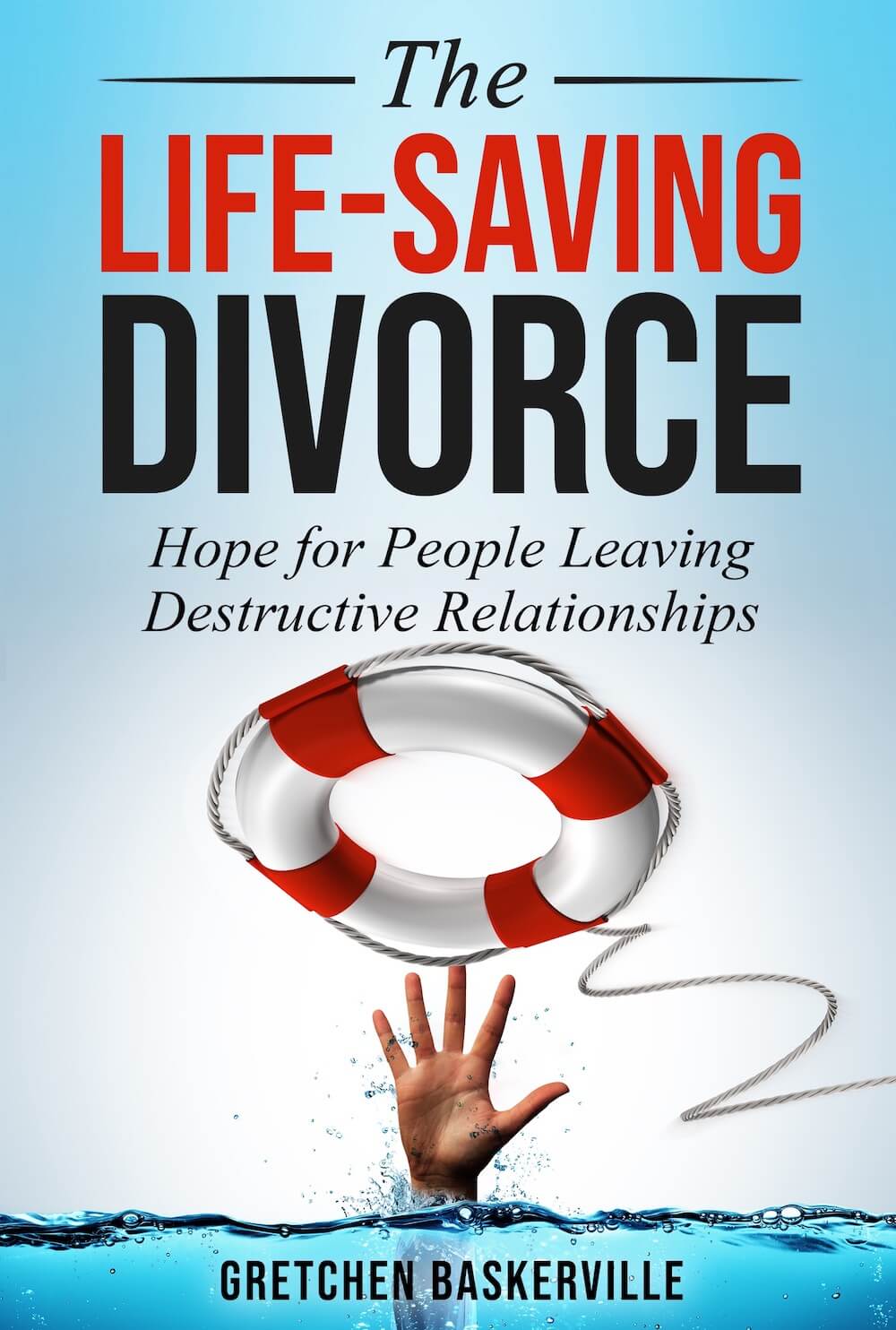
For pastors and church leaders, see Chapter 8 of my book, The Life-Saving Divorce, which includes a 39-point checklist on how to become a safe church for abuse victims. This matters because more than 1 million God-honoring Christian divorcees say they cannot find a safe church. To compare your denomination’s policies with others, view this Church Divorce Policy Comparison Chart. If you would like to become better educated on abuse and biblical divorce, please explore the recommended books and resource list.
How to Find a Safe and Supportive Church
- Pastors Who Recognize Physical and Emotional Abuse as Biblical Grounds for Divorce
- 7 Ways to Know if a Church Is Safe for Abused Wives (or Husbands)
- Do Pastors Have Authority Over My Divorce Decision?
- Why 1 Million God-Honoring Divorcees Cannot Find a Safe Church
- Church Denominations and Their Divorce Policies — Comparison Chart
- Excommunication for Getting Divorced? What You Can Do
- Evangelicals Shooting Their Own Wounded Divorcees (Video) or Read the Blog/Transcript
 :
:
 :
: Buy PDF