

A young married pastor recently wrote to me as if I had not weighed the cost of divorce carefully enough.
Here’s my message to him:
Young man, devout Christians in horrific marriages have weighed
the costs and benefits of divorce 100 times more than you have.
They have weighed custody.
They have weighed support.
They have weighed financial stability.
They have weighed loneliness.
They have weighed holidays.
They have weighed the grief of watching the life they prayed for fall apart.
And they have also weighed the cost of staying: the fear, the trauma, the betrayal, the children walking on eggshells, the spiritual confusion, the emotional collapse, and the slow death of hope.
That is why so many stayed as long as they did. Not because they failed to count the cost—but because they counted it every day.
Let’s go through the pastor’s claims.
You claim: “Divorce never makes anything better; it just gives you different problems.”
This sounds wise at first. It sounds realistic. It sounds like someone is simply trying to warn people not to romanticize divorce.
But in a destructive marriage, this statement can become a trap.
Because it assumes the “different problems” after divorce are comparable to the problems inside the marriage.
But custody schedules, support negotiations, lonely holidays, and legal bills are not the same as living with abuse, adultery, coercive control, chronic betrayal, sexual betrayal, addiction, intimidation, or children hiding in their rooms.
Divorce does not magically make life easy. Of course not.
But sometimes divorce does make something better: it can make a home safer. It can stop daily intimidation. It can reduce chaos. It can give children one peaceful household. It can allow the abused or betrayed spouse to sleep without fear, think clearly, rebuild, and heal.
So no, divorce does not merely “give you different problems.”
Sometimes it gives you survivable problems instead of soul-crushing ones.
You claim we haven’t weighed “Custody. Support. Property. Loneliness. Holidays.”
Yes. Divorce can be financially and emotionally brutal.
Custody schedules can be heartbreaking. Support negotiations can be frightening. Property division can feel like watching your life get cut in half. Holidays can ache.
I don’t minimize any of this.
But these are not reasons to shame people into staying in destructive marriages. They are reasons churches should come closer, not stand farther away.
When someone is facing divorce after abuse, adultery, abandonment, coercive control, addiction, or chronic betrayal, they do not need a lecture on how sad Christmas morning might be. They need safety, truth, prayer, practical help, and courage.
They already know divorce will cost them.
That is often why they stayed so long.
You claim: Divorce is “the severing of a Biblical ‘one-flesh’ union”
Marriage is sacred. I believe that.
But a “one-flesh” union is not meant to become a place where one person consumes, controls, terrorizes, betrays, or degrades the other.
In many life-saving divorces, the covenant has already been shattered by the destructive spouse. The divorce is not what destroyed the marriage. The divorce is the public recognition that the marriage has already been destroyed.
Jesus took marriage seriously. So do I.
That is why I refuse to call treacherous marriage holy.
You claim: “It is a hugely painful decision.”
Yes, it is.
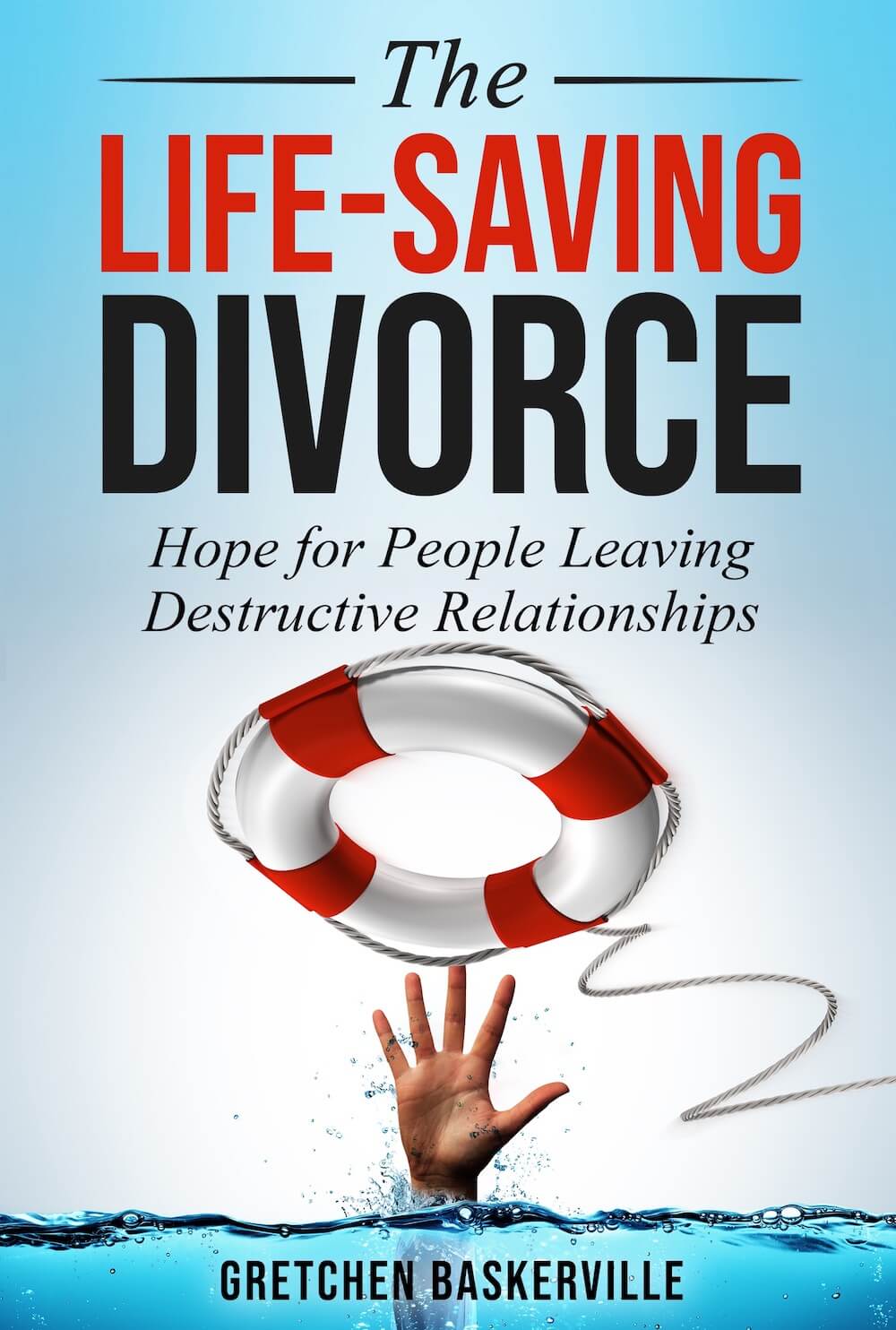
In The Life-Saving Divorce, I wrote about my own divorce: “Some people say that divorce is worse than the death of a spouse. All I know is that it was the most painful event I’d ever experienced.”
So when a married pastor tells me divorce is painful, I want to say: We know. We lived it.
We cried in the dark. We worried about our kids. We felt the judgment of church people. We wondered whether God was disappointed in us. We carried shame we never deserved.
But pain does not automatically mean sin.
Surgery is painful. Childbirth is painful. Grief is painful. Leaving Egypt was painful.
Sometimes pain is not proof that you are doing the wrong thing. Sometimes pain is the cost of getting free.
You claim: “The couples that I meet with rarely take the time to ponder this.”
This sentence concerns me.
Because many abused and betrayed spouses have done almost nothing but ponder this.
They have pondered it while lying awake at 2 a.m.
They have pondered it after another discovery of porn, another affair, another drunken explosion, another threat, another financial betrayal, another child hiding in their room.
They have pondered it after counseling failed, after forgiveness was weaponized, after repentance was faked, after promises were broken again.
And I want to be very clear: in many life-saving divorces, this is not a “couples” decision.
The abuser, cheater, addict, or chronically destructive spouse often does not want the divorce. Why would they? They may want the benefits of marriage—status, sex, childcare, income, respectability, a clean public image—while continuing to betray, control, deceive, neglect, or terrorize their spouse behind closed doors.
They may want the pastor to silence the suffering spouse.
They may want the church to pressure the victim to forgive, submit, reconcile, and stay quiet.
They may want to have their cake and eat it too.
So when a pastor says “the couples” have not pondered the cost, I wonder whether he understands what is happening in many of these rooms. Often one spouse has pondered the cost for years, while the other has counted on the church to make leaving impossible.
The people I know are not flippant.
They are exhausted.
You claim: “The heartache leaving a marriage can be just as great as the difficulty of trying to save the marriage.”
This sounds compassionate at first. But it quietly creates a false choice:
If divorce is painful, and trying to save the marriage is painful, why not stay and keep trying?
But those are not the only two options.
In many destructive marriages, the real choice is not between divorce and a repaired marriage.
The real choice is between ongoing destruction and a painful path toward safety.
That distinction matters.
A faithful spouse cannot “fix” adultery the cheater refuses to end. They cannot “fix” abuse the abuser denies. They cannot “fix” addiction the addict hides. They cannot “fix” coercive control by communicating better, submitting more, forgiving faster, or praying harder.
Marriage restoration requires repentance, truth-telling, accountability, and changed behavior over time. Without those things, “trying to save the marriage” often means the betrayed or abused spouse is pressured to keep absorbing harm while everyone waits for a miracle the destructive spouse has no intention of pursuing.
Yes, leaving can be heartbreaking.
But the heartache of leaving is not the same as the heartache of staying trapped.
A wound hurts when it is cleaned. A broken bone hurts when it is set. A victim may grieve even while walking toward safety.
But healing pain and destroying pain are not the same.
So, no, the answer is not simply, “Since both paths hurt, stay and fix it.”
Sometimes the marriage cannot be fixed because the destructive spouse is still destroying it.
And sometimes the most faithful thing a suffering spouse can do is stop calling ongoing harm “working on the marriage.”
A counselor says: Every choice leads to more pain.
I have also seen Christian counselors write this way, especially when talking about abused spouses. They may say that whether the spouse stays, leaves, confronts, or remains quiet, every option will lead to more pain.
In one sense, that may be true in the short term. Abuse creates pain. Betrayal creates pain. Telling the truth creates pain. Leaving creates pain. Even staying silent creates pain.
But this framing can become deeply misleading.
Because it makes all choices sound equally painful, equally dangerous, and equally hopeless.
They are not.
There is a difference between the pain of escaping harm and the pain of remaining in it. There is a difference between the short-term pain of setting boundaries and the long-term destruction of being coerced, controlled, betrayed, or violated year after year.
When a counselor says “every choice leads to more pain,” the suffering spouse may hear, There is no real hope in leaving. There is no real safety ahead. You may as well stay.
That is not a neutral statement.
That can be fear-bombing.
Yes, leaving may bring legal stress, financial fear, church judgment, and grief. But for many abused and betrayed spouses, leaving also brings relief, safety, peace, clarity, and the chance to heal.
Pastors and counselors need to be careful. The goal is not to scare suffering spouses into paralysis. The goal is to help them see reality clearly, make wise decisions, and get the support they need.
You say: “Fight for their marriages instead of fighting to be freed from them.”
Young man, devout Christians in horrific marriages have weighed the costs and benefits of divorce far more carefully than you have.
They are not flippant.
They are usually the deeply invested spouse.
They may have bought the marriage books, read the articles, signed up for marriage retreats, found the counselor, made the appointment, prayed, fasted, journaled, pleaded with God, and scrutinized their own heart.
They may have reminded themselves over and over to be more loving, more forgiving, more patient, more respectful, more hopeful.
They may have lain awake wondering, Did I try hard enough? Was I too harsh? Did I sin when I got angry after discovering another lie? Should I have stayed quiet about the missing rent money? Maybe I’m not perfect either.
They may have apologized when they did nothing wrong, just to keep the peace.
They may have given their spouse the benefit of the doubt again and again: Maybe it wasn’t flirting. Maybe it wasn’t an affair. Maybe it wasn’t abuse. Maybe I misunderstood. Maybe I’m too sensitive.
This is what invested spouses do. They doubt themselves. They have sensitive consciences. They second-guess their own motives. They want to become better people. They are often far harder on themselves than anyone else is.
But in many destructive marriages, the other spouse is not similarly invested.
The uninvested spouse may want to remain married, but that is not the same as investing the time, money, effort, humility, and repentance needed to make the marriage loving, safe, and respectful.
They may define “fighting for the marriage” as blocking the suffering spouse from leaving.
They may use coercion, intimidation, fear-bombing, false accusations, demeaning comments, and spiritual guilt.
They may say, You’ll ruin the children’s lives.
They may say, You’re lazy.
They may say, You’ll never make it on your own.
They may take the keys, block the car, refuse to sign documents, or run to the pastor hoping the church will pressure the suffering spouse to stay.
That is not fighting for the marriage.
That is fighting to keep control.
An uninvested spouse may minimize their own marriage-destroying sin, blame their behavior on the victim, shame the victim for getting angry, quote Bible verses about forgiveness, and insist that the faithful spouse make all the changes.
They may not sit up at night worrying about their own cruelty, betrayal, addiction, porn use, deception, intimidation, or neglect.
They may not volunteer to take responsibility for making the marriage safe.
They may only “work on the marriage” when the other spouse is finally ready to leave.
And even then, the goal may not be repentance. The goal may be preventing consequences.
So when a pastor tells people to “fight for their marriages instead of fighting to be freed from them,” I have to ask: Which spouse are you talking to?
Because many abused and betrayed spouses have already fought for years.
They fought with prayer. They fought with counseling. They fought with forgiveness. They fought with patience. They fought with self-examination. They fought by trying one more time.
But one spouse cannot single-handedly save a marriage the other spouse keeps destroying.
At some point, “fight for your marriage” becomes “keep absorbing the consequences of someone else’s sin.”
And that is not biblical wisdom.
Sometimes the person filing for divorce is not the one who destroyed the marriage. Sometimes they are the one who finally stopped pretending it was safe.
Recommended Reading
- What is a Life-Saving Divorce? What Are the Reasons for Divorce?
- The “Easy Divorce” Myth: For Many Christian Survivors, Divorce Took Years
- 5 Ways Christian Marriage Advice Goes Wrong in Destructive Marriages
- Pastor Education: How to Respond Biblically to Abuse and Betrayal in Marriage
- 7 Shocking Signs Your Pastor Is Helping Your Abuser
 :
:
 :
: Buy PDF