
Tim Challies Tells Christians to Stay in Bad Marriages. That Is Dangerous Counsel.
Summary: A critique of the January 2026 article To Those Who Married Poorly, including a comparison of Tim Challies’s advice with Jesus’ response to harm and bondage in Scripture.
I have written about Tim Challies before in Jesus Said, “Love My Enemy”—Can I Still Divorce Them?, because this is not a tiny disagreement over wording. It is about what happens when Christian teachers speak carelessly about hard marriages, duty, endurance, and God’s will.
His newer article, To Those Who Married Poorly, tries to soften the message with a footnote saying he is not talking about abusive marriages. But the body of the piece still tells hurting spouses to “bear patiently,” remain in the marriage, fulfill their role, and accept the burden as something God has assigned them to carry.
That is not safe counsel. And on his Facebook page, many of his followers pushed back hard.
Tim Challies Blurs the Line Between a Hard Marriage and a Destructive One
The biggest problem is that many people in abusive or deeply destructive marriages do not call it abuse right away. They call it difficult. They call it disappointing. They call it lonely. They call it a heavy cross. They call it a marriage they need to work harder on.
By the time someone realizes, “This is not merely hard; this is destructive,” they may have already spent years being spiritually pressured to stay.
That is why vague teaching does so much damage.
Many abused spouses will hear his advice as applying to them
When a Christian writer says, in effect, “You may have married poorly, but God means for you to remain married,” the conscientious spouse hears this:
Try harder. Suffer longer. Repent more. Be more loving. Don’t be the bigger problem.
Meanwhile, the selfish, exploitative spouse gets cover and a free pass to continue their marriage-destroying sins.
The more tender-hearted spouse gets the burden
This is one of the oldest traps in Christian marriage teaching.
The more tender-hearted spouse gets handed the burden. The harder-hearted spouse gets handed a get-out-of-jail-free card.
And time is not neutral when someone is being worn down by chronic cruelty, sexual betrayal, intimidation, neglect, raging, financial control, or spiritual manipulation.
“Bear Patiently” Is Terrible Advice for a Destructive Marriage
I deeply disagree with the idea that a spouse in a damaging marriage should simply stay longer, repent more thoroughly, and keep fulfilling their role while the other person continues to break covenant.
That kind of counsel predictably falls on the wrong shoulders.
Tim Challies clearly understands that marriage can be tested by intense suffering. In his writing about the death of his son in 2020, he describes how grief strained his marriage and how he and his wife grieved differently and on different timelines.
But that is precisely the point: a loving marriage under strain is not the same thing as a destructive marriage. Shared grief is not cruelty. Different grief timelines are not intimidation. Emotional difference is not covenant-breaking abuse. Advice to “bear patiently” may fit a faithful spouse walking through sorrow beside you. It is dangerous when applied to a spouse who is actively harming you.
Endurance language often protects the person doing the damage
The destructive spouse hears very little challenge in advice like this. The suffering spouse hears a great deal of obligation.
That is why these articles are so dangerous. They sound pious, but they often function as spiritual pressure on the person already carrying too much.
Jesus repeatedly clashed with religious leaders who treated their interpretation of Scripture as more important than the well-being of the person in front of them. He was not neutral about that. He angered them often, and He was angry at their hardheartedness when their approach to God’s law left suffering people trapped, burdened, or endangered.
| Counsel in Tim Challies’s article | Jesus in Luke 13 | Jesus in the Good Samaritan |
|---|---|---|
| Speaks of remaining under a hard burden | Sees bondage and names the need for release | Moves toward the wounded person instead of passing by |
| Emphasizes patient endurance in a painful situation for the one harmed | Emphasizes rescue for the person being crushed | Emphasizes mercy in action |
| Risks treating prolonged suffering as something to bear | Treats oppression as something that ought to end | Treats suffering as a call to intervene, not a test of endurance |
| Gives primary attention to staying in the marriage | Gives primary attention to the suffering person | Gives primary attention to the injured person’s safety and care |
| Can be heard as telling people to remain where harm is happening | Calls the bound person forward into freedom | Removes the wounded person from danger and gets help |
| Leaves vulnerable readers to sort out whether their situation is serious enough | Publicly confronts the mindset that delays rescue | Rebukes religious passivity by showing that true neighbor-love acts |
| Places weight on duty, burden, and providence | Places weight on mercy, dignity, and deliverance | Places weight on compassion, protection, and practical care |
| Can function as pressure on the tender-hearted spouse | Acts to lift the burden from the oppressed | Crosses the road to help rather than protecting religious distance |
God’s Providence Is Not a Command to Stay Trapped
Tim Challies says that even if a marriage “may have been unwise,” it still happened “within the bounds of God’s providence,” and that God “makes no mistake in insisting you remain within it.” But that does not follow.
Yes, many Christians entered marriage prayerfully. They sought counsel. They asked God for wisdom. They asked Him to close the door if the relationship would dishonor Him. I do not know many devout Christians who married lightly, without prayer, or without asking God to stop the relationship if it was the wrong one.
So when a marriage later becomes unsafe, deceptive, sexually immoral, cruel, or oppressive, that does not mean the betrayed spouse somehow failed to pray hard enough. And it certainly does not mean God now requires that spouse to stay and “bear patiently” under ongoing harm.
God’s providence means He was not absent. It does not mean He is morally endorsing everything one spouse later chooses to do. A wedding certificate is not a magical shield against sin. A spouse can begin well and later become prideful, deceptive, exploitative, violent, or chronically unfaithful. That should not shock Christians. It is exactly the kind of thing sinners do.
We see a similar pattern with King Saul in the Old Testament. Saul really was chosen by God and anointed for his role, yet after repeated disobedience, deception, and destructive behavior, God rejected him and removed His blessing from his kingship (see 1 Samuel 9–16). In other words, the fact that something began within God’s will did not mean it remained blessed no matter how corrupt Saul became.
The question is not whether the marriage once began with prayer. The question is whether one spouse is now breaking covenant through marriage-endangering sin.
So no, “God allowed this marriage” does not automatically mean, “God insists you remain within it.” That is a cruel leap. God may have allowed the marriage to begin, just as He allows many things in a fallen world. But when a spouse becomes destructive, the innocent spouse is not required to call that destruction a holy assignment.
And even if a person did see some red flags before marriage, that still does not settle the matter. Church culture often makes it very hard to slow down or call off a wedding. Many Christians are taught to prioritize marriage, to believe that strong faith can overcome serious concerns, and to fear that backing out means they are failing God, being judgmental, or refusing to trust His power to change people. In that environment, real warning signs get minimized, spiritualized, or explained away.
A bad marriage is not automatically a lifelong assignment from God
Some Christian teachers speak as if the mere existence of a marriage settles the matter forever. It does not.
If one spouse has turned the marriage into a place of fear, betrayal, coercion, degradation, or unrelenting harm, the right question is not, “How can I suffer more beautifully?” The right question is whether this marriage has been so violated that separation or divorce is justified.
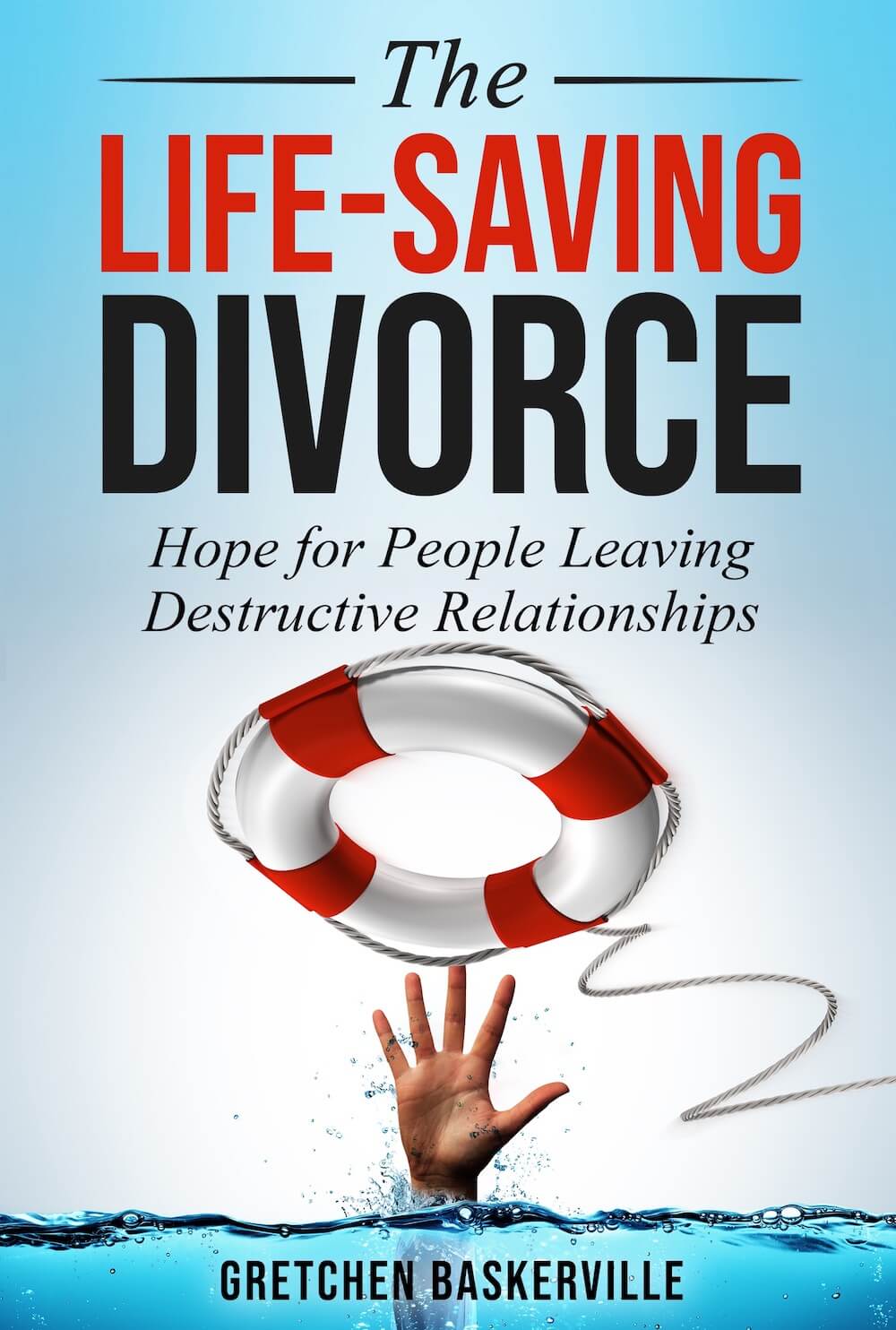
That is exactly why I write about life-saving divorce.
The Footnote Does Not Undo the Damage
Tim Challies added a footnote saying he is not talking about abusive marriages. But the footnote does not solve the problem, because the main message is still aimed at people in painful marriages, and many abused spouses do not yet realize their marriage qualifies.
The response under Challies’s own Facebook post showed that readers immediately understood the problem. Several pointed out that many people in abusive marriages initially describe them as merely difficult, not abusive, and warned that a short footnote was not enough to protect those readers. Others noted the wider church pattern of pressuring people to stay in harmful marriages and prioritizing the preservation of marriage over the safety of the person being harmed. In other words, the danger here was not theoretical. Even his own audience could see it.
Most people in abuse minimize it for years
They do not usually say, “I am being abused.”
They say: I think my marriage is just hard. I think I need to pray more. I think I need to be more patient. I think maybe I am the problem. I think God wants me to endure.
That is exactly why broad “stay and bear it” teaching is so unsafe.
Telling People to Wait for Death Is Not Hope
I also object to the poetic language about how death will finally end even the hardest marriage.
That may sound profound from a distance. But to someone living in misery, confusion, fear, or despair, it lands like this: Hang on until one of you dies.
That is not comfort.
That is not good news. (When new divorce laws passed in the 1970s, the suicide and homicide deaths of wives dropped significantly.)
Jesus repeatedly angered religious leaders by putting mercy, rescue, and human well-being ahead of rigid interpretations that kept people trapped. Luke 13 is a good example.
Marriage is not a sanctified hostage situation
No Christian should be taught that faithfulness means remaining available for lifelong mistreatment.
Marriage is a covenant. It is not a permission slip for one spouse to destroy the other.
And in some cases, this is not only a marriage issue. It is also a reporting issue. If children are being sexually abused, physically harmed, terrorized, or exposed to serious danger, pastors, counselors, teachers, and other adults may have legal duties to report suspected abuse in states that require it. Churches should not hide behind “let’s just pray more” language when children or disabled adults may be in danger.
And even when a situation does not trigger a civil reporting law, Matthew 18 still matters. When a spouse is engaged in serious, ongoing, marriage-endangering sin—abuse, intimidation, coercion, sexual betrayal, chronic deception, or destructive neglect—that sin should be brought into the light and addressed by church leaders. Church discipline is not supposed to pressure the harmed spouse to endure more. It is supposed to confront the wrongdoer.
If a church hears about a destructive marriage and its first instinct is to silence the victim, protect the reputation of the marriage, and avoid calling sin what it is, that is not faithful shepherding. That is helping the harmful spouse keep power.
What Christians in Destructive Marriages Need to Hear
If you are in a marriage where your spouse treats you like the enemy, minimizes your pain, exploits your conscience, or keeps breaking vows without real repentance, please do not let vague Christian teaching trap you.
Naming serious sin, seeking safety, involving the proper authorities when needed, and asking church leaders to confront marriage-endangering sin is not unspiritual. It is truthful. It is wise. And sometimes it is necessary.
Suggested reading:
What is a Life-Saving Divorce?,
Can I Divorce for Abuse? Can Christians Divorce for Abuse?, and
The Bible Teaches Us to Get Away from Abusers.
If your church keeps urging you to absorb more damage, see Pastors Who Accept Physical and Emotional Abuse as Grounds for Divorce and Excommunication for Getting Divorced? What to Do!.
Difficult is not the same thing as destructive
A difficult marriage is one thing.
A destructive marriage is another.
Christian teachers who blur that line are not being deep. They are being reckless.
Tim Challies Is Still Getting This Wrong
Tim Challies writes as if patient endurance is the clear biblical answer. But he is not the only conservative Christian voice worth hearing. David Instone-Brewer, a respected biblical scholar with connections to Tyndale House in Cambridge, England, argues from Scripture, ancient Jewish law, and the teachings of Jesus and Paul that there are four biblical grounds for divorce: sexual immorality, abandonment, neglect, and abuse or cruelty. That matters because it shows that rejecting harmful “just endure it” advice is not liberal drift or biblical compromise. It can be a serious, thoughtful, and deeply Christian reading of the Bible.
Further Reading
One striking pattern in the Gospels is that Jesus was often in conflict with religious leaders who prized their interpretation of Scripture more than the safety and dignity of the vulnerable.
Divorce and the Good Samaritan Story asks a hard question: when someone is being crushed, who is really acting like Jesus? In the parable of the Good Samaritan, mercy moves toward the wounded person instead of passing by in the name of religious caution. That matters for destructive marriages, because Christlike love protects the harmed person rather than preserving a theological image while someone bleeds by the roadside.
Luke 13 Shows Jesus Prioritizes Rescue Over Remaining in Bondage highlights Jesus’ instinct to liberate the oppressed rather than defend a system that keeps them bound. In Luke 13, Jesus rebukes religious resistance to deliverance and declares that the woman ought to be loosed from her bondage. The point is clear: Jesus does not glorify prolonged oppression. He moves toward freedom.
Red Flags: Why You Didn’t See Them and Why It’s Not Your Fault If You Married Anyway explains why many devout Christians miss warning signs before marriage and why later discovering destructive patterns does not make the harmed spouse blameworthy.
“You Made Your Bed, Now Lie in It” Is Not Biblical Counsel challenges the cruel idea that a spouse must remain trapped in ongoing harm simply because they chose the marriage in the first place.
The Bible Teaches Us to Get Away from Abusers shows that biblical wisdom does not require people to stay close to those who are harming them.
 :
:
 :
: Buy PDF