
I’m Having Second Thoughts About Filing for Divorce
Yes. It is completely normal to have second thoughts while moving toward divorce—and to keep having doubts for months after you file.
In fact, your doubts may reflect how seriously you take marriage, your children, your faith, and the consequences of this decision. People leaving destructive marriages are often not impulsive. They have usually spent years hoping, praying, forgiving, explaining, counseling, adjusting, and trying again.
You can know that a marriage is unhealthy and still grieve not only its ending, but how good it might have been if your spouse had invested as much honesty, effort, and care as you did.
You can recognize that your spouse repeatedly harms you or the children—and still remember the moments when that same person was helpful or kind.
Human beings are complicated. A person does not have to be cruel every minute of every day to be an unsafe or destructive marriage partner. If you are struggling to name what is happening, these warning signs of abuse may help you look at the larger pattern.
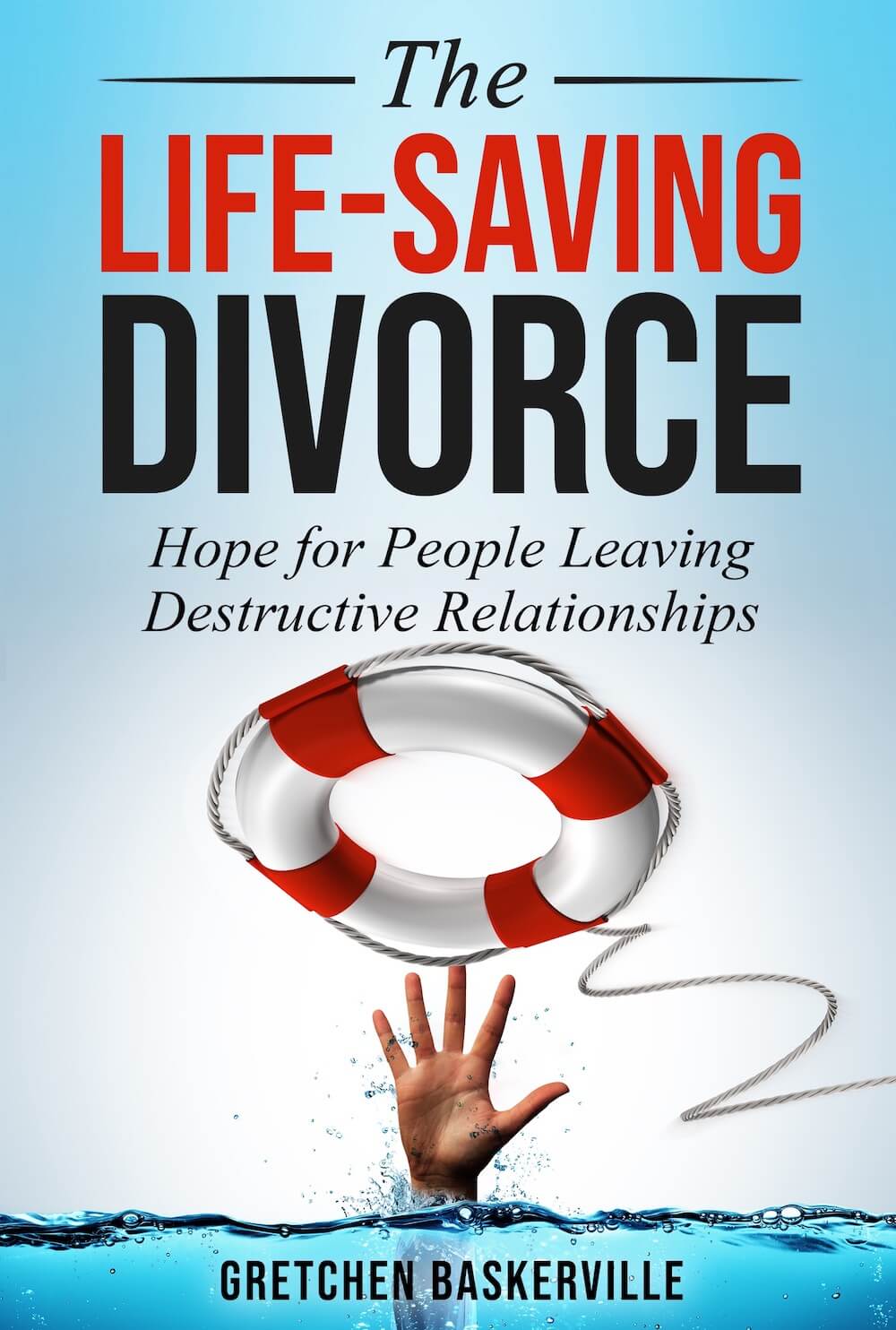
As I wrote in The Life-Saving Divorce:
“People are complex. Some are good in certain areas but unable to be safe marriage partners.”
You do not have to prove that your spouse is entirely bad. The more important question is whether there is any rational reason to believe the marriage can become safe, respectful, and mutually loving.
Look at the Pattern, Not the Occasional Good Day
When you begin doubting yourself, return to the pattern you have actually lived.
- What happens when I express hurt?
- Does my spouse listen and take responsibility—or dismiss, lie, ignore, excuse, interrupt, shout, blame, or withdraw?
- Have apologies led to sustained change?
- Is my spouse genuinely seeking help that really sticks? Or do they go to counseling for a while before everything returns to the way it was?
- Am I becoming healthier, freer, and more fully myself—or am I shrinking?
- What are my children learning about love, respect, conflict, and marriage?
A pleasant weekend or helpful gesture does not erase a longstanding pattern of contempt, intimidation, neglect, deception, or emotional abandonment.
Real change is not merely kindness after conflict. It includes honest acknowledgment, responsibility without excuses, respect for boundaries, professional help when needed, and consistently changed behavior over time. Here are some practical ways to evaluate whether an abusive or deceptive partner has really changed.
You Cannot Know the Future With Certainty
Many people want God to give them absolute certainty before they make a painful decision. But most major life decisions do not come with a guarantee.
You make the wisest decision you can using the truth you know now. For many people that means looking back at their journals or notebooks to remind themselves of what has happened in the past. It’s not your imagination; it’s a long pattern of harmful behavior, maybe not all the same type, but having the same effect.
It also means gathering information, documenting patterns, seeking counsel from people who understand destructive relationships, considering your children’s wellbeing, and paying attention to the effect the marriage is having on your emotional, spiritual, and physical health.
Choose your counselors carefully. A safe pastor or counselor will take destructive behavior seriously rather than automatically prioritizing the preservation of the marriage. These guidelines can help you distinguish between safe and unsafe pastoral counselors.
It may also help to imagine two futures.
What might your life and your children’s lives look like one year from now if nothing changes? What about five years from now?
Then picture what each path is likely to require from you over the next year or five years. Which future asks you to keep absorbing the same harm and betrayal, and which one gives you a realistic chance to rebuild safety, health, peace, and hope?
Your Children Need Safety More Than a Two-Parent Household
Divorce can be difficult for children. So can living in a home shaped by chronic tension, disrespect, deception, emotional withdrawal, anger, and fear. You can read more about the effects of destructive marriages in Abuse and Kids.
Even Dr. Judith Wallerstein, whose work is frequently cited to emphasize the difficulties of divorce, wrote:
“Children raised in extremely unhappy or violent intact homes face misery in childhood and tragic challenges in adulthood.”
Her work has often been misrepresented as proving that divorce is always harmful to children, but that isn’t true. She was in favor of life-saving divorces because often they protected the children. Here is a closer look at what Wallerstein’s work actually says about children and divorce.
Children learn about relationships by watching us. They notice who is allowed to speak, whose feelings matter, how conflict is handled, and whether mistreatment has consequences.
Your job is not to create a life in which your children experience no pain. No parent can do that. Your job is to make thoughtful, responsible decisions that protect their wellbeing as much as possible.
Second-Guessing After Filing for Divorce
It is also very common to second-guess yourself after you file. Filing does not instantly erase grief, hope, fear, or the lifelong messages you may have heard about divorce.
You may still wonder whether you should try one more time, especially when time has passed, when you feel overwhelmed by single parenting, loneliness, or financial pressure, or when your spouse says the right words.
One Woman’s Story: A Pastor’s Question That Brought Clarity
“What has changed other than the passage of time?”
Six months after filing for a life-saving divorce from a serial cheater, one woman had second thoughts. She went to her pastor full of doubt and exhausted from raising small children alone. She wondered whether she should take her husband back.
Her pastor asked one question: What had changed other than the passage of time?
He encouraged her to look past apologies and ask whether the underlying condition had actually changed. Was there new honesty? Consistent responsibility? Humility? Faithfulness? Sustained action over time? Or were the same patterns still present?
The pastor knew the woman had good character. She was forgiving and willing to go the extra mile. Then he asked how many extra miles she had to go before acknowledging that her husband had not shown the ability or willingness to make a faithful commitment and rebuild trust.
That is a useful way to evaluate your own situation. Do not measure change by promises, emotion, gifts, pressure, or the simple passage of time. Look for evidence.
Second thoughts do not necessarily mean you made the wrong decision. Sometimes they are simply part of grieving a marriage you deeply wanted to work—and reevaluating the shaming messages you were given by family, friends, church, and culture.
Keep returning to what is true. God is not confused about what has happened in your home. Safety is not an unbiblical or selfish concern. Biblical scholarship affirms that an innocent spouse may be free to leave a marriage broken by serious betrayal, abuse, or neglect. Read more about the biblical freedom of the innocent spouse.
You may move forward carefully, prayerfully, and honestly—one step at a time.
For more on this, see chapter 5 in The Life-Saving Divorce.
Sources
- Gretchen Baskerville, The Life-Saving Divorce: Hope for People Leaving Destructive Relationships, chapters 1 and 5. These chapters discuss unsafe marriage partners, tipping points, and evaluating whether there is a rational reason to expect meaningful change.
- Judith S. Wallerstein, Julia M. Lewis, and Sandra Blakeslee, The Unexpected Legacy of Divorce (2000), p. 300. Wallerstein acknowledged the serious risks faced by children raised in extremely unhappy or violent intact homes.
Recommended Reading
- How to Tell If an Abusive or Deceptive Partner Has Really Changed
- Is This Abuse? Warning Signs to Watch For
- Abuse and Kids: What Children Experience in Destructive Homes
- What Judith Wallerstein’s Research Really Says About Children and Divorce
- How to Recognize Safe and Unsafe Pastoral Counselors
- Biblical Freedom for the Innocent Spouse
 :
:
 :
: Buy PDF