
Scorecard for Premarital Articles from Focus on the Family
Are you a pastor, parent, or friend wondering whether certain Focus on the Family articles are wise premarital reading? This page is designed to help you answer that question. Experts recommend that premarital education material teach about signs of potentially destructive character and behavior issues before the marriage.
This scorecard rates selected Focus on the Family premarital advice articles by a simple standard:
Does this article make truth-telling, red-flag recognition, outside help, and postponing or canceling a wedding when serious warning signs are present easier—or harder?
These ratings do not measure warmth, sincerity, or writing style. They measure whether the advice is clear, realistic, and protective when serious problems are present, including coercion, deceit, chronic degradation, sexual pressure, or other major warning signs.
A higher score means the article is more honest and protective. A lower score means it is more likely to minimize danger, blur serious risks, or make harmful marriages easier to enter.
What does the numeric score mean?
- 10 = strongly protective
- 8 = mostly sound
- 6 = half-helpful, half-risky
- 4 = seriously flawed
- 2 = dangerous
- 1 = maximally dangerous
Don’t see the article you wanted? Send me the URL and I’ll score it and add it.
Christian Sex Advice for the Wedding Night and Beyond
Image:
Internet Archives URL: https://web.archive.org/web/20250513223816/https://www.focusonthefamily.com/marriage/newlywed-sex-how-will-you-respond-to-the-challenges-youll-be-facing/
Quick verdict: This article recognizes trauma, sexual addiction, and the value of outside help. But it frames sexual disappointment mainly as a test of whether you will be “selfish or sacrificial” or willing for God to make you “a great lover.” That is risky counsel for readers facing coercion or honeymoon abuse.
What it gets right: It encourages communication and seeking help from counselors, doctors, pastors, and therapists.
What it misses: It never clearly names marital sexual coercion, wedding-night or honeymoon abuse (which is a common high-risk time that abuse begins), or the need to stop, separate, or protect yourself.
Penalty flags: coercion omitted; abuse omitted; spiritualized pressure; no protective exit language.
Should Couples Live Together Before Marriage?
Image:

Internet Archives URL: https://web.archive.org/web/20260317021832/https://www.focusonthefamily.com/marriage/cohabitation-as-a-means-to-marriage/
Quick verdict: This article does encourage premarital counseling, waiting, and more deliberate decision-making before marriage. It also mentions higher rates of domestic violence in cohabiting relationships. But it treats cohabitation mainly as a commitment and moral problem, not as a context where coercion, deceit, or unsafe dynamics may need clear screening and a broken engagement.
What it gets right: It pushes couples toward structured premarital counseling, slower timing, and more intentional choices. It also warns that sliding into marriage is not the same as deciding wisely.
What it misses: It never clearly tells readers to watch for coercion, intimidation, sexual pressure, chronic disrespect, or deceit, and it never says those are reasons to postpone or cancel a wedding.
Penalty flags: abuse underdefined; red flags vague; moral framing outweighs safety framing; no clear stop-the-wedding guidance.
Are My Marriage Expectations Realistic?
Image:
Internet Archives URL: https://web.archive.org/web/20241212010948/https://www.focusonthefamily.com/marriage/are-my-expectations-realistic/
Quick verdict: This article does better than many Focus pieces at telling readers not to assume marriage will fix debt, temper, shallow connection, or other preexisting problems. It urges honest evaluation before marriage and says prospective spouses should see each other under stress, around family, and in disagreement.
What it gets right: It pushes realism over wishful thinking. It asks concrete questions about character, conversation, spiritual maturity, social fit, and how someone handles pressure. That does help readers slow down and assess whether they really know the person they plan to marry.
What it misses: It never clearly names abuse, coercion, intimidation, deceit, sexual pressure, or the freedom to postpone or cancel a wedding over serious warning signs. Even its red-flag examples stay relatively mild.
Penalty flags: abuse omitted; red flags underdefined; no clear stop-the-wedding guidance.
Cohabitation: Does it Help or Hurt?
Image:

Internet Archives URL: https://web.archive.org/web/20260120212301/https://www.focusonthefamily.com/marriage/cohabitation-does-it-help-or-hurt/
Quick verdict: This article does better than some Focus pieces at saying cohabitation can blur judgment and make it harder to leave bad relationships. But it still frames the issue mainly as commitment, covenant, and sexual morality—not as screening clearly for coercion, deceit, intimidation, or sexual pressure before marriage.
What it gets right: It warns that shared housing, money, routines, and social pressure can trap couples in unhealthy relationships. It also says people may ignore or rationalize red flags.
What it misses: It never clearly names abuse as a reason to end the relationship. Instead, it keeps steering toward marriage as the answer.
Penalty flags: abuse underdefined; marriage idealized as safety; moral framing outweighs safety framing; no clear stop-the-wedding guidance.
24 Questions to Help You Plan for Your Future Marriage
Image:

Internet Archives URL: https://web.archive.org/web/20260212094952/https://www.focusonthefamily.com/marriage/marriage-prep/24-questions-to-help-you-plan-for-your-future-marriage/
Quick verdict: This article does encourage real conversation before marriage and asks about family dynamics, goals, faith, and concerns. But it frames premarital preparation mostly as deeper mutual understanding, not as screening for coercion, deception, sexual pressure, or reasons to postpone the wedding.
What it gets right: It urges couples to talk honestly about nervousness, family concerns, finances, roles, past difficulties, and “inner vows,” and it says other people can provide encouragement and counsel.
What it misses: It never names abuse, coercion, intimidation, chronic degradation, sexual danger, or the freedom to postpone or cancel a wedding over serious warning signs.
Penalty flags: abuse omitted; red flags underdefined; no cancel-the-wedding guidance; outside help vague.
Gen Z’s Marriage Misunderstanding
Image:
Rating for Gen Z’s Marriage Misunderstanding article from Focus on the Family.
Internet Archives URL: https://web.archive.org/web/20260316232732/https://www.focusonthefamily.com/marriage/gen-zs-marriage-misunderstanding/
Quick verdict: This article treats divorce as an “escape hatch,” urges lifelong covenant commitment, and contrasts marriage with cohabitation, but gives no guidance about coercion, deceit, fear, or when ending an engagement may be wise.
What it gets right: It values commitment over a disposable view of relationships.
What it misses: It never names abuse, red flags, outside counsel, or postponing a wedding when serious warning signs are present.
Penalty flags: abuse omitted; red flags omitted; no outside-help guidance; commitment language without safety guardrails.
12 Questions Every Father Should Ask His Future Son-In-Law
Image:
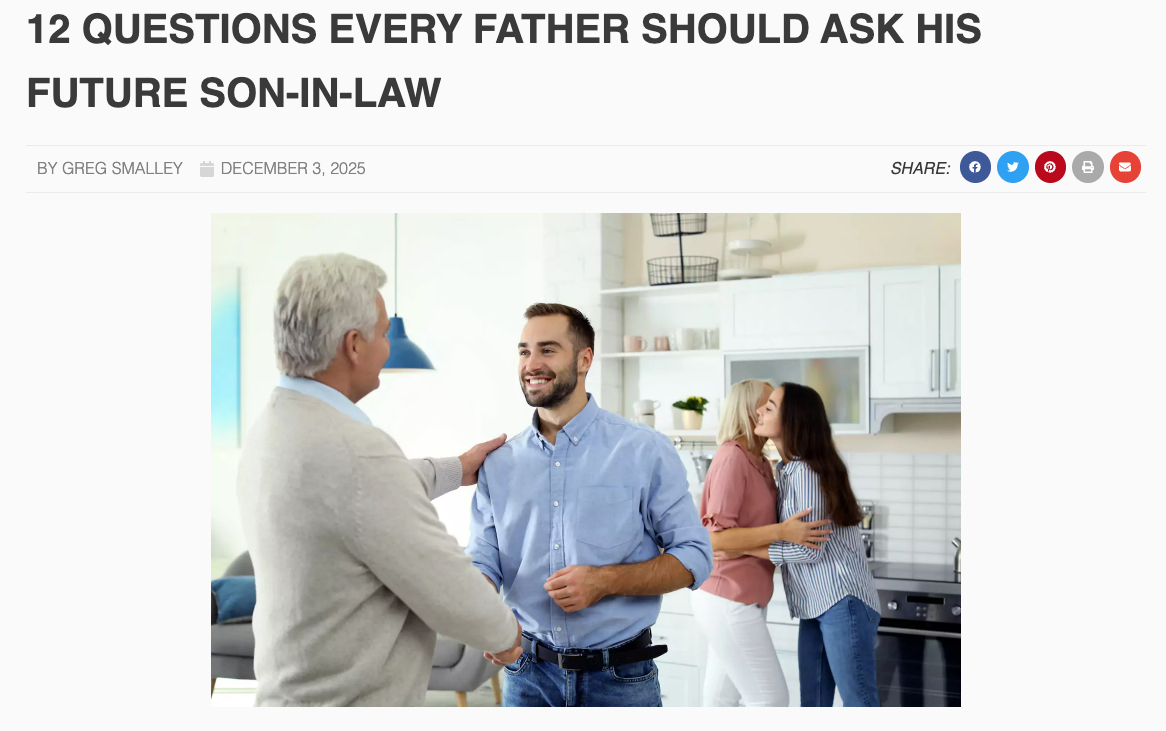
Rating for 12 Questions Every Father Should Ask His Son-in-Law article from Focus on the Family
Archive URL: https://archive.ph/b5iLQ
Quick verdict: This article does better than some. It tells families to ask if the bride feels “tense, confused, uneasy, or pressured,” and it explicitly lists abuse, violence, and other red flags.
What it gets right: It encourages serious questions about faith, conflict, baggage, counseling, and warning signs before giving a blessing.
What it misses: It still pushes “lifelong commitment,” says “divorce” should not be in his vocabulary, and frames abuse as just one issue calling for extra caution, not a clear reason to stop the wedding.
Penalty flags: abuse underweighted; commitment pressure; no clear stop-the-wedding language.
Note: Greg Smalley’s daughter got divorced. You might want to see the analysis of his public article on that here: https://lifesavingdivorce.com/church-divorce-double-standard/
What Is the Best Age to Get Married?
Image:

Rating for What is the Best Age to Get Married Article from Focus on the Family
Internet Archives URL: https://web.archive.org/web/20260316234134/https://www.focusonthefamily.com/marriage/what-is-the-best-age-to-marry/
Quick verdict: This article treats the question mainly as a research debate about timing and argues that early marriage can be wise for “young, mature couples of serious faith” with parental support. That sounds measured, but it never asks whether the couple is safe, honest, non-coercive, or free of serious warning signs.
What it gets right: It pushes back on the idea that later is always better and says maturity and commitment matter more than age alone.
What it misses: No abuse, coercion, deception, sexual pressure, or cancel-the-wedding guidance.
Penalty flags: red flags omitted; safety omitted; risk romanticized.
What Does the Bible Say About Soulmates?
Image:

Rating of What Does the Bible Say About Soulmates article from Focus on the Family
Internet Archives URL: https://web.archive.org/web/20260316234345/https://www.focusonthefamily.com/marriage/soulmates-or-sole-mates/
Quick verdict: This article does well at warning against infatuation and telling readers to consider character, compatibility, life goals, spiritual health, and wise counsel.
What it gets right: It says to listen to parents, pastors, and trusted advisors, and even says to put marriage plans on hold if respected people have serious reservations. It also says not to ignore red or even yellow flags.
What it misses: It never clearly names abuse, coercion, deceit, intimidation, or sexual pressure.
Penalty flags: abuse omitted; red flags underdefined; “peace” language can blur danger.
Go for the Life Partner, Not the Prom Date
Image:

Rating of Go For the Life Partner, Not the Prom Date article from Gottman Institute
Internet Archives URL: https://archive.ph/vOzzJ
Quick verdict: This article does a better job than the Focus on the Family pieces at shifting readers away from chemistry, looks, and “fun” toward character, emotional stability, kindness, loyalty, good judgment, and constructive conflict.
What it gets right: It tells readers to ask, not “What would a love story look like?” but “Can I make a life with this person?” It emphasizes traits that matter for long-term wellbeing, including emotional stability, loyalty, kindness, growth mindset, and the ability to argue constructively.
What it misses: It still does not clearly name abuse, coercion, deceit, intimidation, or the need to end a relationship when those are present.
Penalty flags: abuse omitted; red flags underdefined.
Premarital Counseling With Marriage Mentors
Image:
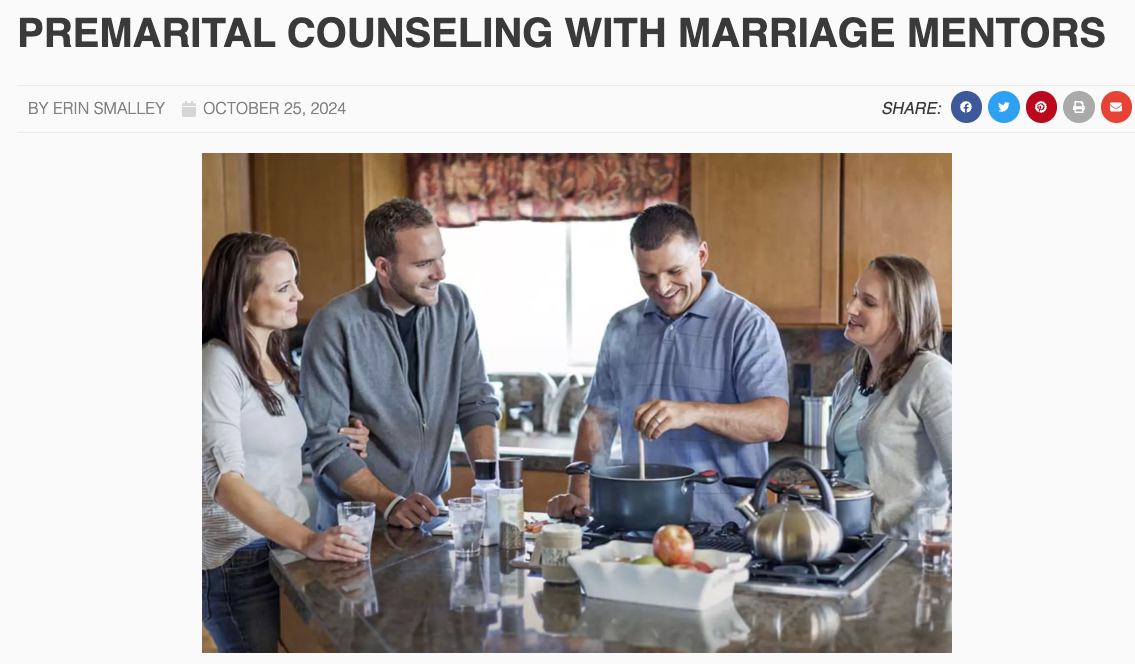
Rating for Premarital Counseling with Marriage Mentors article from Focus on the Family
Internet Archives URL: https://web.archive.org/save/https://www.focusonthefamily.com/marriage/invest-in-your-marriage-with-mentors/
Quick verdict: Encourages honesty, mentoring, and professional counseling for serious issues, which is better than many Focus articles. But it still does not clearly name abuse, coercion, intimidation, or postponing/canceling a wedding when major warning signs appear.
What it gets right: It encourages honesty, mentoring, and professional counseling for serious concerns.
Penalty flags: abuse underdefined; red flags vague; no clear stop-the-wedding guidance.
How the math works
Each article receives a raw score in five categories:
- Harm named
- Protective options
- Burden-shifting
- Clarity
- Practical safety
Each category is scored from 0 to 2:
- 0 = absent or harmful
- 1 = partial or mixed
- 2 = clear and strong
Then those category scores are weighted:
- Harm named × 3
- Protective options × 3
- Burden-shifting × 2
- Clarity × 1
- Practical safety × 1
That gives a weighted total out of 20.
Then subtract penalties for dangerous problems in the article:
- abuse omitted = -2
- abuse minimized = -2
- danger normalized = -2
- endurance pressure = -2
- final legal protection withheld = -2
So the formula is:
Then convert that to a 10-point scale by dividing by 2.
In other words, an article first earns points for how clearly and protectively it responds to serious warning signs and danger. Then it loses points for omissions or messages that could trap harmed spouses. That is why some articles sound caring but still score poorly: the penalties matter.
 :
:
 :
: Buy PDF