

Conservative Christians Are Laughing at the Heritage Foundation’s $4,000 Marriage Fix
Divorced Christians respond to a proposal to reward marriage and make divorce harder. They’re not impressed.
The Heritage Foundation thinks it has some ideas for saving American families: encourage marriage with financial incentives, make divorce harder, reconsider alimony, and favor presumptive equal custody.
But what happens when you ask Christians who actually survived destructive marriages what they think?
Some of them laugh out loud. Others are furious. And many say the proposals would have endangered their lives and their children.
In January 2026, the Heritage Foundation released Saving America by Saving the Family: A Foundation for the Next 250 Years. Among its recommendations and discussions are new financial incentives for marriage and policies intended to discourage divorce.
The report is presented as a way to restore America’s families.
But divorced Christians, including people who spent decades trying to honor their wedding vows, have a rather different perspective.
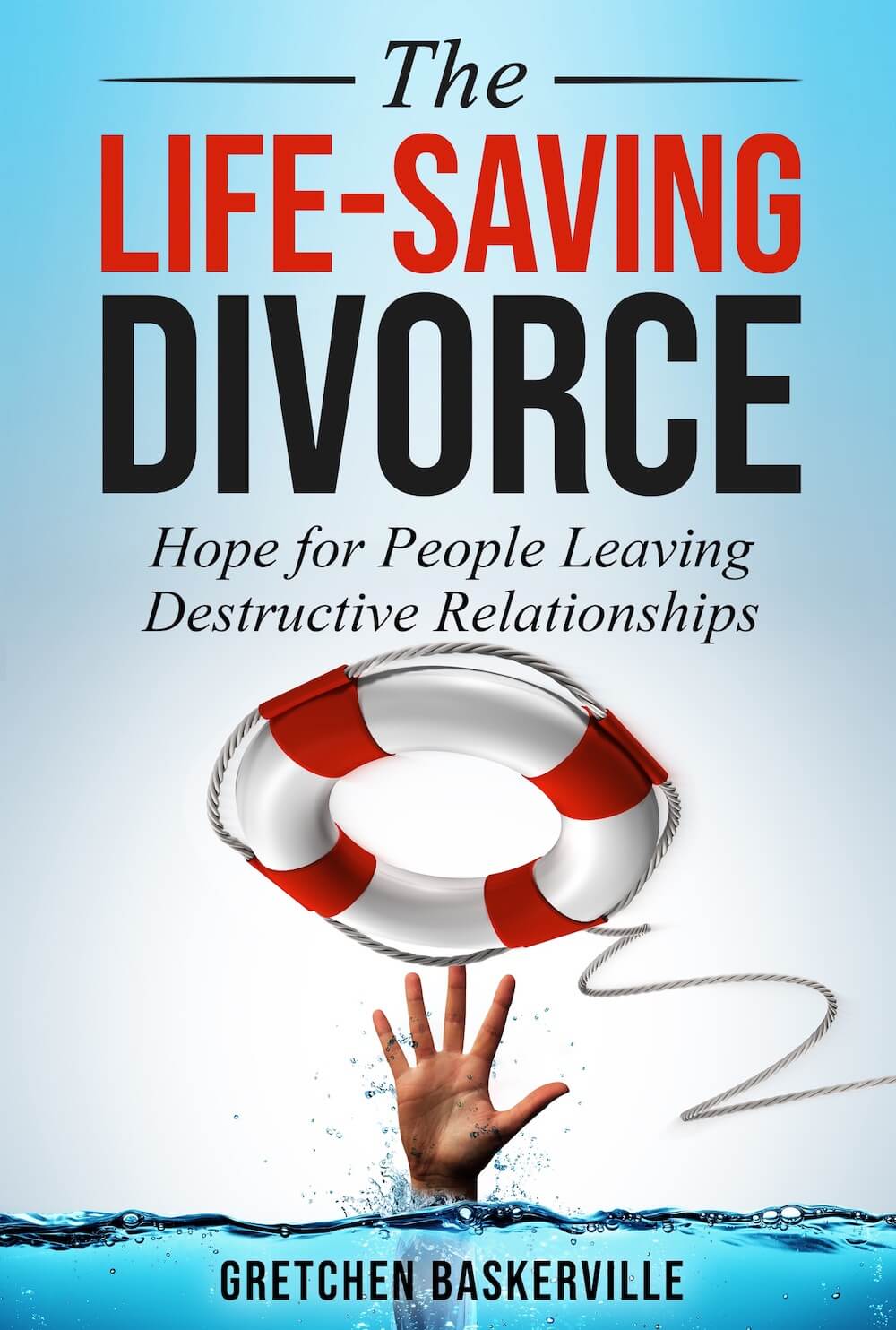
At The Life-Saving Divorce, we asked six questions about the proposed financial incentives and the idea of making divorce harder. More than 170 anonymous survey responses arrived.
These are voluntary responses from our audience, not a representative national survey. But they offer something that policymakers often miss: the experiences of people who tried desperately to save marriages that were being destroyed by abuse, infidelity, addiction, and abandonment.
And some of their responses are unforgettable.
1. Would $4,000 a year have saved your marriage?
One woman responded:
“If only throwing money at bad marriages worked….”
Another:
“I wouldn’t take ten billion dollars to stay with that abusive man.”
And a third:
“He would have used the money to buy more guns. I wouldn’t have seen any of it anyway.”
One woman who stayed married for 28 years was particularly offended:
“What a slap in the face! Offering four grand to stay where I was is such an insult and, frankly, makes me feel gross even thinking about accepting it. Like, ‘What, am I being trafficked here?!'”
Others pointed out that an annual tax benefit does absolutely nothing to stop infidelity, drug addiction, financial abuse, or physical violence.
One respondent said:
“$4,000 would not have stopped him from seeking a relationship with another man”
Another answered:
“The problem was no repentance of repeated porn use (adultery) and spiritual and verbal abuse.”
These are not problems that disappear when the government offers a tax benefit.
And there’s a particularly troubling problem when one spouse controls the family money: the person being abused might never see the financial benefit at all.
As another respondent put it:
“It would have just been more money for him to take and keep from me”
2. They think divorce is too easy? These Christians have news for them.
Heritage’s discussion of divorce assumes that making it harder to dissolve a marriage can strengthen family stability.
But many survey respondents had already endured years of legal proceedings after spending decades trying to rescue their marriages.
One woman wrote:
“It already took me 20 years to work up the courage to leave, then it took over 2 years to actually have divorce finalized. It’s already difficult.”
Another said:
“I already stayed for 28 years! That was long enough!”
And another described her divorce proceedings:
“The slow process of divorce court and having to document to attorneys and the court what is actually going on brings to mind Frodo traveling through Mordor.”
Yes, Frodo traveling through Mordor.
Not exactly the picture of a carefree woman strolling into divorce court for a quick change of scenery.
Another woman summed up why many of these respondents object to additional restrictions:
“People don’t leave because it’s easy. It terrifying. People leave when the fear of staying become greater than the fear of leaving”
Her point is unmistakable.
3. Some conservative Christian values are exactly why these women stayed so long.
One of the most striking themes in the responses is how seriously many respondents took their Christian commitments.
They didn’t reject marriage. They believed in it.
Often, they believed so strongly in preserving marriage that they stayed long after it was safe or healthy.
One woman explained:
“I was married for 25 years because I take vows made to God seriously.”
Another stayed 35 years in an abusive Christian marriage, including 11 years in a Christian marriage mentoring program.
Others described exhausting their savings on marriage counseling, books, ministries, and attempts at reconciliation.
One woman wrote:
“I did literally EVERYTHING to save the marriage that I didn’t break in the first place.”
She described trying advice from Love and Respect and Fireproof: The Love Dare, only to discover that her efforts could not produce repentance or change in an unwilling spouse.
This is a central misunderstanding in proposals that assume divorce occurs because people have not tried hard enough.
Many of these Christians tried for decades.
The problem was not insufficient commitment to marriage. It was that one spouse could not single-handedly repair what the other spouse continued to destroy.
4. What did they actually need? Money to leave safely.
When we asked whether respondents would rather receive financial assistance to stay married or help leaving safely, the answer was overwhelmingly the latter.
And they explained why.
One woman said:
“My poor, living on Social Security mom, scrounged up $5000 for me to get an attorney. She saved me.”
Another wrote:
“I gave my abusive ex-husband 60% of our assets without quibbling to finally escape.”
One mother described having no income, degree, job, or savings, and five children when she left after an assault.
Another said her husband drained the accounts and credit line, forcing her to stay with relatives for months.
These are the realities of trying to leave a destructive marriage.
A modest financial incentive to remain married does not solve these problems. In some families, it could become another financial tool used to pressure someone not to leave.
Imagine what $4,000 in assistance could do for a family escaping abuse and facing homelessness: a rental deposit, legal fees, groceries, transportation, or childcare.
Why are we trying to pay people to stay married instead of helping endangered families reach safety?
5. Some Christians are questioning whether the government should be involved at all.
One respondent made an explicitly conservative argument against government interference:
“Marriage is a personal choice and a covenant before God. The government has no business in that relationship.”
She continued:
“Using the government to step into a Godly relationship doesn’t convert people to faith. It alienates people even more.”
That raises an interesting question for proponents of limited government.
If marriage is a sacred covenant, why should government increase the legal barriers to ending one when the covenant has already been violated?
Does compelling two people to remain legally married produce faithfulness, love, repentance, or safety?
Or does it simply preserve marital status on government records?
6. The funniest answers carry a serious warning.
When we asked whether Heritage’s policymakers would still think divorce was too easy if they had lived in respondents’ homes for a week, the answers were sometimes hilarious.
One woman replied:
“But they probably would say I didn’t pray hard enough”
Another imagined a longer visit:
“Maybe a week would not be long enough, but a few months of walking on eggshells, they would be screaming to leave.”
And one Christian woman reached all the way back to the Exodus story to explain why she wouldn’t be tempted back into a destructive marriage:
“I will never go back to Egypt. The leeks aren’t that good.”
Now that’s a biblical response to the idea of making people stay married for financial benefits!
But beneath the humor was a deeply serious issue.
Several respondents explained that their spouses could behave charmingly in front of visitors, pastors, friends, and relatives. A week in the house might not reveal what was happening privately.
Some had spent decades believing they were required by God to remain married.
And some described marriages that became physically dangerous.
One woman said:
“Money would not have changed my husband’s behavior.”
That may be the simplest answer to the Heritage Foundation’s entire approach.
7. Here’s what these Christians would do instead.
Our respondents did more than criticize Heritage’s proposals. They repeatedly identified practical alternatives.
They wanted legal protection, meaningful accountability for abusers, better counseling, financial assistance, and family courts that take children’s safety seriously.
Their responses suggest a different agenda for saving American families:
- Keep unilateral no-fault divorce available so a spouse cannot block the other’s freedom to leave.
- Provide emergency financial help, housing, childcare, and legal aid to families escaping abuse.
- Protect fair alimony and property division, especially for homemakers and financially dependent spouses.
- Prioritize children’s safety over automatic 50/50 custody arrangements.
- Reduce court delays and prevent abusive spouses from weaponizing litigation.
- Enforce child support and financial accountability.
- Train pastors and counselors to distinguish ordinary marriage problems from abuse, coercive control, addiction, and betrayal.
- Teach young people to recognize healthy relationships and warning signs before marriage.
- Support effective addiction treatment and voluntary counseling without pressuring victims to reconcile.
- Measure family well-being by safety, stability, and healthy relationships—not simply whether a couple remains legally married.
The goal should be healthier marriages, not merely fewer divorces.
The Bottom Line: A Marriage Trap Isn’t a Family Policy
Heritage’s authors undoubtedly recognize that stable, loving marriages can benefit families and children.
So do many of the divorced Christians who responded to our survey.
But the people who lived through destructive marriages know something important:
A tax credit doesn’t stop abuse.
A waiting period doesn’t create repentance.
A marriage counselor cannot make an unwilling spouse faithful.
Restricting divorce doesn’t necessarily protect children.
And a marriage certificate doesn’t guarantee a healthy family.
One respondent summarized the central problem:
“The problem was no repentance of repeated porn use (adultery) and spiritual and verbal abuse.”
The respondents are asking policymakers to recognize that sometimes the institution of marriage has already been destroyed by the actions of one spouse.
A legal divorce can formally recognize what has already happened.
Making divorce harder in those circumstances is like removing the emergency exits from a burning building—and calling it fire prevention.
If we really want to save American families, we should make marriages safer, not make dangerous marriages harder to escape.
Read the Heritage Foundation’s original report:
Read our earlier collection of funny and fierce Facebook comments:
Read our detailed critique:
https://lifesavingdivorce.com/heritage-foundation-make-divorce-harder-critique/
 :

 :
 Buy PDF