
FORGIVENESS IS NOT SWEEPING EVERYTHING UNDER THE CARPET
| Forgiveness is not… | Forgiveness is… |
| Forgiveness is not letting the offender off scot-free. | Forgiveness is holding the offender responsible, including requiring reparations and accepting the legal consequences of their actions. Forgiveness wants repentance and compensation, if possible, not revenge. |
| Forgiveness is not saying the abuse, cheating, sexual immorality, and addictions are okay. | Forgiveness is saying that the abuse, cheating, and betrayals are wrong and destructive, and there are consequences for the offender, such as the loss of trust and often the loss of the marriage. |
| Forgiveness is not acting as if it never happened. | Forgiveness is saying it happened, and it shouldn’t happen again. |
| Forgiveness is not refusing to look at the offense. It is not sweeping the injury under the carpet or refusing to see the damage done.[1] | Forgiveness is looking at the full damage and expressing the horror and rage. It is to name the injuries and express your anger/sadness/grief aloud. It is speaking about the unspeakable. |
| Forgiveness is not saying “forgive and forget.” | Forgiveness does not require forgetting. Forgiveness doesn’t erase the offender’s guilt or wipe out the consequences for the offender. Even if you have forgiven a person, you can still divorce them. Forgiveness doesn’t give them a clean slate or a fresh start to hurt you all over again. |
| Forgiveness is not the same as healing the injuries caused by that offense. | Forgiveness happens in the spiritual world. Healing happens in the emotional and physical world. You can forgive, but still need time to heal. Just because you’ve forgiven doesn’t mean the damage caused by the other person miraculously disappears. |
| Forgiveness is not a one-time event. | Forgiveness is a long process. As you tell your story and think about the past, you will uncover some pain or hurt you hadn’t seen before. You may have to forgive various parts of the abuse/betrayal. |
| Forgiveness is not becoming friends again, trusting again, or reconciling again. It does not require you to trust this person again, or to befriend them, or even speak to them ever again. It doesn’t mean answering their letters, emails, voicemails, or messages. | Forgiveness is permission to protect and distance yourself. |
| Forgiveness is not saying, “We’ll go back to the same warm feelings we had before the betrayal.” | Forgiveness is facing the truth about the pain and injury. It means staying away from a dangerous person if possible. In some cases, it might include cooperating with law enforcement to keep this person from injuring others. |
You may also find these articles helpful:
- Forgiveness: What It Is and What It Isn’t
- What the Bible Says About Abuse
- Does the Bible Say to Run from Abusers?
- Unconditional Love Doesn’t Mean Staying
- How Abuse Affects Children
- Does Malachi 2 Mean God Hates Divorce?
[1] Top author on trauma and recovery, Dr. Judith Herman of Harvard, says, “The ordinary response to atrocities is to banish them from consciousness. Certain violations of the social compact are too terrible to utter aloud: this is the meaning of the word ‘unspeakable.’” She goes on to write, “Remembering and telling the truth about terrible events are prerequisites both for the restoration of the social order and for the healing of individual victims.” Herman, Trauma, 1.
If you wonder where these teachings come from, they are right in the Bible. The Bible says we are to get away from abusers, not to associate with them, not even to eat with them. So it must be possible to love, forgive, and walk away.
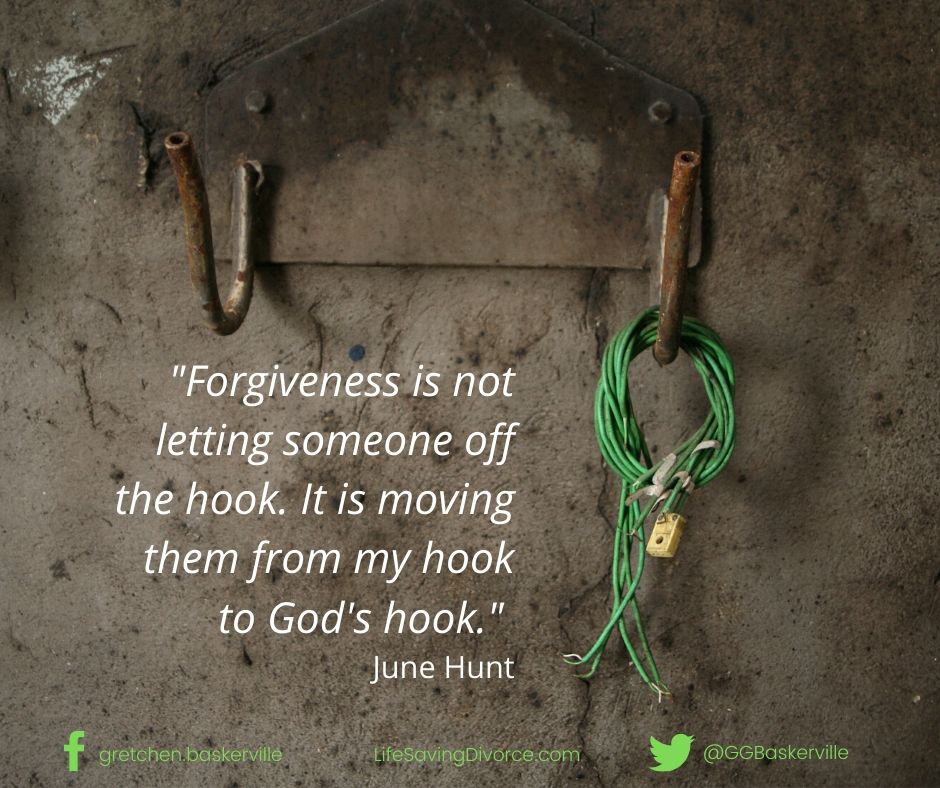
Radio counselor June Hunt says,
“Forgiveness isn’t letting someone off the hook for the bad they’ve done.
It is moving them from your hook onto God’s hook.”[4]
[1] Definition for slander based on “Slander,” www.USLegal.com, accessed 11/3/19, https://definitions.uslegal.com/s/slander/.
[2] “Libel vs. Slander: Different Types of Defamation,” Nolo Press, retrieved 11/3/19, https://www.nolo.com/legal-encyclopedia/libel-vs-slander-different-types-defamation.html.
[3] Top author on trauma and recovery, Dr. Judith Herman of Harvard, says, “The ordinary response to atrocities is to banish them from consciousness. Certain violations of the social compact are too terrible to utter aloud: this is the meaning of the word ‘unspeakable.’” She goes on to write, “Remembering and telling the truth about terrible events are prerequisites both for the restoration of the social order and for the healing of individual victims.” Herman, Trauma, 1.
[4] June Hunt, Self-Worth: Discover Your God-Given Worth (Peabody, MA: Rose Publishing, 2013), 65.
 :
:
 :
: Buy PDF