

Divorce vs. Legal Separation: What Abuse Survivors Should Know
Divorce vs. Legal Separation
Many churches feel that legal separation is a good solution for an abused wife or husband because it fits their beliefs about Christians and divorce. But legal separation is not always safe—or financially protective—for the abuse victim.
Most common reasons people choose a legal separation
- Keeping health insurance coverage under a spouse’s employer plan (check your state and plan rules).
- Preserving potential Social Security benefits (especially if nearing the 10-year marriage requirement for divorced-spouse benefits). For a plain-English overview, see AARP’s explanation and for the SSA’s technical guidance see SSA POMS RS 00202.005.
- Tax reasons (some couples prefer to keep the option of filing jointly—ask a qualified tax professional). A quick overview of joint vs. separate filing is here: Fidelity: Married filing jointly vs. separately.
- You are disabled or destitute and your church or family won’t help you if you divorce.
- You believe God hates all divorce in every case. (If this is you, please consider these Bible passages and analysis.)
Most common reasons people choose divorce instead
1) Legal separation isn’t available in some states
Legal separation is not available in every U.S. state. As of 2026, a commonly cited list says ten states do not offer it: Delaware, Florida, Georgia, Mississippi, Pennsylvania, and Texas. See: World Population Review’s overview, TexasLawHelp (Texas), and Forbes Advisor (Florida).
2) In some states, legal separation may not protect you from financial abuse as well as divorce can
In some situations, remaining legally married can expose you to shared debt or financial entanglements, including medical debt issues in certain states or circumstances. A general overview (state laws vary) is here: Legal Beagle: Responsibility for spouse’s debt after separation. Consult an attorney in your state.
3) What if the other person is dangerous and never improves?
If the other person is destructive and wants revenge for separating, are you expected to remain legally bound forever? That can punish the abused spouse more than the one who abuses.
4) “Worse than an unbeliever” vs. “no divorce allowed”
If Scripture says a person who doesn’t care for their family is “worse than an unbeliever”, then how can churches forbid divorce for abuse? For many victims, abuse functions as a form of abandonment in practice—especially when a spouse refuses basic covenant duties. Paul also says in 1 Corinthians 7:15 that the believer is “not bound” when the unbeliever leaves.
5) Emotional abuse can be as devastating as physical abuse, infidelity, or abandonment
I often hear emotional abuse victims say, “If only my spouse would hit me or cheat on me—then I could get free with the church’s blessing!” That kind of statement shows the desperation and bondage that come from being tied to someone who does not care about your wellbeing. And there are many Bible passages that call churches to remove unrepentant, destructive people from fellowship; how much more when the harm is 24/7 inside a marriage?
6) Jesus prioritized rescue over rule-keeping in Luke 13
In Luke 13, Jesus released a woman who had been bound for years, defying a religious leader’s rigid Sabbath rules. Jesus publicly rebuked the leader—essentially saying, “You treat animals better than this.” In the same way, wouldn’t Jesus place the safety and wellbeing of an abused spouse over preserving a marriage at all costs?
7) Sometimes divorce is simpler than undoing a legal separation
In some states, if the couple later reconciles, it can be faster and less expensive to remarry after divorce than to untangle a legal separation. And it may save money because you avoid paying for two separate legal processes.
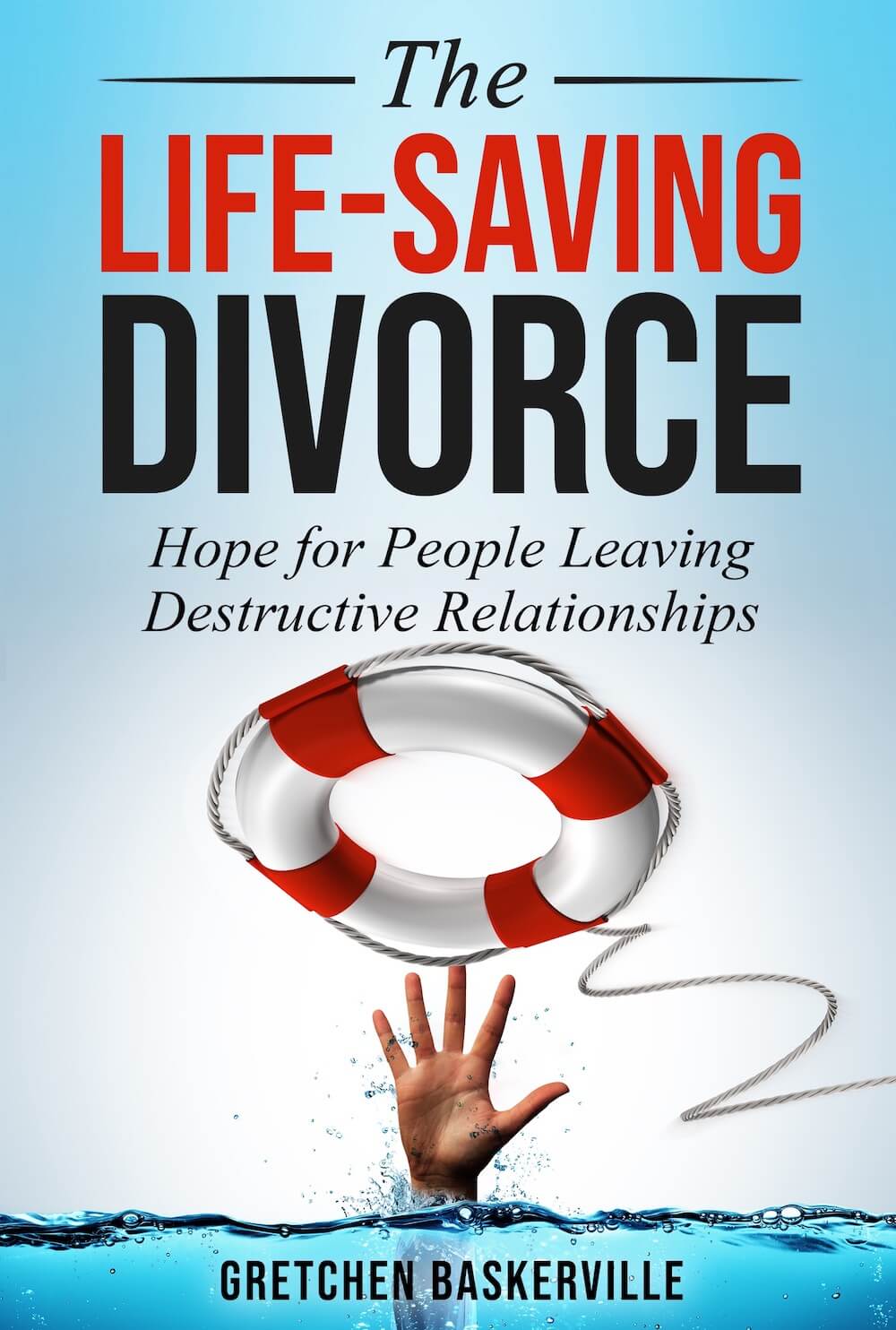
Note: #1 and #7 are from an interview with a Christian divorce attorney. You’ll find a discussion of this in my book, The Life-Saving Divorce, on pp. 278–279. I am not an attorney, and this is not legal advice. Every state is different, so consult an attorney in your state.
- Another woman’s story, Stephanie’s, is told in 6 parts on Pastor Jeff Crippen’s anti-abuse blog UnholyCharade.com. Pastor Crippen describes the harm the church did to her and offers churches a better way to respond, with biblical rationale.
Part 1 Part 2 Part 3 Part 4 Part 5 Part 6 - Chapter 8 of my book, The Life-Saving Divorce, is about how to find safe friends and a safe church.
 :
:
 :
: Buy PDF