
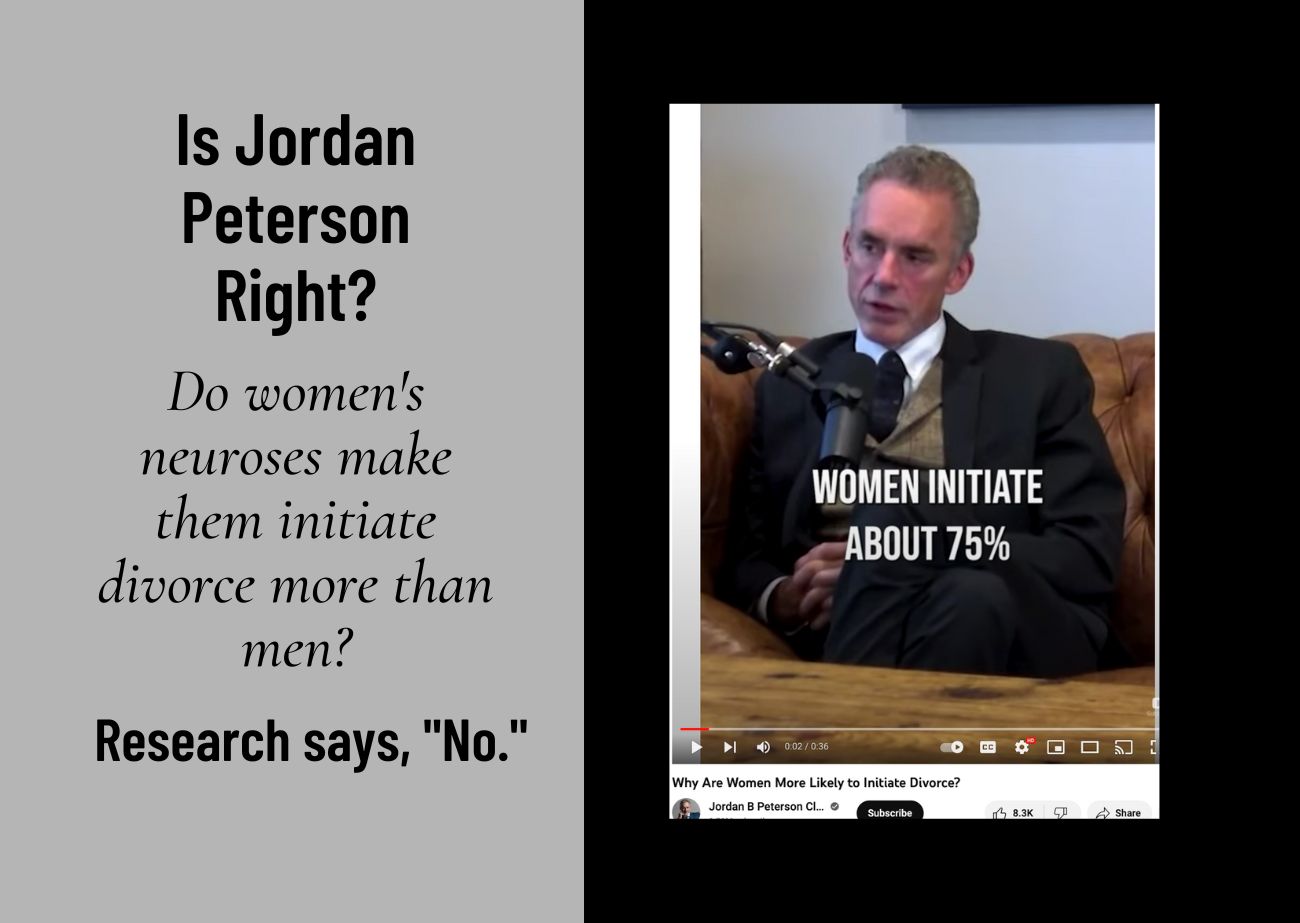
Is Jordan Peterson Right about Women and Divorce in This Video?
UPDATED 2/28/2026 – This post has been updated with the latest happiness figures for married people according to the GSS. This article has been enhanced with graphics and charts for visual learners.
This week’s question comes from a woman in my co-ed online divorce recovery group, the Life-Saving Divorce, made up of people who needed a life-saving divorce to escape a destructive marriage. So if you are new to my blog, be aware that most people in my group are religious conservatives who were brought up to value marriage, but found themselves in such destructive situations they had to leave to save their lives and sanity, even if they risked being stigmatized by their churches and friends.
This week’s question was from a woman who had seen a short video posted by a social media influencer:
“Is Jordan Peterson correct when he says that women initiate divorce in 75% of the cases and that it is because women are more neurotic than men?”
Let’s take that question and break it into individual pieces. It’s only fair to see what he said, not what people told us he said, right? So here’s the link to the video clip from Jordan Peterson. Please watch. It’s short. If you watch the clip, you’ll see that Peterson’s answer has some nuance, so it’s best to listen to his actual words. Also, I would recommend you keep an open mind and turn to demographers and family researchers for expert insights.
1. Do women initiate 75% of divorces?
It’s probably not as high as 75%, but it is high. According to Stanford professor Dr. Michael Rosenfeld’s 2017 study, about 2-in-3 divorces or 66% to 69% percent of U.S. divorces are wanted by the wife. The same is true in Europe and Australia.
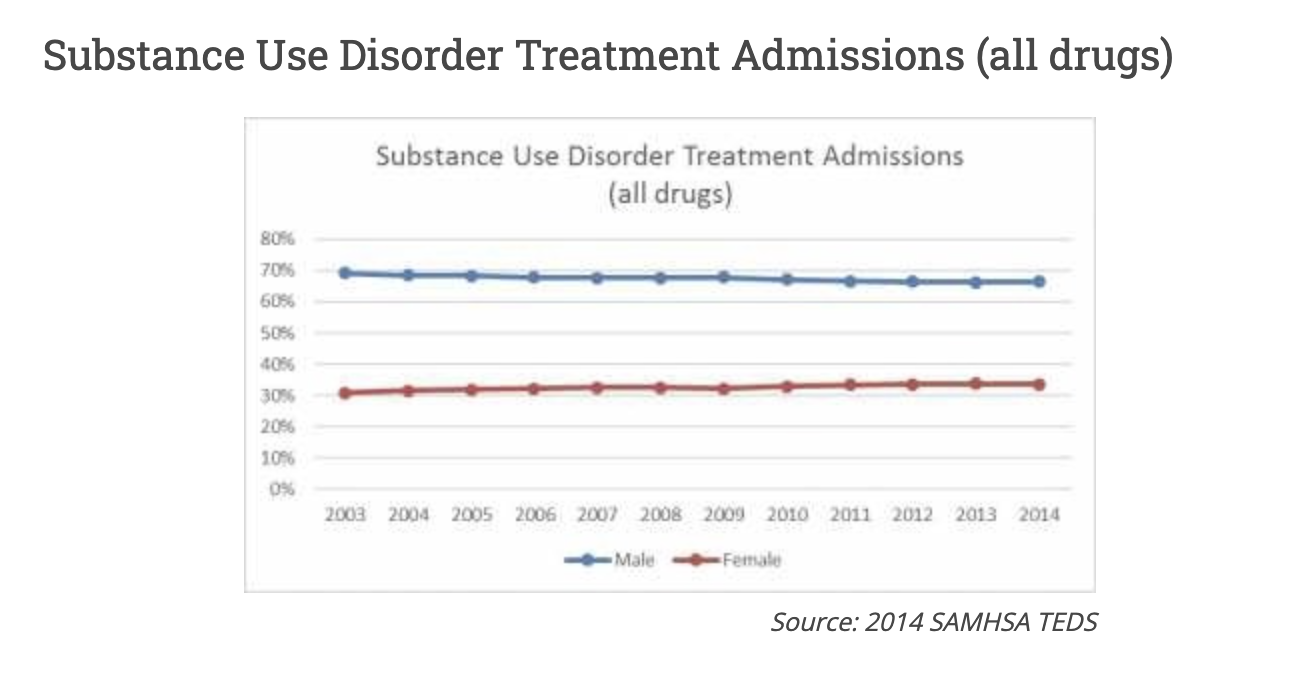
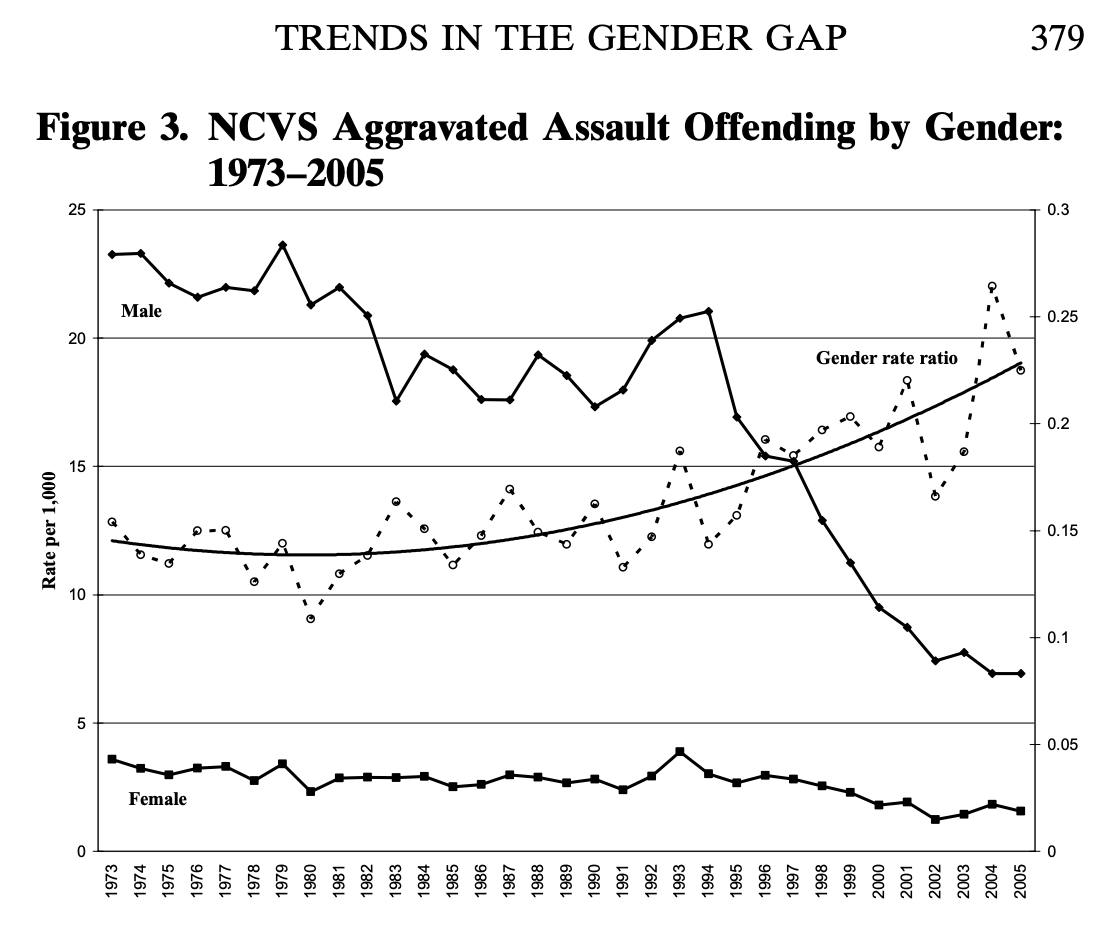
When you look closely at the factors, it’s no wonder that women initiate divorce proceedings more frequently than men. Men cheat twice as much. Men are five times more likely to be highly violent (criminally violent) and twice as likely to have a substance addiction so serious that professional treatment is recommended. But no one talks about that. Jordan Peterson doesn’t mention that, at least not in this video. People who like to shame women often use this 75% statistic as a “gotcha.” It’s not. Divorce is a complex issue and grasping for an easy answer doesn’t help the situation.
2. Are women more neurotic (negative) than men?
In his video, Peterson does NOT say that neurotic women are the main reason for divorce. He says it’s one of many factors. (Below, we will talk about some other factors.)
The Big 5 Personality Test measures five domains:
-(1) Openness to experience,
-(2) Conscientiousness,
-(3) Extraversion,
-(4) Agreeableness and
-(5) Neuroticism
Women indeed tend to score higher in neuroticism than men do. Neurotic traits can include (but not necessarily) anxiety, depression, anger, and irritability. Peterson suggests that some of this is natural because women are primary caregivers to infants, so an overly protective stance is understandable.
But what Peterson does not tell you in this video is that women also score higher than men on Agreeableness (being cooperative and prioritizing social harmony) and Conscientiousness (self-discipline, being emotionally well-regulated). It’s fair to say that people who behave well and enjoy cooperating may have considerable tension and conflict when living with those who don’t. So while women’s perceived negativity may be one reason, it may not be the primary reason.
3. Can We Blame Neuroticism for Women’s Higher Divorce Initiation Rate?
No, I don’t think so, because most marriages are happy. More than 8 in 10 people currently in heterosexual U.S. marriages say their marriage is “very happy” or “pretty happy” as of 2024 per the GSS. If women’s negativity was a serious problem, it seems that number would be lower. See the donut chart below.
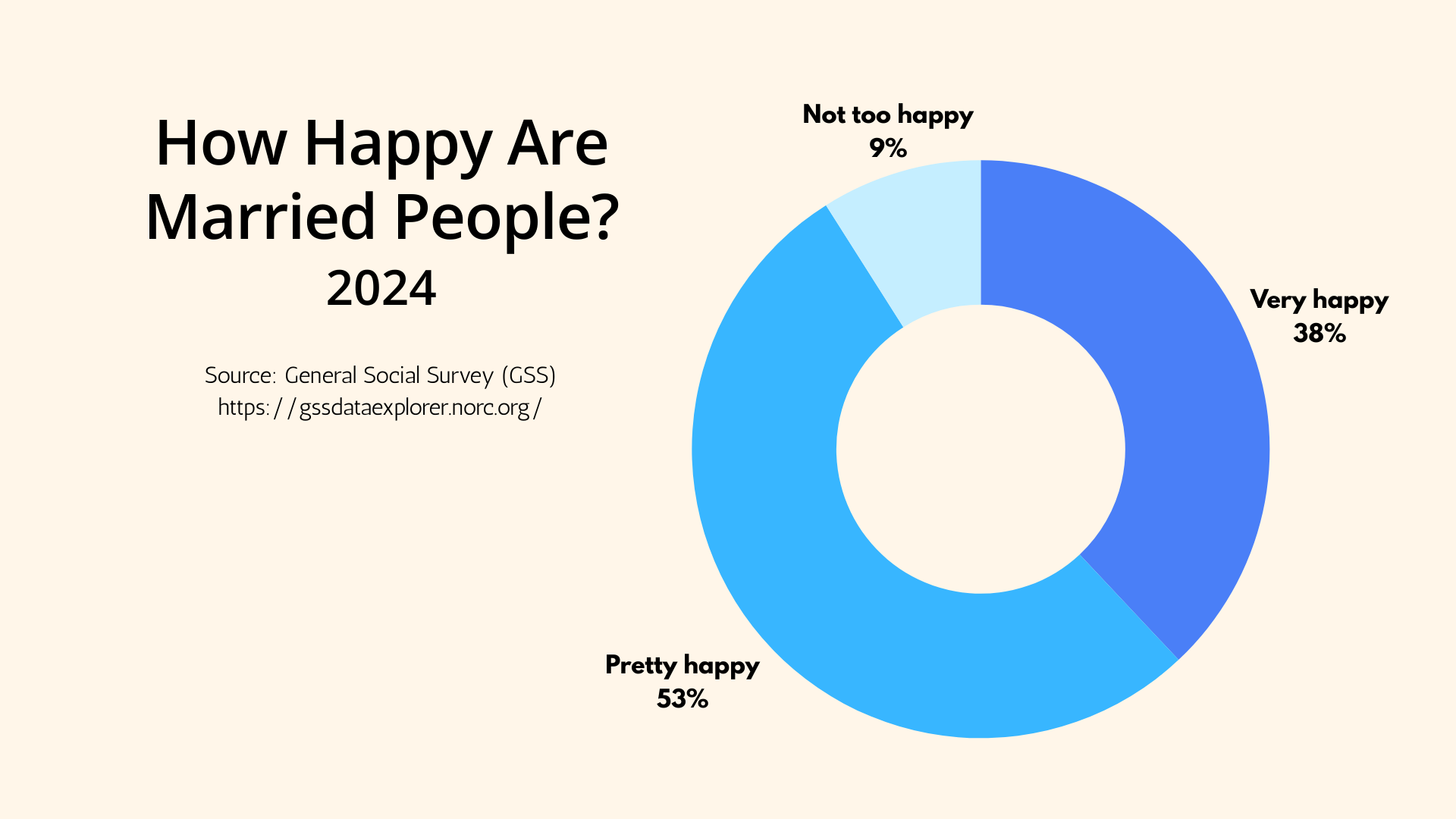
Click to enlarge. In 2024 GSS data, 38% of married adults say they are “very happy,” 53% “pretty happy,” and 9% “not too happy.” Source: General Social Survey (GSS).
But what about bad marriages? To answer the question we need to look at why MEN divorce and why WOMEN divorce. Do they divorce for the same reasons?
Are there any deal-breakers that both men and women agree are equally divorce-worthy? Yes.
4. Why Do Men Divorce? Why Do Women Divorce? – Three Studies
Study A
Study A showed that both men and women divorce about equally for the following reasons: their spouse’s infidelity, abandonment, cultural/religious differences (politics?), over-spending and miserliness, and finally, because of their own infidelity. (RIA 2014)
Men were far more likely than women to say the reason for the divorce was, “We married too young.”
Women were far more likely than men to say the reason for the divorce was, “It was my spouse’s immaturity, porn use, physical abuse, alcohol or drug use, or spouse’s unresponsiveness to needs.”
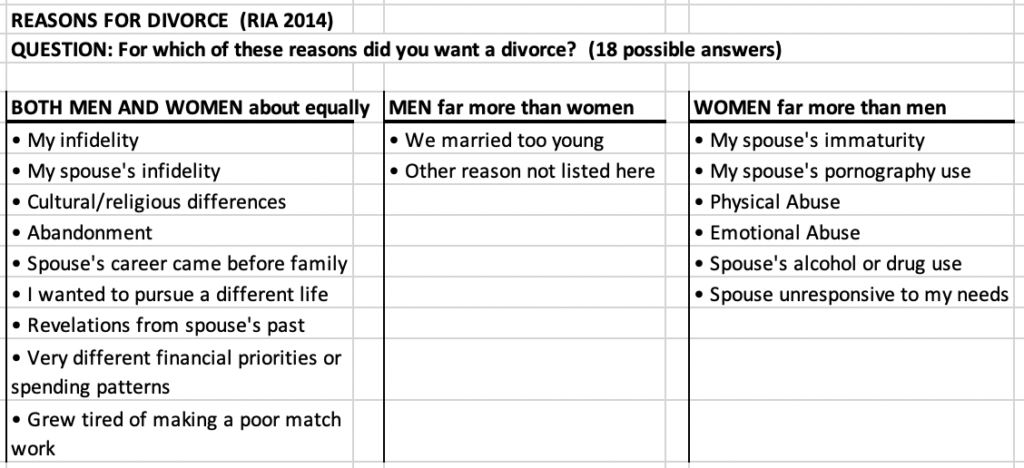
Caption: Reasons for Divorce, RIA 2014
Study B
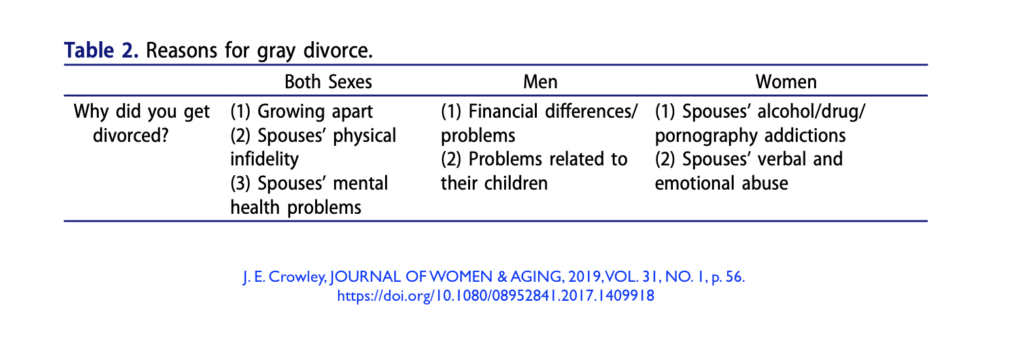
Study B found that both men and women wanted the divorce about equally for the following reasons: “growing apart,” “spouse’s infidelity,” and “spouse’s mental health problems.” (Mental health problems were described in the study as: “codependency, depression, anxiety, bipolar disorder, narcissism, and others…”). (J.E. Crowley, Reasons for Gray Divorce, 2017)
Men wanted the divorce more than women for “financial differences/problems,” and for “problems related to their children.”
Women wanted a divorce more than men for “spouses’ alcohol/drug/porn addictions” and for “spouses’ verbal and emotional abuse.”
You can see that the two studies have some interesting similarities. And it doesn’t seem to neatly fit into a box labeled “women’s neuroticism.”
Men and women both reject cheating spouses. Women don’t like abuse. Men don’t like financial problems. Does that make men neurotic too?
Study C (A Study of Divorce at Midlife and Beyond, 2004)
The top 5 reasons that women over age 40 file for divorce are [4]:
-1. Verbal, emotional, or physical abuse
-2. Infidelity
-3. Different values or lifestyles
-4. Alcohol or drug use
-5. Control freak
Women tend to be agreeable and duty-bound, as mentioned above, but in the long run, they are not interested in investing in a marriage with a selfish, mean, unfaithful, addicted, negligent, or violent husband who doesn’t lift a finger to make it better. (And of course, vice versa, husbands aren’t interested in destructive wives who conceal their spending or meddle in their children’s lives either.)
5. Reasons for Divorce
Women Divorce Due to Abuse and Addictions.
Men Divorce Due to Financial Conflict/Problems.
Everyone Divorces for Infidelity
1. Men cheat twice as much as women. They have far higher infidelity rates. [1]
So it shouldn’t surprise anyone that women want more divorces for infidelity-perhaps twice as much.
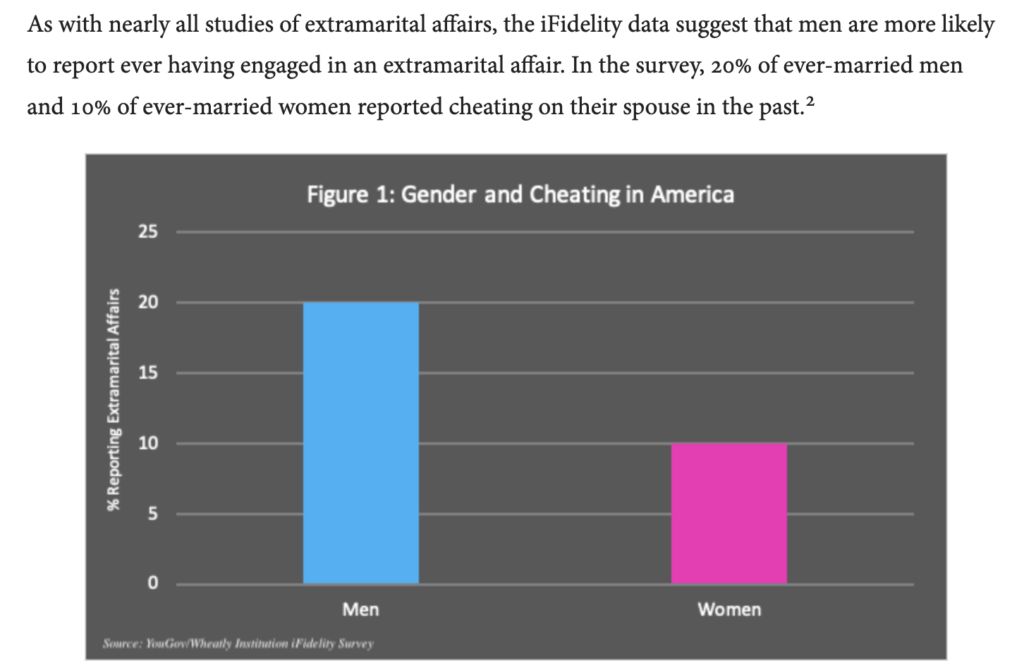 Mens and women’s infidelity rates
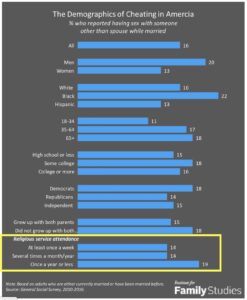
Even those who attend church every week commit adultery. About 14 in 100 said they had had sex with someone else while married, according to the Institute for Family Studies.
2. Men’s drug/alcohol use is much higher.
Men wind up in substance use treatment programs at about double the rate of women. [2] So it shouldn’t surprise anyone that women want divorces for substance abuse far more than men do.
3. Men’s rate of serious violent behavior (for example, aggravated assault) is 5 times higher than women’s. [3]
It shouldn’t surprise us that women want to divorce in these cases, and indeed for all kinds of abuse: physical, emotional, psychological, and sexual abuse. According to the studies above, women (more than men) will want a divorce where there is abusive behavior. It should also be noted that men are far less likely to want a divorce in cases of abuse, even if they are the victims. As a society, we need to believe male victims of spousal abuse when they disclose abuse and take their stories seriously because they are less likely to talk about it or initiate a divorce.
If everyone behaved better,
the U.S. divorce rate would drop in half,
because about half of divorces are due to these very serious issues.
Footnotes
[1] Dow, J., “Predicting Infidelity: An Updated Look at Who Is Most Likely to Cheat in America” Institute for Family Studies, September 21, 2020, captured online: https://ifstudies.org/blog/predicting-infidelity-an-updated-look-at-who-is-most-likely-to-cheat-in-america
[2] Sex and Gender Differences in Substance Use Disorder Treatment. https://nida.nih.gov/publications/research-reports/substance-use-in-women/sex-gender-differences-in-substance-use-disorder-treatment
[3] Lauritsen, Heimer, Lynch, “Trends In The Gender Gap In Violent Offending: New Evidence From The National Crime Victimization Survey” Criminology Volume 47 Number 2 2009, p. 379
[4] Montenegro, X., “The Divorce Experience: A Study of Divorce at Midlife and Beyond,” AARP the Magazine (May 2004), a study of individuals who had one or more divorces at age 40 or higher, accessed 1/10/20, https://assets.aarp.org/rgcenter/general/divorce.pdf.
[5] Rosenfeld, M., “Who Wants the Breakup? The Gender and Breakup in Heterosexual Couples,” 2017. pp. 1 and 21.
 :
:
 :
: Buy PDF