
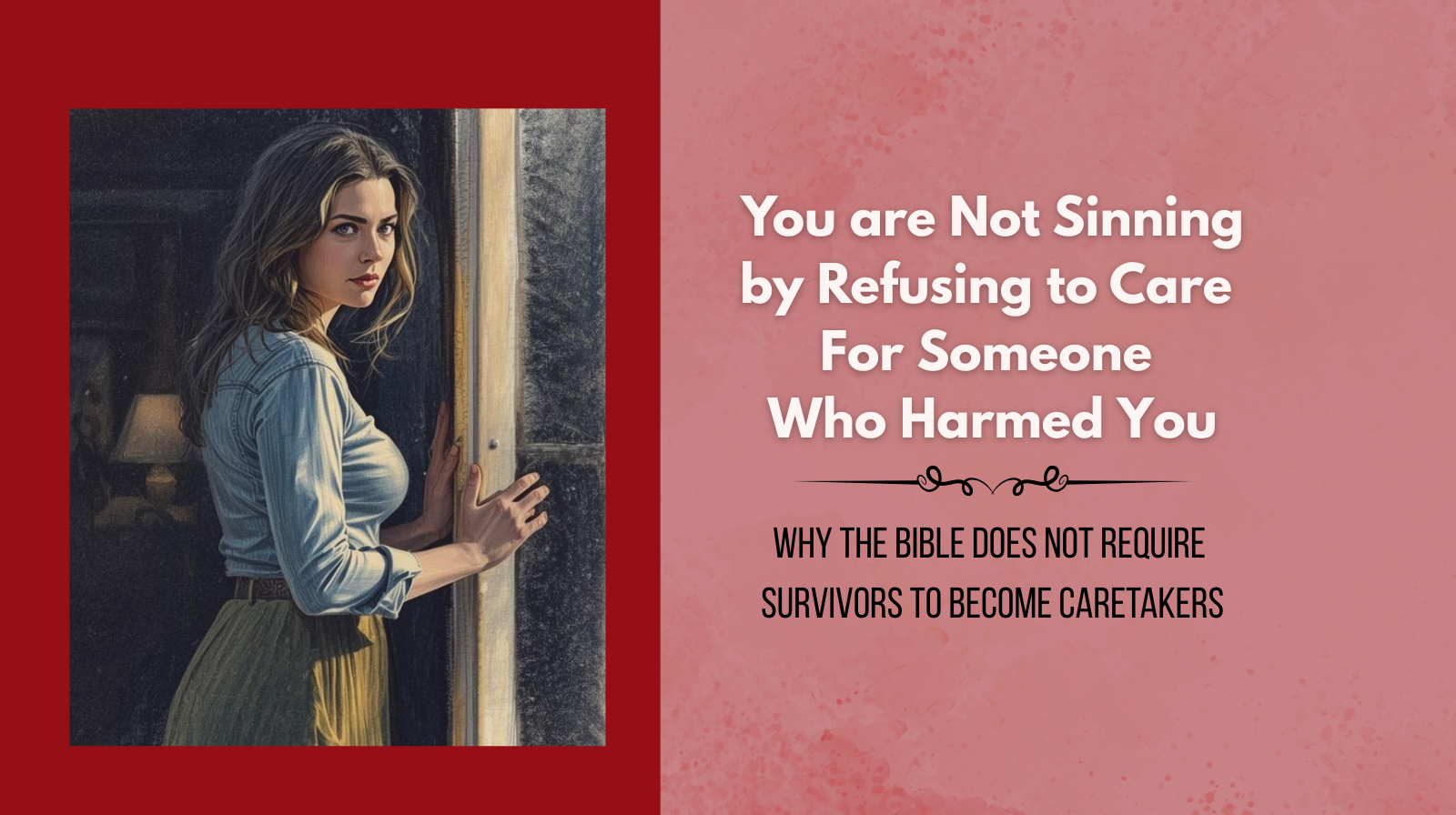
You Are Not Sinning by Refusing to Care for Someone Who Harmed You
Why the Bible Does Not Require Survivors to Become Caretakers
After my first post about why an abused or betrayed spouse is not legally or morally required to provide caretaking for their abuser, many of you said, “I understand that—but I still feel guilty.”
That guilt didn’t come from God.
Scripture makes a clear distinction between vengeance and boundaries. Refusing to provide care is not retaliation; it is stepping out of harm’s reach. When the Bible says, “Vengeance is mine” (Romans 12), it is not assigning victims ongoing responsibility for an abuser’s life—it is relieving them of the burden of managing consequences.
I am not talking about ordinary kindness or brief acts of help; I am talking about long-term, hands-on caretaking—medical, financial, or daily life management—often demanded when an abusive spouse is elderly, ill, or declining.
Scripture also draws a clear line around personal responsibility: “Each one should carry their own load” (Galatians 6:5). This verse does not contradict compassion; it clarifies accountability. Paul is not describing temporary help in a crisis; he is affirming that each adult is responsible for the consequences of their own choices.
Abuse, chronic betrayal, and refusal to change are not “burdens” a spouse is commanded to absorb. They are moral loads that belong to the person who created them. Refusing to carry what was never yours is not vengeance—it is obedience to a biblical boundary.
Throughout Scripture, responsibility rests on the one who commits violence or betrayal—not on the one who escapes it. God repeatedly instructs the vulnerable to get away from those who harm them, not to manage, rescue, or remain available to them (see The Bible Says We Are to Run From Abusers). Malachi condemns covenant violence and treachery, not the act of stepping away from it (see God condemns hypocritical abusers).
Forgiveness is a heart posture, not an obligation to provide access, proximity, or unpaid labor (see Forgiveness Takes Time After Abuse and Betrayal).
You are allowed to choose safety, limits, and freedom.
 :
:
 :
: Buy PDF