

What Is DARVO? How Harm Is Silenced by “Deny, Attack, and Reverse Victim & Offender”
Why You Feel Unheard When You Name Harm
If you have ever told your story and mentioned harm—abuse, neglect, exploitation, coercive control, betrayal, or injustice—and walked away feeling attacked, dismissed, or confused, this may be why. 💔
This happens to people who divorced for safety reasons.
It also happens to survivors who didn’t divorce.
It happens to adult children, whistleblowers, abuse victims, and anyone who threatens a comforting narrative.
There is a well-documented psychological pattern that explains this response. It’s called DARVO, identified by psychologist Jennifer Freyd.
DARVO = Deny, Attack, Reverse Victim and Offender
Once you know the pattern, you start seeing it everywhere—especially when someone names harm that makes others uncomfortable.
DARVO isn’t about disagreement.
It’s about shutting down truth-telling.
Here’s how it usually works 👇
1️⃣ DENY (Deflect or Dismiss the Harm)
Someone describes real harm:
- abuse
- coercive control
- exploitation
- long-term damage
- betrayal
- injustice
Instead of engaging the harm, the response deflects, minimizes, or reframes it.
Common deflections sound like:
- “It wasn’t abuse—every relationship has problems.”
- “You’re exaggerating.”
- “That’s just conflict.”
- “You’re focusing on the negative.”
- “Marriage is hard.”
- “No one is perfect.”
- “The bigger issue is…”
🔍 What this does:
The harm disappears. The person talking about it becomes the problem.
That’s not engagement.
That’s denial by deflection.
2️⃣ ATTACK (Discredit the Speaker)
Next, the person who named harm is attacked—not with facts, but with labels.
- “You’re bitter.”
- “You’re unforgiving.”
- “You’re anti-marriage.”
- “You hate men / women / the church.”
- “You’re deceived.”
- “You’re rebelling against God.”
- “You’re listening to the wrong people.”
The conversation shifts from what happened to what kind of person you are.
This move is powerful because it:
- shames
- intimidates
- isolates
- silences
3️⃣ REVERSE VICTIM AND OFFENDER
Finally, the person being challenged is recast as the real victim.
- “He’s the one suffering now.”
- “You’re ruining his life.”
- “Men are under attack.”
- “Families are being destroyed.”
- “Good people are being harmed by accusations.”
The original harm is erased.
The truth-teller becomes the threat.
This reversal:
- exploits empathy
- induces guilt
- pressures silence
- rewrites reality
The DARVO Pattern
The conversational loop becomes:
Deflect → Moralize → Attack → Reverse → Move On
That’s DARVO.
And it explains why so many survivors walk away feeling unheard—or questioning their sanity.
They aren’t failing to communicate.
They’re being systematically erased.
Why Victims Are So Often Disbelieved
This is one reason DARVO can be so powerful: it doesn’t just happen in private. It often recruits the surrounding community.
Trauma expert Judith Herman, M.D., in her book, Trauma and Recovery, describes how perpetrators try to escape accountability by promoting secrecy, discrediting the victim, and urging everyone to “move on” before the truth has been faced. One of her clearest lines is this: “If secrecy fails, the perpetrator attacks the credibility of his victim.”
That is exactly what many abuse survivors experience.
First, the abuse is hidden. Then, when the victim finally speaks, the focus shifts away from the harm and onto the victim’s character: Are they exaggerating? Are they bitter? Are they unforgiving? Are they trying to destroy the family? Are they gossiping? Are they making the church look bad?
This is DARVO in action. The offender denies the abuse, attacks the victim’s credibility, and reverses the roles so the person who caused the harm is treated as the wounded party.
DARVO Isn’t Just Personal — It’s Institutional
DARVO doesn’t only show up in arguments or comment threads.
It also appears in counseling advice, religious teaching, and institutional responses to abuse.
Sometimes it shows up subtly—in language that:
-
reframes cruelty as “brokenness”
-
recasts accountability as “bitterness”
-
shifts the burden of change onto the harmed person
-
spiritualizes endurance instead of naming danger
That’s why DARVO is especially effective in religious settings.
👉 For a real-world example of how this works, see:
Why James Dobson’s Advice Is So Useful to Predators
https://lifesavingdivorce.com/james-dobson-advice-useful-to-predators/
That article walks through how DARVO appears in counseling advice—and how it was exploited by Jeffrey Epstein to redirect a victim’s justified anger away from self-protection.
Naming DARVO Is Not Unkind — It’s Clarifying 💡
DARVO awareness isn’t about winning arguments.
It’s about:
-
protecting truth
-
protecting people
-
protecting your own clarity
Once you can name the pattern, you stop internalizing blame and recognize when a conversation was never about healing in the first place.
✅ What to Do About It
DARVO awareness isn’t about winning an argument or a social media comment thread.
It’s about protecting truth and people.
Here’s how it can help:
-
Name the pattern briefly—once.
A simple line like:
“This is DARVO—harm is being denied or deflected, the speaker attacked, and roles reversed,”
can be incredibly clarifying for silent readers. -
Write for the abuse victims watching, not the critics arguing.
Most help happens off-screen. Many women later say,
“That comment was the first time I realized I wasn’t crazy.” -
Don’t chase engagement.
DARVO feeds on endless rebuttal. Jesus didn’t argue with hard hearts; He named truth and walked away. -
Silence can be faithful.
Staying silent isn’t weakness if you’ve already spoken truth.
It can be stewardship of your soul. 🤍
DARVO awareness is a flashlight, not a battering ram.
Use it to illuminate—and then step back.
There is nothing new about this. DARVO is simply a modern name for an ancient human pattern, and Scripture names it repeatedly.
It starts in Genesis 3:12, when Adam responds to God: “The woman whom You gave to be with me—she gave me fruit, and I ate.” That’s deny responsibility, blame the woman, and cast himself as the victim—all in one sentence.
Isaiah 5:20 names the moral inversion directly: “Woe to those who call evil good and good evil.”
And Micah 6:8 reminds us that God’s standard has always been truth, justice, and humility—not protecting power.
And when a church, counselor, family member, or friend accepts that reversal, the survivor is harmed twice: first by the abuse, and then by being disbelieved.
I’ve heard this again and again from Christians in destructive marriages. They were told, “It wasn’t that bad,” “You need to forgive and forget,” “You’re being dramatic,” or “There are two sides to every story.” But sometimes “two sides” means one person is telling the truth, and the other is trying to avoid consequences.
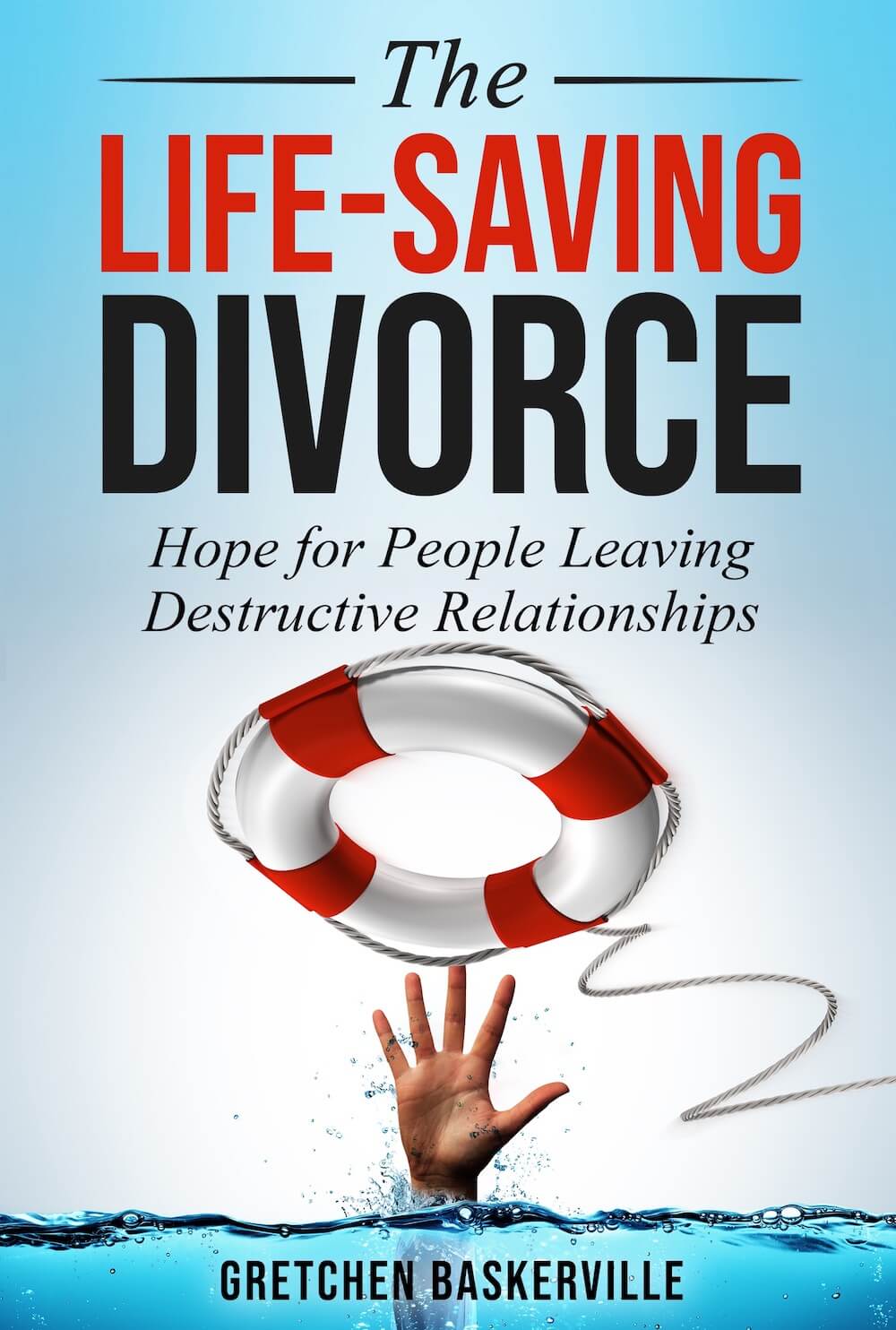
In The Life-Saving Divorce, I wrote, “You can forgive and still tell your story.” I also wrote, “If you are telling the truth, you are not slandering.” For more on this, see chapter 10 in The Life-Saving Divorce.
This is why safe people don’t rush victims into silence. They listen. They ask careful questions. They look for patterns of coercion, fear, control, deception, and retaliation. They understand that truth-telling is not the enemy of healing.
The Bible never commands us to help oppressors protect their reputations. Scripture tells us to “speak up for those who cannot speak for themselves” and to “defend the rights of the poor and needy” (Proverbs 31:8–9, NIV). That includes abuse survivors whose stories have been minimized, twisted, or buried.
 :
:
 :
: Buy PDF