

Poverty and Bad Parents, Not Single Mothers, Drive Most Juvenile Delinquency
Brad Wilcox of the Institute for Family Studies often suggests that single-parent homes (fatherlessness) cause juvenile delinquency, but having a very low income and having a parent who is incarcerated are far bigger factors.
Adolescents with an incarcerated parent are 65% more likely to face incarceration themselves, driven by stigma and trauma. Kids from poor families often face problems like unstable housing and fewer resources, which can lead to trouble.
Poverty accounts for 41% highly likelihood of being a juvenile delinquent. Race is a factor too. Black and Indigenous kids are 3–5 times more likely to end up in trouble than white kids, even when family structure is the same.
Rather than promoting messages that suggest abused parents should remain with abusive spouses, Brad Wilcox would do better to focus on combating poverty and supporting exit from relationships with criminals as ways to help children avoid delinquency. These factors—parental incarceration, poverty, and racial disparities—are stronger predictors of juvenile trouble than single-parent family structure alone. Addressing these root causes could more effectively support children in staying out of trouble.
Research indicates that parental incarceration is the strongest predictor of adolescent incarceration, followed by low parental income, with parental marital status (e.g., single-parent households) playing a smaller role. Below is the evidence-based analysis:
1. Parental Incarceration: Most Significant Factor
-
Direct behavioral impacts: Adolescents with incarcerated parents are at heightened risk for delinquency due to stigma, social isolation, and reduced access to support systems. LINK, LINK, LINK
-
Intergenerational cycles: Parental incarceration increases the likelihood of adolescent incarceration by 65% compared to non-incarcerated households, even after adjusting for income and education. LINK
-
Mechanisms:
-
Psychological trauma from witnessing parental arrest or separation, or observing criminal behavior.
-
Association with antisocial peers and reduced school engagement.
-
2. Parental Income: Secondary but Substantial
-
Economic vulnerability: Low-income families face systemic barriers (e.g., cannot afford good legal representation, face unstable housing and possible malnutrition) that increase incarceration risk.
-
Mitigation through support: Cash assistance programs reduce parental criminal activity by 15%, indirectly lowering child incarceration risks.
-
Correlation with race/ethnicity: Black and Indigenous youth from low-income families are 3–5x more likely to be incarcerated than white peers.
3. Racial inequality is a greater driver of incarceration disparities than single parenthood
-
A Black teen from a two-parent home is still more likely to be incarcerated than a white teen from a single-parent home.
-
Racial gaps in incarceration rates (5–10x) far exceed gaps linked to family structure (1.8x)Link.
Systemic reforms targeting racial bias in policing, sentencing, and community investment are critical to addressing this inequity
4. Parental Marital Status: Smaller Indirect Role
-
Single-parent households correlate with higher incarceration risk, but it has the weakest direct effect.
-
A parent who escapes a toxic environment often has lower income and sometimes they are escaping a spouse with criminal behavior.
Comparative Analysis
| Factor | Key Impact | Supporting Evidence |
|---|---|---|
| Parental Incarceration | Strongest predictor (65%↑ risk) | LIFT study showing persistent effects after controlling for income; stigma-driven delinquency LINK |
| Low Parental Income | Moderately significant (41%↑ risk for adverse outcomes) | Poverty-linked school dropout and neighborhood crime exposure |
| Single-Parent Status | Weakest direct effect | Often mediated by income loss or parental absence due to incarceration |
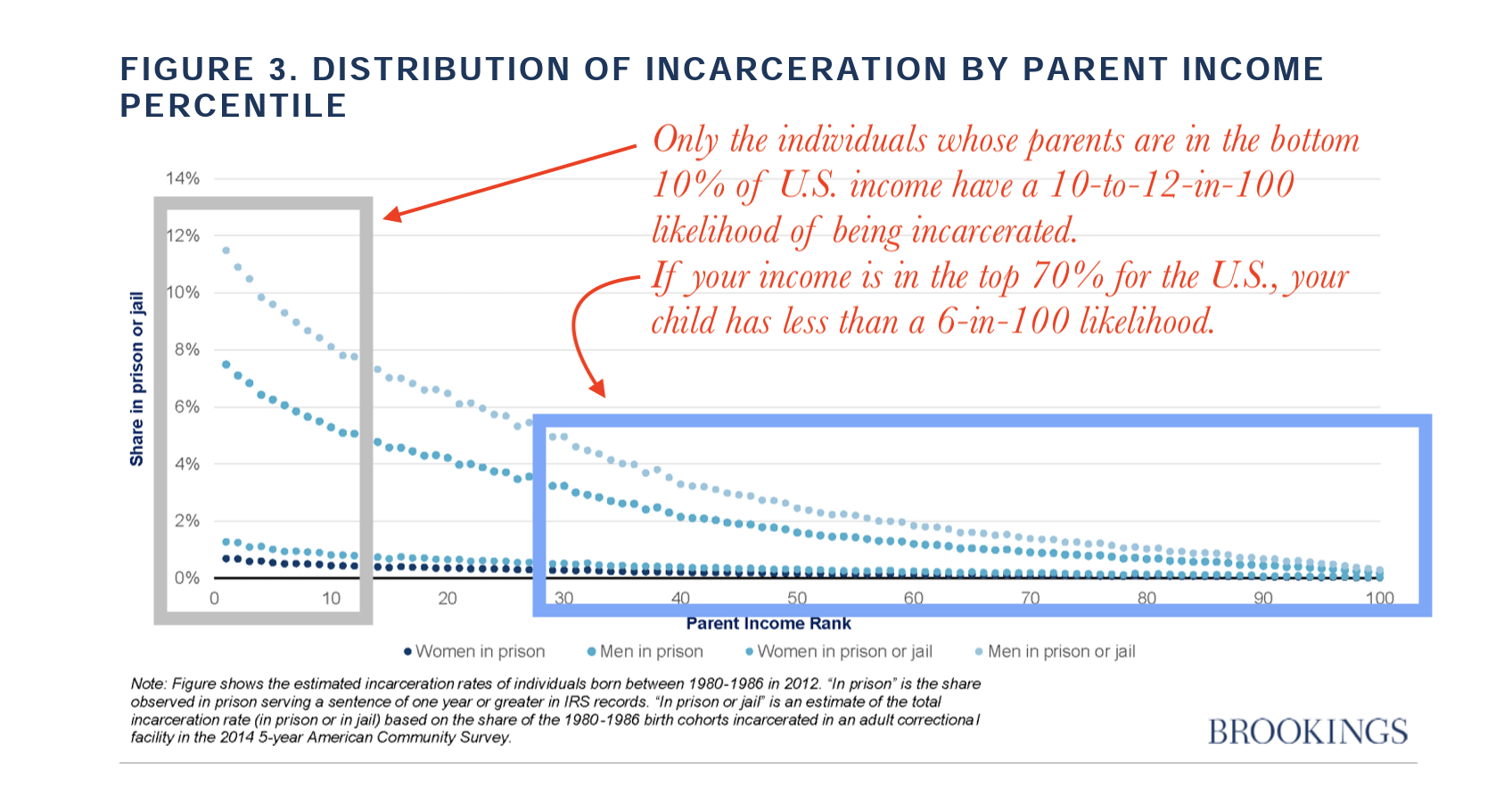
Explanation of the Brookings Institution chart below: Poverty makes a big difference. The poorest families who are in the bottom 10% of U.S. income (gray box) have nearly a 12-in-100 chance of having a son who gets incarcerated (daughters even less so). All other families have a lower chance of having a son in prison. Families who have medium or high income (blue box) have very low incarceration rates, between 1 in 100 sons and 6 in 100 sons.
Are My Kids Going to Be Juvenile Delinquents If I Divorce My Abusive, Deceptive, or Malicious Spouse?
If you’re in an abusive relationship and considering leaving, don’t let the naysayers and alarmists threats about single parenthood or juvenile delinquency stop you. Even if you had all of the factors, it is far less than a 50% chance, on average. Research shows that abuse and instability harm kids far more than divorce itself. A good single-parent home is better for kids than a toxic two-parent home. Staying in a toxic marriage can expose children to trauma, which is a much bigger risk factor for delinquency than growing up in a single-parent home. By leaving, you’re not just protecting yourself—you’re giving your children a chance to grow up in a safer, healthier environment. Support systems, counseling, and community resources are available to help you and your kids heal and thrive. You’re making the brave choice for a better future, and that’s what truly matters.
For further reading:
- 27 Myths about Divorce That Probably Don’t Apply to Committed Christians
- 12 Positive Outcomes of Divorce that Nobody Told Us
- Debunking the “Stay Together for 5 Years” Lie: When Divorce is the Right Decision
- Do Women File for Divorce 70%-80% of the Time?
- Harvard Study Shows Divorce Saves Lives
- There Is No Divorce Crisis. We have a Sin Crisis.
- 1-in-4 Highly Religious U.S. Marriages Have Abuse
- The “Easy Divorce” Myth: For Many Christian Survivors, Divorce Took Years
- Divorce Is Not the Mass-Shooter Warning Sign People Think It Is
- Is Jordan Peterson Right about Women and Divorce?
Other organizations that sometimes miss abuse in marriages

 :
:
 :
: Buy PDF